
By Abdullahi O Haruna Haruspice
History is a strange tailor. It does not merely sew garments for great men; it also records who stained them.
Power is a mirror that reveals souls. Some approach it as pilgrims seeking purpose; others approach it as merchants searching for profit. The tragedy is that both often wear the same robes until time, that relentless examiner of men, tears open the seams.
There is an old African proverb that says a tree does not fear the axe because of the iron, but because the handle is carved from its own wood. Every great betrayal begins not with strangers, but with familiar footsteps. The assassin of trust rarely knocks from outside; he already possesses the keys to the house.
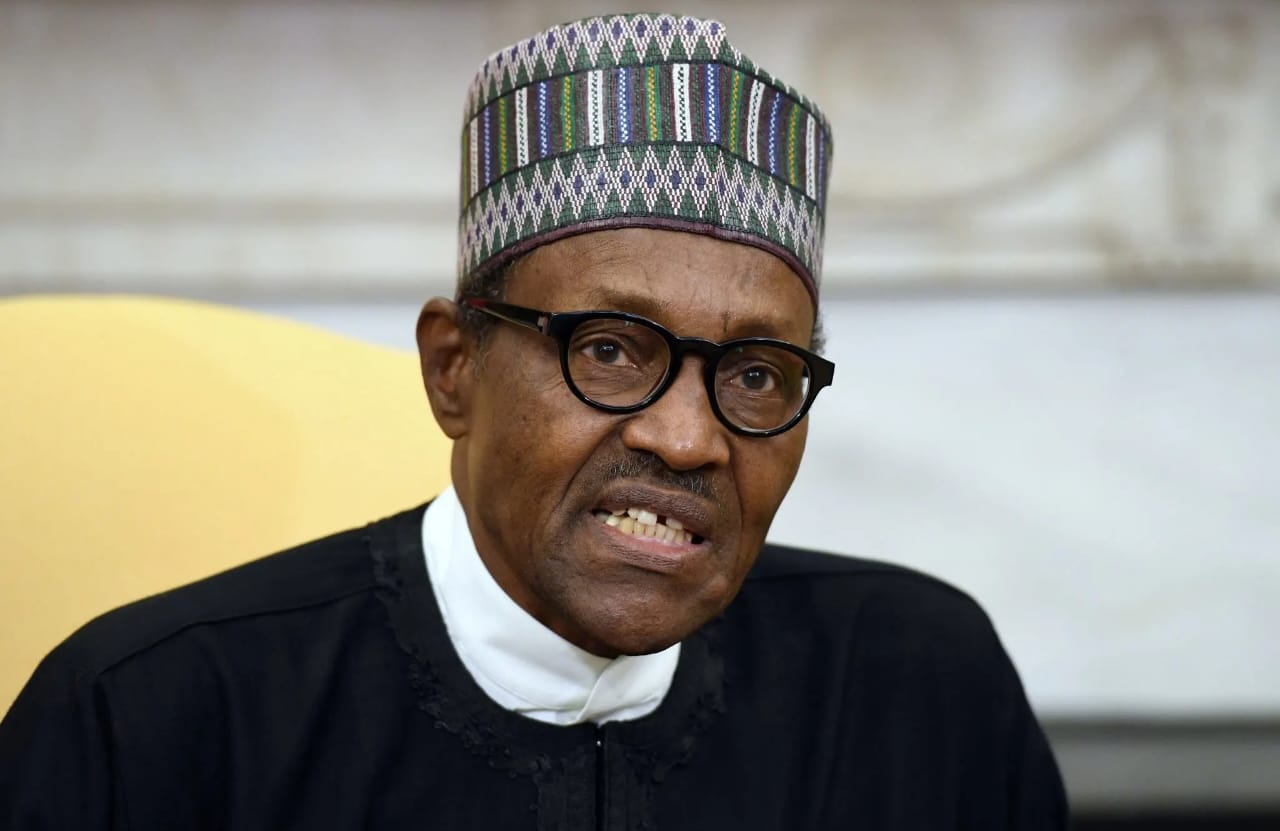
Such is the lingering sorrow surrounding the memory of President Muhammadu Buhari.
Love him or loathe him, few honestly accused him of living a life intoxicated by personal luxury. He walked through power with an almost monastic disposition. While many politicians measured success by the length of their convoys and the weight of their estates, Buhari seemed content carrying only the austere luggage of discipline. He denied himself many of the indulgences that accompany power, preferring instead the difficult theatre of restraint.
He departed this world at eighty-two carrying a reputation remarkably untouched by the familiar scandals that have become recurring footnotes in African leadership. No tales of obscene wealth flaunted across continents. No whispers of decadent appetites. No secret empire erected upon public tears. His greatest wealth appeared to be an unwavering belief that public office was a sacred trust.
Yet there is a painful irony history seldom forgives. A king is rarely destroyed by his enemies.He is destroyed by those who guard his throne. Perhaps that is Buhari’s greatest tragedy.
The story of his administration is slowly becoming less about the man himself and more about the shadows cast by those who stood closest to his light. ‘They borrowed the credibility of his name while spending the currency of his integrity’ apologies to my friend Vincent Unogwu . They wrapped themselves in the white garment of his reputation, yet walked through muddy streets without caution. Every stain they gathered eventually became his burden to explain.
A leader may build a cathedral over decades. One careless disciple can reduce it to ashes in a single afternoon.
When disturbing allegations surfaced surrounding former Attorney General and Minister of Justice, Abubakar Malami, many Nigerians reacted with disbelief. For some, they remain allegations awaiting judicial resolution. For others, they reopened painful questions about accountability in the last administration. Whatever the eventual legal outcomes, the political and moral damage was immediate. The conversation itself became a wound.
Why Malami?
Why the man who occupied one of the most sacred offices in government?
Why someone who enjoyed not merely the confidence of Buhari but something even more precious—his trust?
The pain is difficult to describe.
It feels like watching the man entrusted with guarding a sanctuary quietly dismantle its pillars. Subhanallah!!!
There is nothing unusual about returning from an errand with traces of honey on your clothes when the calabash rested upon your head. A few drops are understandable. Temptation is part of the human condition.
But to lower the calabash, plunge both hands into it, and empty its sweetness before arriving at your destination—that is no longer weakness.That is sacrilege. Apologies to my irreplaceable mentor , late Professor Femi Odekunle.
Trust is humanity’s most expensive currency because once spent recklessly, no mint can reproduce it.
Whether history ultimately vindicates or condemns individuals, the mere perception that those closest to Buhari accumulated controversies of extraordinary magnitude has become an enduring burden upon his legacy.
Then came other names.
Hadi Sirika.
Sadiya Umar Farouk.
Each controversy, each investigation, each accusation—proved or unproved—became another crack in the monument Buhari spent decades constructing. A reputation built through military discipline, personal frugality, and political perseverance suddenly found itself answering questions it never asked.
History has a cruel habit.
It remembers scandals more vividly than silence.It remembers smoke even after discovering there was no fire.
As one allegation followed another, those who never forgive Buhari found fresh ammunition people like my friend Kabiru Danladi Lawanti , while those who defended him discovered that loyalty itself had become exhausting.
For those of us who admired him, it felt less like reading headlines and more like attending the gradual demolition of a monument we once considered indestructible.
My grief is deeply personal.
I searched desperately for reasons to dismiss every disturbing report as fabrication. I hoped every revelation would dissolve into the harmless mist of political propaganda. Yet hope and reality are often enemies sharing the same room. The more I wished them away, the louder they echoed.And I found myself asking a question older than civilization itself:
How does a righteous king survive unrighteous courtiers? Perhaps he does not. Perhaps no leader ever truly governs alone.
The character of a government is eventually measured not only by the virtue of its president but also by the conduct of those permitted to speak in his name.
Leadership, after all, is borrowed immortality. Every appointment is a sentence history writes on behalf of the appointing authority.
The saddest paradox is almost poetic.
Many expected Buhari’s fiercest adversaries to emerge from distant political camps, different regions, or opposing ideologies. Instead, some of the deepest disappointments appeared to come from those who shared his faith, his geography, his language, and, above all, his confidence.
There is a haunting lesson buried beneath that irony.Blood does not guarantee loyalty.Shared prayers do not guarantee integrity.Common ancestry cannot manufacture character.Betrayal has no religion.Corruption has no ethnicity.
Greed answers no tribal name.
It simply waits patiently inside the human heart until opportunity unlocks the door.
And yet, history also whispers another truth.Distance sometimes protects integrity better than intimacy.
Among Buhari’s prominent ministers stood Babatunde Raji Fashola, who managed three of the most consequential ministries—Power, Works and Housing. Despite the enormous scale of those responsibilities, his public record remained largely untouched by corruption allegations during his tenure. It is one of history’s curious contrasts: sometimes the man seated furthest from the family table preserves the household’s honour better than those eating from the same plate.
Perhaps that is life’s oldest philosophy.
The knife that wounds deepest is rarely thrown from afar.It is withdrawn gently from an embrace.
As more chapters of the Buhari era continue to unfold through investigations, courtrooms, official reports and the judgment of history, one truth becomes increasingly impossible to ignore: the greatest danger to a good man’s legacy is not always his own imperfections, but the ambitions of those who wear his confidence like borrowed clothing.
Every great leader eventually dies twice.
The first death is when the body surrenders to the earth.
The second is when history begins examining the footprints left by those who walked beside him.
Muhammadu Buhari has already experienced the first.
Whether he survives the second depends less on the speeches delivered in his honour than on the final verdict history reaches concerning the men and women he trusted with the garments of his name.
For in the end, history washes every robe.
Some emerge brighter.
Others reveal stains that were always there—hidden only by the darkness of power.
Sadly Musing
Abdullahi O Haruna Haruspice is the author of the book- The Buhari in Us,and still an unrepentant Buharist and unapologetic Buharideen.
The Great Betrayal- How Buhari’s Bedmates Soiled His Garments
131