
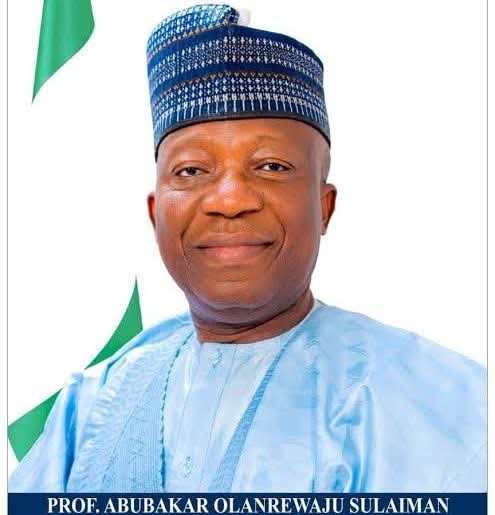
The Director-General of the National Institute for Legislative and Democratic Studies (NILDS), Prof. Abubakar Olanrewaju Sulaiman, yesterday challenged Nigerian youths to channel their frustrations with the nation’s democratic system into active political participation rather than disengagement, warning that democracy cannot be reformed by those who refuse to take part in it.
Sulaiman said despite growing disenchantment among young Nigerians over the pace of democratic development, meaningful change would only come when they joined political parties, contested elections, and positioned themselves to influence public policy from within.
He stated these in Abuja during the commemoration of his seventh anniversary as the director-general of NILDS and the unveiling of a book documenting the evolution and growth of the Institute.
Speaking during a fireside chat, the former Minister of National Planning urged young Nigerians to move beyond protests and social media criticism and embrace leadership and public service.
“Young Nigerians should never abandon the democratic process. If you condemn the system and refuse to participate in it, you cannot change it,” he declared.
According to him, while activism has historically played an important role in driving political reforms, sustainable change requires active involvement in governance.
He said: “Activism has its place. Many of us were activists before joining politics. But there comes a time when you must move beyond protest and become part of the decision-making process.
“You cannot reform a system from the outside alone. You must engage with it. Young people should participate in political parties. They should contest elections. They should aspire to leadership.
“If our generation could make it despite the challenges we faced, today’s young Nigerians can also succeed.”
Sulaiman maintained that Nigeria’s democratic future would depend largely on a new generation of leaders prepared to serve rather than remain perpetual critics of government.
Reflecting on his seven-year stewardship at NILDS, the director-general identified mentorship and human capital development as the defining achievements of his administration.
Sulaiman said he deliberately placed staff welfare and professional advancement above physical infrastructure. He explained that his administration opened educational opportunities to non-academic staff who previously had little access to postgraduate education.
“I call it my staff-centred policy. People celebrate buildings and reforms, but they forget the drivers, the gardeners, and the cleaners who keep the institution running. “Before I came here, opportunities for non-academic staff to pursue higher education were extremely limited. We changed that. “Today, several non-academic staff members have earned Master’s degrees and PhDs because we deliberately invested in their development,” he stated.
Sulaiman also reflected on the personal sacrifices demanded by public service, describing leadership as a vocation that often comes at a high personal cost.
“Public service comes with enormous sacrifice. It affects your freedom, your personal life, and even the people you can freely associate with,” he said.
On succession planning, he stressed that every leader owed it to the institution to prepare those who would take over after them.
“My successor should learn from both my achievements and my mistakes. Leadership is a relay race. The baton must always be passed responsibly,” he stated.
Looking beyond his tenure, Sulaiman said his vision was to transform NILDS into Africa’s foremost institution for legislative studies and democratic governance, serving not only Nigeria’s Parliament but legislatures across the continent and beyond.
He said: “I want NILDS to become Africa’s leading centre for legislative studies and democratic governance. I see an institution that serves not only the Nigerian Parliament but legislatures across Africa and eventually democratic institutions around the world. I see NILDS becoming a global intellectual hub for democracy.”
Delivering the keynote address, former Senator Shehu Sani praised Sulaiman’s leadership, saying he had transformed NILDS into the intellectual backbone of Nigeria’s Parliament through research, documentation, and capacity building.
Sani described the Institute as the “engine room” of the National Assembly, arguing that lawmakers required continuous intellectual support to effectively discharge their constitutional responsibilities.
“The National Institute for Legislative and Democratic Studies has become the engine room of the National Assembly. If Parliament is left entirely to politicians without intellectual support, there will be no direction,” he said.
He also urged young politicians and aspiring legislators to take advantage of the Institute’s resources, noting that the practical realities of politics often extend far beyond classrooms.
“Politics requires understanding realities that are rarely written in textbooks,” Sani said.
He further encouraged Nigerian youths to prepare themselves for leadership through knowledge acquisition, mentorship and active participation in the democratic process, insisting that despite the country’s numerous challenges, Nigeria’s democratic journey remained worthy of pride and continued improvement.
Sani equally commended Sulaiman for broadening the Institute’s relevance beyond the National Assembly and positioning it as a leading centre for legislative research, democratic governance and institutional development.
Don’t Abandon Democracy, Join Politics Instead, NILDS DG Tells Nigerian Youths
114