
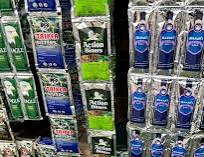
National Agency for Food and Drug Administration and Control (NAFDAC), has reiterated that its ban on the sale of alcoholic drinks packaged in sachets and other small-volume containers remains in effect, stressing that the policy will not be reversed.
The agency’s South-East Zonal Director, Festus Ukadike, disclosed this in an interview on Friday in Enugu, saying enforcement was already underway across the region.
According to him, NAFDAC has begun clamping down on manufacturers and distributors of sachet alcoholic beverages, with the next phase focusing on removing the remaining products from markets nationwide.
Mr Ukadike explained that the directive would not stop companies from producing alcoholic beverages, provided they are packaged in bottles of at least 200 millilitres.
He revealed that enforcement operations had resulted in arrests and product seizures in several South-East states, including Enugu, Imo, Abia, Ebonyi and Anambra.
The zonal director said the decision was primarily aimed at protecting children and young people from early exposure to alcohol and reducing unhealthy drinking habits.
He noted that limiting access to sachet alcohol would encourage healthier lifestyles among young Nigerians, help reduce antisocial behaviour, and support efforts to tackle diseases such as cancer.
Mr Ukadike also urged Nigerians to consume alcohol responsibly, insisting that doing without sachet-sized drinks should not be considered a major inconvenience.
Addressing concerns that the ban could make alcohol less affordable, he maintained that safeguarding public health takes precedence over commercial interests.
He added that within the next 12 months, the country should have a fully regulated market where no alcoholic drink is sold in containers smaller than 200 millilitres.
Meanwhile, reactions from consumers were divided. While some welcomed the policy as a step towards improving public health, others argued that it would make alcoholic beverages less affordable for low-income earners.
One consumer, Charles Otubo, suggested that instead of a nationwide ban, the restriction should be enforced mainly in motor parks to help reduce road accidents.
(NAN)
NAFDAC Insists Sachet Alcohol Ban Will Remain in Force
102