
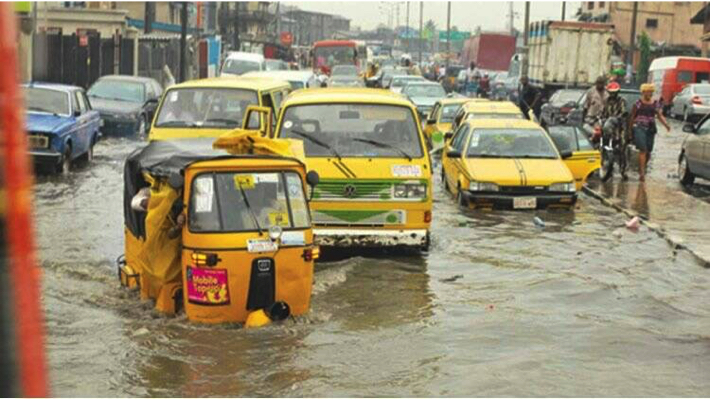
Persistent rainfall across Lagos is disrupting daily life, with residents battling floods, severe traffic congestion, increased transport fares and damage to property as the rainy season intensifies.
The prolonged downpours have forced many people to rethink their routines, from leaving home much earlier to taking extra precautions to protect themselves and their belongings. Umbrellas, raincoats, waterproof bags and regular weather updates have become part of everyday life for many Lagosians.
The situation reflects the 2026 Seasonal Climate Prediction by the Nigerian Meteorological Agency (NiMet), which forecast a longer-than-usual rainy season and a delayed end to rainfall in Lagos.
An Aguda resident, Shola Opeyemi, said she now leaves home much earlier each day to avoid getting trapped in traffic caused by heavy rain. She added that she always carries a backpack containing rain boots and a raincoat because of the city’s unpredictable weather.
According to her, unexpected rainfall often doubles her daily transport expenses as commercial transport operators increase fares during bad weather.
Similarly, Cecilia Uwadi, who lives in Ogba, said surviving the rainy season requires careful planning. She explained that she either leaves home as early as 4:00 a.m., relies on Google Maps to monitor traffic after work or remains at the office until late at night to avoid gridlock.
She noted that traffic caused by continuous rainfall has significantly increased her fuel consumption, reducing the number of days a full tank lasts from about 10 days to less than a week. She added that the demanding routine leaves her constantly sleep-deprived.
For Timothy, a Mafoloku resident who works in Surulere, the rains have placed additional pressure on his monthly income. He said his transport costs have risen from about N2,000 to more than N3,000 whenever it rains, making it harder to meet other essential needs.
While commuters struggle with higher expenses, some traders say the rainy season creates business opportunities.
At Ojota, umbrella seller Adewunmi Yusuf said demand for umbrellas rises sharply whenever heavy rain catches commuters unprepared. On busy rainy days, she said, she can sell more than 20 umbrellas compared to little or no sales during dry weather.
Raincoat trader Nkiru Adedeji in Oshodi also described the rainy season as her busiest period, noting that disposable emergency raincoats are especially popular because they are affordable, selling between N500 and N700. However, she added that severe flooding sometimes keeps customers away from the market, affecting business.
At Mile 12 Market, trader Temitope Alakija said frequent rainfall has made it risky to leave children in charge of shops because sudden downpours can destroy goods before they have time to respond. She added that heavy rains also discourage customers, leaving many traders without sales for the day.
Students are not left out of the challenges. Chikaodinaka Agbo, a student of the University of Lagos, said she now stores her textbooks and academic certificates in waterproof coverings to prevent water damage, explaining that protecting important documents has become a daily priority during the rainy season.
Despite facing different challenges, many residents agree that adapting to Lagos’ prolonged rainy season has become unavoidable. For most people, coping now means leaving home earlier, spending more on transportation, protecting their businesses and belongings, and adjusting plans whenever the weather changes.
Lagos Residents Struggle With Flooding, Soaring Transport Costs as Heavy Rains Persist
100