
By Torkuma Gbor
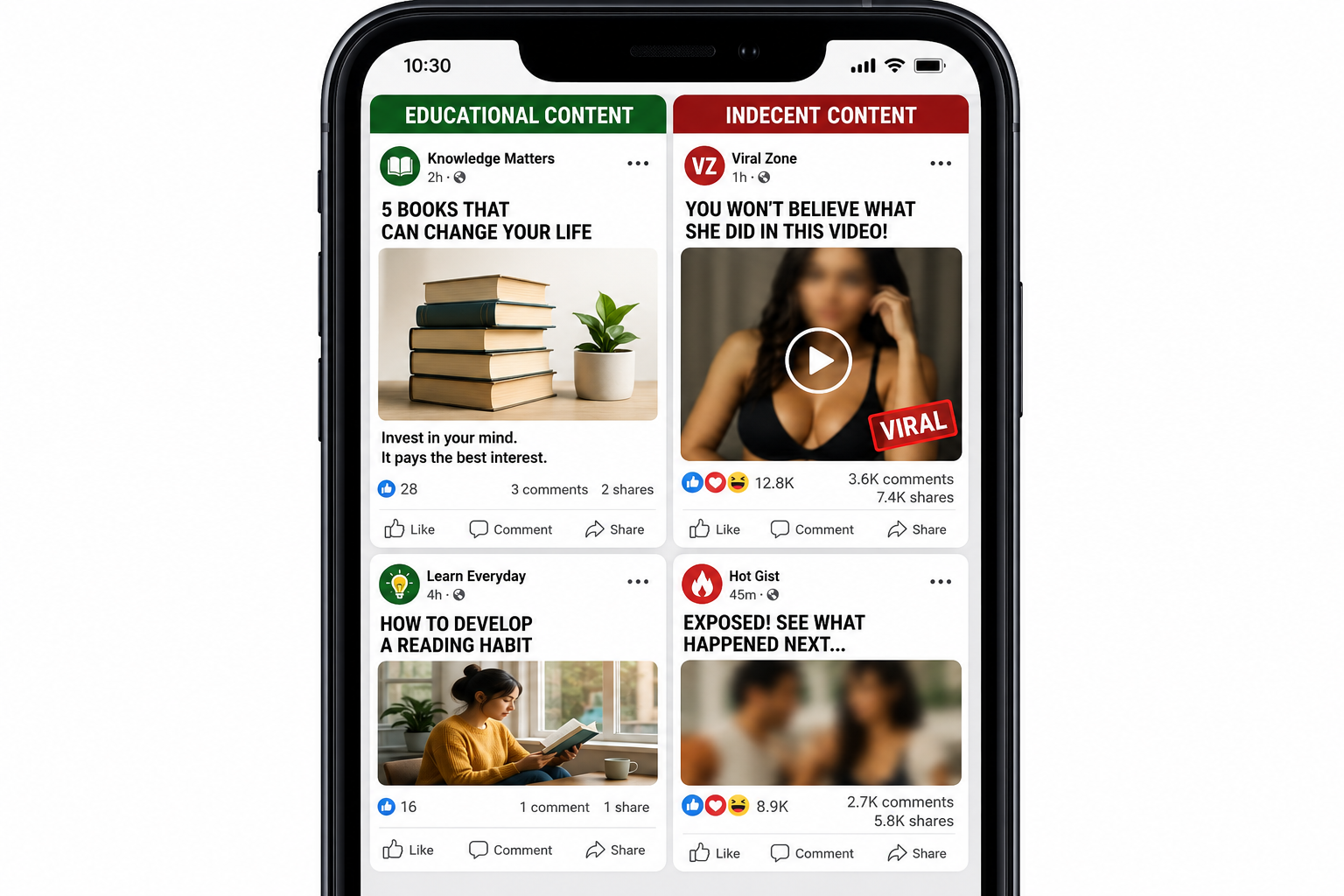
There is an uncomfortable reality about social media that we may need to confront: we are increasingly giving more attention to indecent content than to decent and meaningful content.
A provocative video can appear online and, within a few hours, attract thousands of views, comments and shares. People will debate it, condemn it, mock it and sometimes even circulate it further. Meanwhile, a well-written article, an educational video or content that genuinely seeks to inform and inspire may struggle to get noticed.
This is not entirely the fault of social media platforms or content creators. The audience plays a significant role in determining what thrives online.
Social media operates largely on engagement. The more people interact with a piece of content, the more visibility it is likely to receive. This means that our likes, comments, shares and views are not meaningless. They help determine what gets pushed to more people.
Unfortunately, we often give our strongest engagement to the very content we claim to dislike.
Someone posts something indecent, and instead of ignoring it, thousands of people rush to the comment section. Some condemn the person, others make jokes, while others share the content with friends. Before long, the post is everywhere.
The creator sees the attention and learns a simple lesson: this type of content works.
The next post may be even more provocative.
This is how a cycle is created. What attracts attention is repeated, and what is repeatedly rewarded becomes increasingly common.
There is, of course, nothing wrong with entertainment. Social media cannot and should not be a place where everything must be educational or serious. People need humour, relaxation and entertainment. The concern is the growing imbalance between what entertains us and what adds value to us.
There are people using social media to teach, educate, raise awareness, share opportunities, discuss important issues and showcase their talents. Some spend considerable time creating content that could positively influence another person’s life.
Yet, such content often receives a fraction of the attention given to controversy and indecency.
That should make us pause.
Perhaps the question is no longer only, “Why are people posting this kind of content?” We should also ask, “Why are we giving it such a large audience?”
Content creators respond to incentives. When decent and thoughtful content is ignored while sensational content is rewarded with massive engagement, we should not be surprised when more creators choose the latter.
We cannot complain about the deterioration of social media while actively contributing to it.
If we want better content, we must also become better audiences. We can choose to like and share content that informs us. We can encourage creators who promote creativity, knowledge and responsible conversations. We can give meaningful content the visibility it deserves.
And sometimes, the most responsible thing we can do with indecent content is simply to scroll past it.
Not every post deserves our reaction. Not every controversy needs our contribution. Not everything that appears on our screens deserves to be amplified.
Our attention has value, and where we place it matters.
The social media environment we have tomorrow will, to some extent, be shaped by what we reward today. If indecent content continues to receive the loudest applause while decent content is met with silence, we are indirectly encouraging the former.
We cannot keep asking creators to do better while rewarding them for doing worse.
Perhaps it is time to change what we celebrate.
Perhaps it is time to give decency, knowledge and meaningful conversations the same attention we so readily give controversy.
After all, what we reward is what we encourage.
When Indecency Gets the Applause: What Our Social Media Engagement Is Encouraging
84