
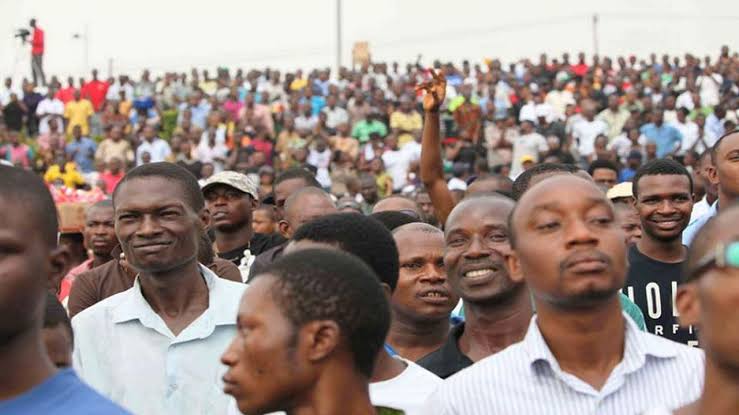
Some residents of Umuahia, the Abia State capital, have expressed mixed feelings over Nigeria’s socio-economic and political journey since it attained independence from Britain on October 1, 1960.
Speaking in separate interviews in Umuahia on Thursday, they reviewed the progress so far made vis-à-vis the challenges and expectations.
A businessman, Godwin Onyemaechi, said Nigeria had made progress despite the numerous challenges since independence.
He said the removal of fuel subsidy and forex unification had stabilised the economy and increased the funds available to states.
Mr Onyemaeci also said businesses are now more promising, pointing out that the exchange rate predictability had restored investor confidence and reduced arbitrage.
A trader in the Orie-Ugba Market, Chinyere Okoye, said, “The journey has been tough for market women and common Nigerians.”
Ms Okoye expressed regret that the price of goods had gone beyond the reach of average Nigerians but hoped that the ongoing reforms would eventually reduce the cost of living.
She urged the government to support traders with soft loans and improved electricity supply to help small businesses grow.
A teacher, Roseline Ekezie, said the education sector had experienced an innovation with the introduction of the Nigerian Education Loan Fund.
Ms Ekezie also said many indigent students now have access to university education without dropping out due to financial constraints.
She said university education had also enjoyed some stability due to the lack of prolonged ASUU strikes.
A welder, Udoka Kalu, said infrastructure development had improved, citing the completion of the rehabilitation of the Enugu-Port Harcourt Expressway.
Mr Kalu said artisans were enjoying a boom, even though material costs remained a challenge.
He called for more vocational training and youth empowerment programmes to reduce unemployment.
A commercial driver, Chukwudi Uzoanya, said the country’s independence had not translated to a better life for ordinary Nigerians.
Mr Uzoanya said the hike in the price of fuel, from less than N200 in 2015 to more than N1,500 per litre since subsidy removal, had made transport business less attractive.
He said drivers now spend more on fuel and spare parts, leaving commuters to struggle with cut-throat fares.
A civil servant, Chinelo Anyaegbu, said workers’ salaries had been eroded by high inflation; hence, many families now find it extremely difficult to pay their bills.
Ms Anyaegbu said the minimum wage had been eroded by the high cost of food, rent and school fees.
A youth leader, Chidubem Uche, said insecurity had overshadowed any achievements recorded in the 66 years of the country’s independence.
According to him, kidnapping and killings in different parts of the country had made distant travelling dreadful.
He further said that many youths have continued to roam about the streets jobless and have lost faith in the country.
A food vendor, Theresa Obi, said the cost of soup ingredients had tripled, forcing many petty traders out of business.
She said a bag of rice that sold for N35,000 last year now goes for more than N70,000.
Ms Obi urged the government to address hunger and insecurity rather than rolling out drums for independence celebrations.
The residents, however, expressed hope that with good and honest leadership, Nigeria could still reach its potential.
(NAN)