
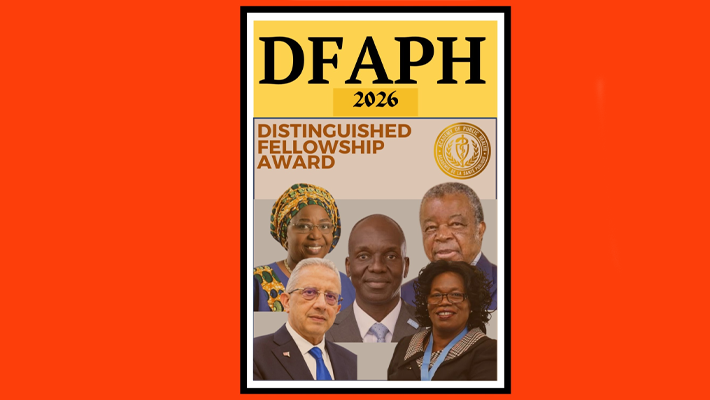
The Pan-African Academy of Public Health has honoured five eminent African scientists for their contributions to medical research, outbreak response, health systems strengthening and public health governance.
The academy announced the recipients of the 2026 Distinguished Fellow of the Pan-African Academy of Public Health (DFAPH) award in a statement on Tuesday in Abuja.
The awardees are Mustapha Ferjani, Tunisia’s health minister; Nkandu Luo, a Zambian immunologist and former public office holder; and Mohamed Janabi, World Health Organisation regional director for Africa.
The other recipients are Awa Marie Coll Seck, former Senegalese health minister, and Jean-Jacques Muyembe-Tamfum, director-general of the Democratic Republic of the Congo’s National Institute of Biomedical Research.

The academy described the DFAPH as its highest honour, recognising sustained achievements that have strengthened health systems, advanced African science and protected communities from disease.
It said the five recipients made significant contributions across healthcare, from clinical medicine and laboratory science to infectious disease control, health policy and international health governance.
According to the statement, their careers demonstrate the importance of linking scientific evidence with strong institutions and effective leadership to build sustainable health security.
Mr Ferjani is being recognised for his strategic leadership in critical care, military medicine and healthcare administration.
The academy said Mr Ferjani’s contributions included efforts to build resilient, technology-driven health systems capable of withstanding acute national emergencies and other major disruptions.
It said his work reflected the importance of strengthening healthcare infrastructure and administrative systems to ensure essential services continue during crises.
Ms Luo, a renowned immunologist from Zambia, is receiving the award in recognition of her decades of HIV/AIDS research, public leadership and advocacy for African scientific independence.
The academy said her contributions spanned about four decades and included mentorship of young people and efforts to strengthen Africa’s capacity to generate scientific knowledge and address its health challenges.
It said Ms Luo’s work highlighted the importance of sustained investment in research, local expertise and the development of future generations of African scientists.
Mr Janabi, a cardiologist, is being honoured for strengthening primary healthcare networks and addressing the continent’s growing burden of non-communicable diseases, alongside infectious disease emergencies.
According to the academy, his contributions focus on strengthening health systems to respond to both long-term health conditions and acute disease outbreaks. The recognition also underscores the importance of primary healthcare as a foundation for improving access to essential services and building resilient health systems across African countries.
Ms Seck, president of Galien Africa, is being recognised for her contributions to infectious disease control, global health policy and the integration of scientific research into national governance.
It said her work has helped bridge the gap between academic research and policymaking, supporting efforts to translate scientific evidence into public health decisions.
Her recognition also reflects the role of African health leaders in shaping international health discussions and advancing policies to improve health outcomes across the continent.
Mr Muyembe-Tamfum, a virologist, is being honoured for his lifelong contributions to field epidemiology, outbreak response and African-led medical innovation.
Known internationally for his work on the Ebola virus, he has played a significant role in advancing understanding of emerging infectious diseases and strengthening scientific responses to outbreaks.
The academy described his contributions as central to efforts to strengthen Africa’s capacity to investigate disease threats, conduct laboratory research and respond to public health emergencies.
His recognition, it said, highlights the importance of local scientific expertise and research institutions in protecting communities and contributing to global health security.
The five awardees, it added, collectively represent decades of service across different fields of public health, with their influence extending beyond their respective countries.
It noted that their work illustrated how scientific research, clinical practice, health administration and international cooperation could contribute to stronger health systems and better protection against disease. It said sustainable health security depended on reliable scientific evidence, strong institutions, and political leadership.
The Pan-African Academy of Public Health, also known as the Academy of Public Health, is a continental professional think tank and faculty of the West African Institute of Public Health.
The organisation focuses on advancing public health practice, programme science, education, implementation research and capacity building, while promoting an enabling environment for public health development across Africa.
It also seeks to strengthen the knowledge and institutional capacity required to address public health challenges on the continent.
(NAN)