
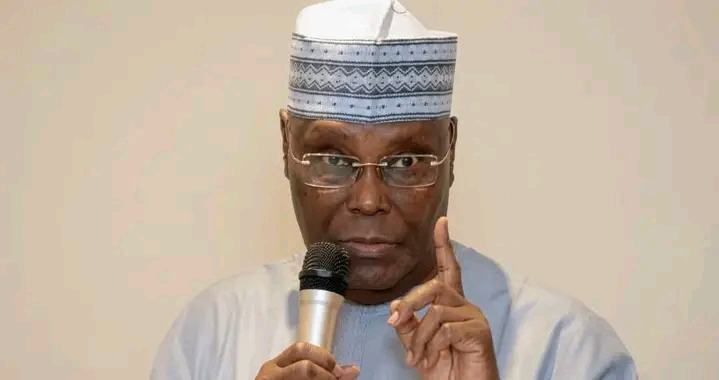
Former Vice President Atiku Abubakar has called on the Senate to reject President Bola Tinubu’s latest borrowing request of $7.7 billion, equivalent to about N10.79 trillion, warning that it could worsen Nigeria’s rising debt burden.
Atiku made the appeal in a statement issued on Wednesday by Phrank Shaibu, Director of Strategic Communication of the African Democratic Congress (ADC) Presidential Campaign Council.
He expressed concern over what he described as the Tinubu administration’s growing appetite for foreign loans, noting that the latest proposal came shortly after the Federal Government submitted another external borrowing request of $20.52 billion and €1.045 billion to the National Assembly.
Questioning the frequency of the government’s borrowing proposals, the former vice president said Nigerians should not be expected to accept successive loan requests as normal government business, given the financial obligations they would eventually create.

He accused the administration of depending heavily on borrowing to finance budget deficits instead of pursuing effective economic policies, adding that households and businesses were already struggling with the effects of rising living costs.
Atiku also faulted the lack of adequate information about the proposed facility, particularly the projects to be financed, their respective costs, interest rates and repayment arrangements.
He further questioned the provision in Tinubu’s letter to the Senate indicating that the final borrowing terms would be determined by market conditions at the time of pricing.
According to him, lawmakers must obtain comprehensive details of the proposed loan before considering its approval.
“The Senate must scrutinise this proposal line by line. It must demand a full project list, clear funding allocations, the proposed loan terms and a credible repayment plan before considering approval,” he said.
He maintained that the executive should not be allowed to contract foreign loans without clearly explaining their purpose and financial implications.
The ADC presidential campaign council also called on international financial institutions and other lenders to suspend further lending to the Tinubu administration until it provides transparent borrowing terms, a credible repayment framework and evidence of the benefits of previous loans.
Atiku criticised the government’s economic performance, arguing that despite the removal of the petroleum subsidy, Nigeria had continued to accumulate debts while citizens faced worsening economic conditions.
He described the situation as one of the country’s most severe cost-of-living crises, saying many households could no longer afford decent living conditions while businesses were finding it increasingly difficult to survive.
He also questioned the impact of government spending on infrastructure and social welfare, asking Nigerians to identify the projects funded through the country’s accumulated debts.
“Tinubu removed subsidy on petroleum products but has emerged as the highest borrowing government in Nigeria’s record history.
“Nigerians are hungry and angry. Public infrastructure are limited; social welfare intervention is none existent. Yet Nigeria is owing massively under Tinubu,” he said.
The former vice president, however, claimed that his alternative economic programme could address the country’s growing poverty and debt challenges.
He proposed a production-based subsidy on petroleum products, which he said would help restore social welfare and reduce the financial pressure on Nigerians.
Atiku urged the National Assembly to exercise its constitutional oversight powers by demanding satisfactory explanations from the Federal Government before approving the latest borrowing proposal.
He stressed that lawmakers owed their accountability primarily to Nigerians and should not approve additional debt without addressing concerns about its purpose, terms and repayment.