
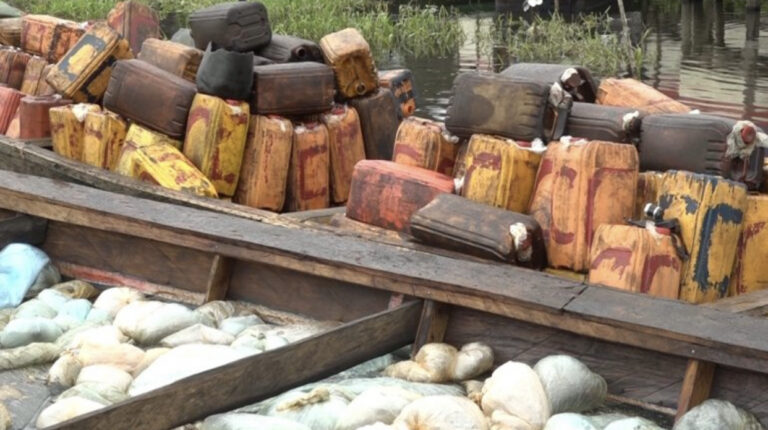
The Security and Economic Research Network (SERN) has called on residents of the Niger Delta to cooperate with security agencies in the fight against crude oil theft, illegal bunkering and illicit refining.
The organisation said community support and the provision of credible intelligence were essential to the success of military operations aimed at eliminating the activities.
SERN convener, Morris Victor, made the appeal in a statement on Friday, stressing that the campaign led by the Chief of Defence Staff, Olufemi Oluyede, required the active involvement of communities in oil-producing areas.
Victor warned that illegal oil activities were exposing residents to serious environmental and economic consequences, including the pollution of rivers and groundwater, destruction of mangrove forests and contamination of agricultural land.

He added that the activities were also endangering public health, food security and the livelihoods of people who depend on the environment for survival.
To highlight the scale of the problem, the SERN convener referred to an October 30 operational report by Defence Headquarters, which revealed that troops had dismantled 49 illegal refining sites and recovered 756,837 litres of petroleum products in the South-South during the period under review.
He also cited figures released by the Nigerian Navy, indicating that more than 7.48 million litres of stolen crude oil and illegally refined petroleum products were recovered between November 2025 and November 2026.
According to the figures, the Navy also deactivated 168 illegal refining facilities, destroyed 363 dugout pits and arrested 259 suspects within the same period.
Victor said the statistics demonstrated the magnitude of oil theft in the region and the need to strengthen intelligence gathering and cooperation between security agencies and host communities.
He called on traditional rulers, youth groups, women associations, religious institutions and other community stakeholders to distance themselves from criminal networks involved in the illicit oil trade.
“Oil theft may appear profitable to those involved in the criminal enterprise, but the communities are paying a much higher price through polluted rivers, destroyed mangroves, damaged farmlands, declining fish stocks and the gradual destruction of their natural heritage,” he said.
He encouraged residents to report suspicious movements of crude oil, illegal refining operations, unauthorised pipelines and vessels suspected of involvement in oil theft to the appropriate security agencies.
The SERN convener equally urged the military to maintain intelligence-led operations while upholding professionalism, respecting human rights and ensuring that innocent residents were protected.
Beyond security operations, Victor called on the Federal Government and relevant environmental agencies to intensify the remediation of polluted areas, rehabilitate damaged ecosystems and create alternative economic opportunities for youths in the region.
He argued that the fight against oil theft should not be limited to arrests and the destruction of illegal refining facilities but should also address environmental degradation, unemployment and the development needs of affected communities.
“Protecting the Niger Delta is a shared responsibility. The people must stand with the Armed Forces, not with criminal networks,” he added.