
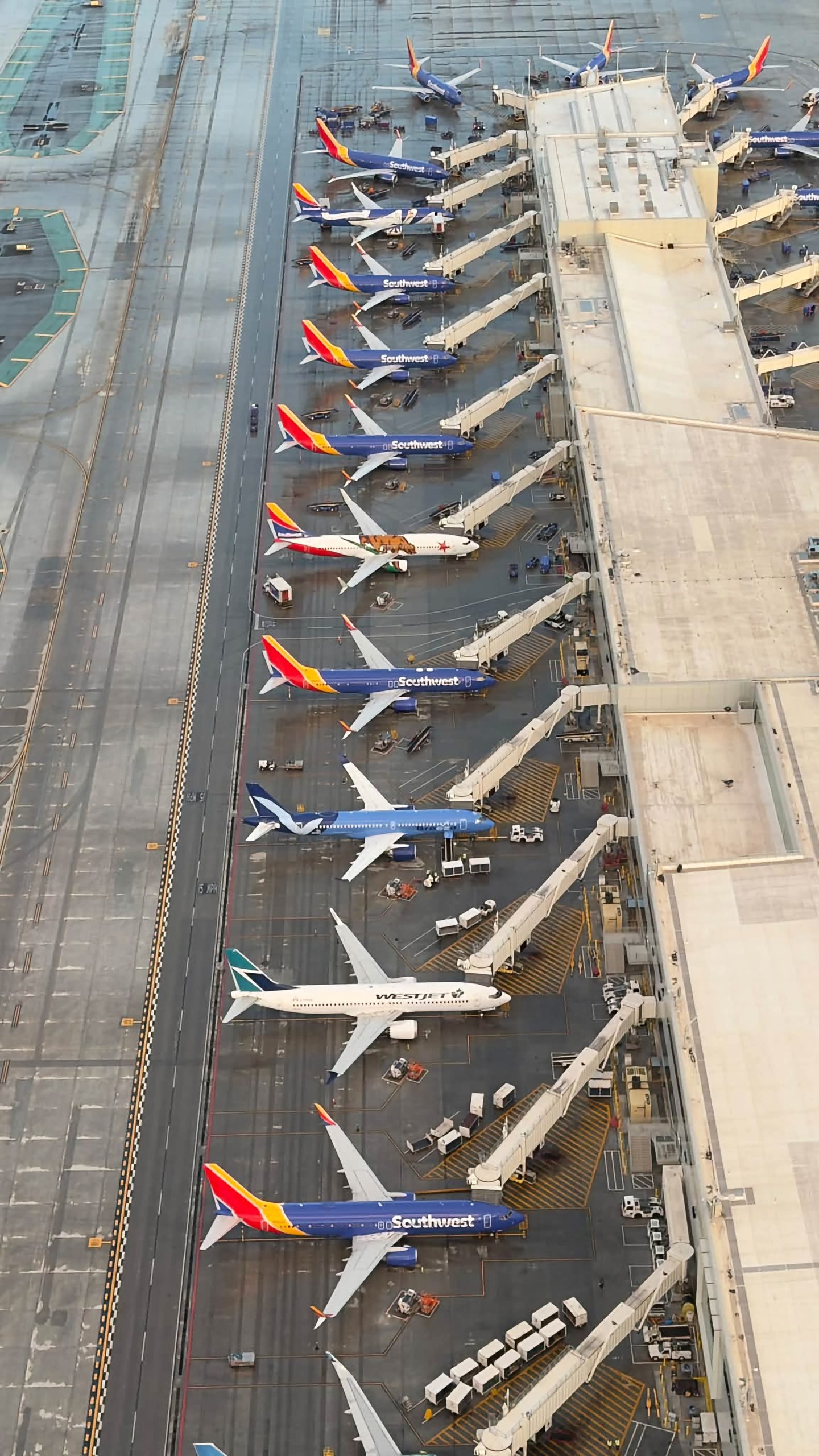
Nearly 50,000 flights have been delayed or cancelled across the United States in two days following a nationwide ground stop imposed by the Federal Aviation Administration (FAA) over telecommunications failures affecting air traffic control facilities.
The disruption, which started on Friday afternoon, left hundreds of thousands of passengers stranded at airports across the country and affected more than 1.5 million scheduled travellers.
The FAA subsequently imposed a nationwide restriction following communication failures at several air traffic control centres, forcing airlines to suspend operations.
The restrictions remained in place for more than four hours before the FAA lifted them at about 8:15 p.m. on Friday. However, significant delays and cancellations continued as airlines struggled to reposition aircraft and crews.

According to flight-tracking platform FlightAware, more than 4,200 flights had been cancelled and nearly 11,000 others delayed as of 9:40 a.m. on Saturday, bringing the number of affected flights over the two days to nearly 50,000.
Transportation Secretary Sean Duffy blamed the disruption on ageing aviation infrastructure, noting that the country’s air traffic control system still relied on decades-old analogue equipment that could no longer meet modern demands.
In a post on X, Mr Duffy said telecommunications problems began at FAA air traffic control and terminal radar approach facilities across the country at about 3:36 p.m. on Friday.
He called on Congress to approve $50 billion in emergency funding to modernise the agency’s infrastructure.
“Let’s not do a patchwork fix to a system that’s critical for every single family”
Mr Duffy said on Saturday that flights were gradually returning to normal but warned that passengers should expect further disruptions as airlines restored their operations.
Meanwhile, American Airlines, Delta Air Lines, United Airlines, Southwest Airlines and JetBlue announced travel waivers and flexible rebooking arrangements for affected passengers.
The incident exceeded the scale of the January 2023 nationwide FAA outage, which lasted less than two hours and resulted in about 1,300 flight cancellations and more than 10,000 delays.