
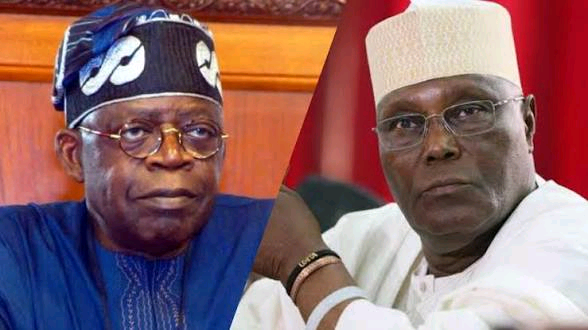
Former Vice-President Atiku Abubakar has questioned whether President Bola Tinubu’s recorded interview at the Presidential Villa was part of a $4.5 million lobbying arrangement carried out on behalf of Nigeria.
Atiku also challenged the presidency to explain why Tinubu had not granted Nigerian journalists an opportunity to ask him difficult questions on issues affecting the country.
In a statement issued on Wednesday by his Director of Strategic Communication, Phrank Shaibu, Atiku said United States filings identified Diana London as a consultant to DCI Group AZ, working for the Republic of Nigeria through Aster Legal.
According to him, the documents showed that DCI Group received a $4.5 million retainer but did not establish whether the recorded interview was among the services covered by the payment.

Atiku also questioned London’s decision to delete social media posts in which she reportedly praised Tinubu’s administration and Nigeria’s partnership with the United States.
He said Nigerians deserved an explanation for the removal of the posts, adding that her actions had raised concerns about whether difficult questions and uncomfortable answers would remain in the final version of the interview.
The former vice-president urged the presidency to release the complete, unedited recording to address doubts about the production.
He accused the Tinubu administration of turning an opportunity for public scrutiny into a publicity exercise, arguing that the government appeared more interested in promoting the interview than allowing the President to face credible questioning.
Atiku also criticised the presidency for announcing the interview as “coming soon” and using government appointees and social media handlers to publicise it like a film premiere, despite releasing only photographs from the recording.
He questioned the reason for the suspense, insisting that Nigerians did not need promotional pictures and announcements to hear their President respond to pressing national issues.
According to him, Tinubu had yet to face the kind of sustained questioning that Nigerian television journalists could offer, stressing that a credible presidential interview should accommodate spontaneous questions and follow-up inquiries.
He further demanded clarification on the terms of the interview and whether London’s professional relationship with a firm working for the Nigerian government would be disclosed when the programme was broadcast.
Atiku also raised concerns over photographs from the recording, which showed a large screen positioned in front of the President.
He questioned whether the screen contained prepared prompts, arguing that the presidency had not provided evidence that the questions were spontaneous or that Tinubu responded without prepared guidance.
He therefore called for the release of the full recording, including the contents displayed on the screen.
The former vice-president maintained that if the presidency had nothing to conceal, Tinubu should be willing to face Nigerian journalists in a live interview.
He specifically mentioned Rufai Oseni, Ojy Okpe, Seun Okinbaloye and Reuben Abati as experienced media professionals capable of questioning the President on issues of national importance.
Atiku said Tinubu should explain the rising cost of food, the inability of workers’ salaries to cover transportation expenses and when Nigerians could expect relief from the prevailing economic hardship.
He added that a flattering interview would not erase the poverty and hunger confronting citizens.
The former vice-president further demanded that the government publish the lobbying agreement, provide details of payments and invoices, identify those who approved the expenditure and clarify whether London’s interview was part of the contracted services.
He also asked who authorised the $4.5 million payment and the public account from which the money was withdrawn.
Atiku argued that Nigerians, who had been asked to endure the hardship associated with the removal of fuel subsidies, deserved to know whether the money saved was being spent on foreign publicity.
He referenced his Affordable Life campaign, which he said was aimed at making food, fuel and transportation affordable again.
Atiku insisted that Tinubu could not expect Nigerians to endure economic hardship while millions of dollars were allegedly committed to improving his public image.
He concluded by demanding the publication of the contract, release of the invoices and unedited interview, as well as an opportunity for the President to answer questions from Nigerian journalists.
The statement was signed by Phrank Shaibu, Director of Strategic Communication, ADC Presidential Campaign Council, and dated November 18, 2026.