
There is a road that every Igala son and daughter knows, even if they have never walked it. It runs from Idah, the ancient spiritual headquarters of the kingdom on the banks of the River Niger, to Anyigba, the bustling university town that has become its modern meeting point. Once a year, that road becomes more than asphalt and dust. It becomes memory, it becomes pilgrimage, it becomes home. That journey is the heart of Italo.
Known in full as Ujéjú-Ógu, Italo is not just a festival. It is the only royal festival of the Ata Igala held outside Idah, a deliberate act of kingship that began in the early 20th century when the Ata would travel to Anyigba to hold court, receive royal homage, settle communal disputes, and sit face-to-face with traditional rulers, title holders, clan leaders and community representatives. It was governance made visible. It was royalty coming to the people, listening to them in their own land, sharing their food, hearing their grievances, blessing their harvests and their children. Over time, it became something larger than a royal visit. It became Igala National Day. A homecoming. A reunion. A congress of identity where the past and the present meet in the same square.
This December, that homecoming returns in grand style. The 96th edition of the Italo Cultural Festival is scheduled for December 30 and 31, 2026, in Anyigba, Kogi State, under the theme: “Celebrating Our Heritage, Preserving Our Culture and Uniting Our People.” It is being organised jointly by the Igala Area Traditional Council and the Igala Cultural and Development Association, under the chief hostship of His Royal Majesty, Agaba’idu Dr. Matthew Alaji Opaluwa Oguche Akpa II, the Ata Igala. Already, the anticipation is building across the kingdom and far beyond it, in Lagos, Abuja, Port Harcourt, Kano and in diaspora communities in London, Houston, Toronto and Dubai, where Igala associations are planning group returns, booking buses, sewing aso-ebi and rehearsing dances they learned as children.
For eleven long years, Italo fell silent. Political violence and division forced its suspension, and with it, many Igala elders say, the nation lost its loudest collective voice. The Igala, acclaimed as the 9th largest ethnic group in Nigeria, found itself fragmented, its sons and daughters scattered, its unity strained, its young people growing up without ever seeing the Ata in Anyigba, without ever hearing the royal drums echo through the town. When the present Ata Igala ascended the throne, one of his first acts was to call for its restoration, insisting that no quarrel, no election, no season of bitterness should be allowed to rob a people of their memory. In December 2022, after an 11-year hiatus, Italo returned to Anyigba. The turnout was massive. The drumming was louder. The tears, for many, were real. The annual celebration of cultural heritage has resumed, the Ata declared then, noting that over the years Italo served as a congruency of Igala unity and socio-cultural cohesion. He prayed that the events that led to its suspension would never be repeated. Since that revival, Italo has become a symbol of reawakening, proof that a people can lose their festival and find themselves again through it, and proof that culture can heal what politics has broken.
The Igala Kingdom itself is one of the oldest and most storied in Nigeria. Its history stretches back centuries, shaped by the Niger and Benue rivers, by trade, by war, by migration and by a sophisticated system of kingship that survived colonial rule and the creation of modern states. Idah remains its spiritual heart, home to the Ata’s palace, to sacred groves and to traditions that predate Nigeria itself. Anyigba, by contrast, is its youthful energy, home to Prince Abubakar Audu University, to markets that never sleep, to students from all over the country, to a generation that is both deeply Igala and thoroughly modern. Italo brings those two worlds together, the ancient and the contemporary, the throne and the campus, the elder in royal regalia and the student in jeans, both dancing to the same drum.
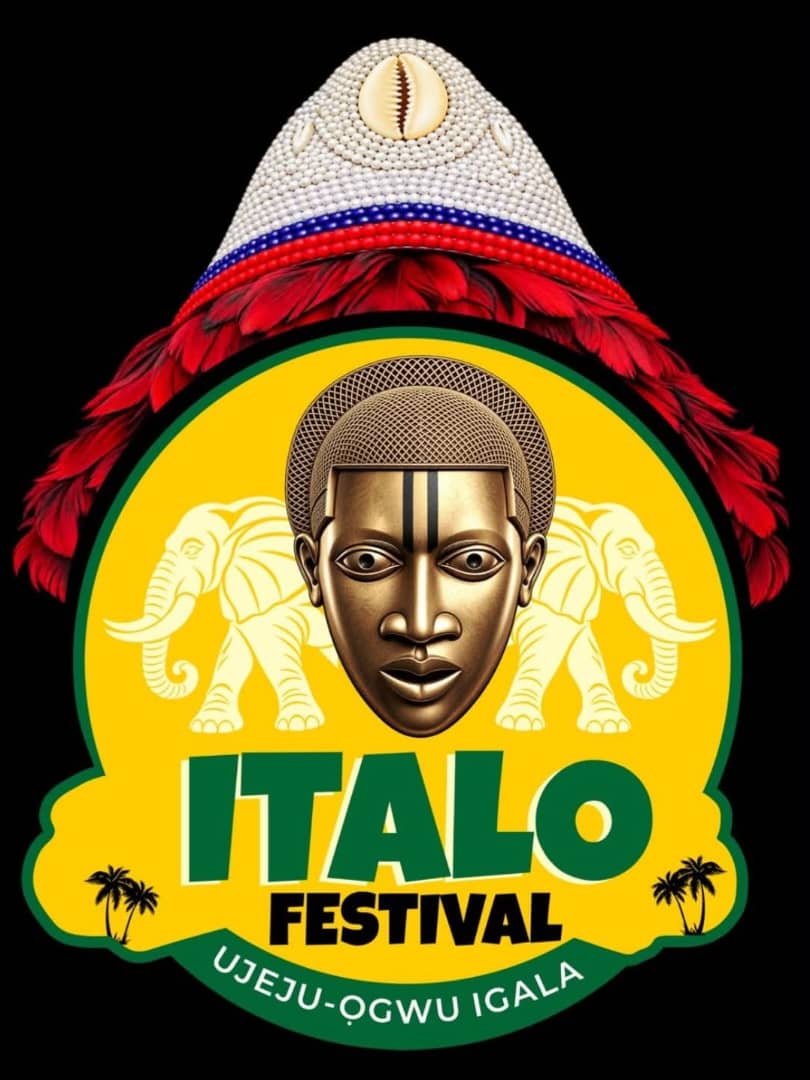
On November 13 in Abuja, the Ata, represented by Commodore Godwin Obaje (rtd), Chairman of the Central Planning Committee, unveiled the official logo and mascot for ITALO 2026. Every element was deliberate, and every element was explained with pride. The royal crown, Onumu-Ere, stands for traditional authority, honour and dignity. The Ejebuje-Ailo mask speaks to the sacred, spiritual dimension of the Ata Igala institution, a reminder that kingship in Igala land is not merely political but spiritual, a trust held on behalf of ancestors and unborn generations. And the elephant, strong, majestic and unhurried, symbolises strength, majesty and resilience, the quiet power of a people who have endured. Together, they tell the Igala story without a single word: a kingdom that is royal, spiritual, and enduring.
The 2026 edition is designed as a two-day cultural immersion, but in truth, for many families, it will feel like a week-long homecoming. Wednesday, December 30 will open with an Awards Night honouring iconic Igala personalities and legends who have distinguished themselves in service to the nation, men and women whose names are spoken with respect in villages and cities alike, teachers, soldiers, doctors, entrepreneurs, artists, traditional rulers and public servants who carried the Igala name with dignity. That same night, the grand finale of the Face of Italo Beauty Pageant will crown the new Miss Igala 2027, a celebration not just of beauty but of poise, intelligence, cultural knowledge and pride, a young woman who will become an ambassador for the kingdom in the year ahead.
Thursday, December 31 is the Main Cultural Festival Day, the grand finale, the day the whole town has been waiting for. Expect a colourful cultural procession featuring traditional performances from the nine Igala-speaking local government areas, each bringing its own drums, its own dances, its own masquerades, its own style of dressing, its own way of telling the same story. Expect a food fair showcasing Igala cuisine, from the famous Igala delicacies to roasted yam, to the soups and stews that mothers and grandmothers have perfected over generations. Expect music, entertainment, gala night, and above all, the ceremonial entry of the Ata Igala, royal homage and royal blessings, the moment when the crowd rises, when the drums change tempo, when the kingdom, in all its diversity, bows as one to its king. It is the moment when Anyigba stops being just a town and becomes a stage for an entire civilisation.
Organisers are insistent on one point: Italo 2026 will remain strictly cultural and social. No political campaigns. No politically branded vehicles, clothing or materials. In a season just weeks before Nigeria’s 2027 general elections, that decision is deliberate, a firewall to protect culture from politics, a declaration that Italo belongs to every Igala person, regardless of party, regardless of candidate, regardless of whom they will vote for. Security, too, has been taken seriously. A multi-agency security sub-committee led by an Assistant Inspector-General of Police, comprising representatives of the DSS, Nigerian Army, Navy, Air Force and local vigilantes, will cover all access routes and festival venues, so that families can come with their children, elders can come without fear, and visitors can experience Igala hospitality at its best.
But beyond ceremony and security, Italo is also economics, and increasingly, its organisers are speaking openly about that. Farmers, traders, manufacturers and food vendors will showcase their products. Tourism and investment opportunities will be on display. Hotels, transporters, tailors, photographers, caterers and artisans in Anyigba and across Kogi East are already preparing for the influx, knowing that a festival of this scale is not just celebration but livelihood. Youth and women empowerment, promotion of the Igala language, and cultural preservation are listed as core objectives, and they are not empty words. In workshops, in pageants, in language competitions, in the very act of gathering, young Igala people are being taught that their language is not old-fashioned, that their dress is not backward, that their history is not a burden but an inheritance.
To understand Italo is to understand what is at stake for the Igala people. Language is fading among the young, replaced in many homes by English and Pidgin. Many in the diaspora have never seen Anyigba except in photos, have never tasted its food except in their mother’s kitchen abroad, have never heard the royal drums except on a phone video. Elders who carry oral history, who know the proverbs, the genealogies, the praise songs, the meaning of every bead and every mark, are passing on, and with them, a library is closing. Italo is the counterweight. It is where a child in Lagos or London hears the drums of his ancestors for the first time, not as a museum piece but as a living sound. Where a young woman learns the meaning of the beads she wears, why her grandmother tied her wrapper a certain way, why certain colours are reserved for certain occasions. Where a farmer from Ibaji meets a professor from Dekina and discovers they are cousins in a larger story, bound not just by blood but by a shared kingdom.
It is also where the Igala nation speaks to Nigeria and to the world. In a country of over 250 ethnic groups, where many smaller cultures fear being swallowed, Italo is a declaration: we are here, we are proud, we are united, and we have something to offer. It is cultural diplomacy at its most authentic, not staged for cameras but lived by a people. As Commodore Obaje put it at the unveiling, the 2026 edition is designed to rekindle the cherished tradition, reconnect the people with their roots and project the cultural heritage of the kingdom to the international community. The Ata himself is optimistic that ITALO 2026 will become a major cultural landmark capable of projecting the history, traditions and values of the Igala Kingdom beyond Nigeria’s borders.
On December 30 and 31, Anyigba will answer that call again. The drums will sound. The masquerades will dance. The food will be served. The Ata will arrive. And a kingdom, scattered across Nigeria and the world, will come home to itself, to remember who it was, to celebrate who it is, and to decide, together, who it will become.
Italo 2026: A Kingdom Comes Home To Itself In Anyigba
64