
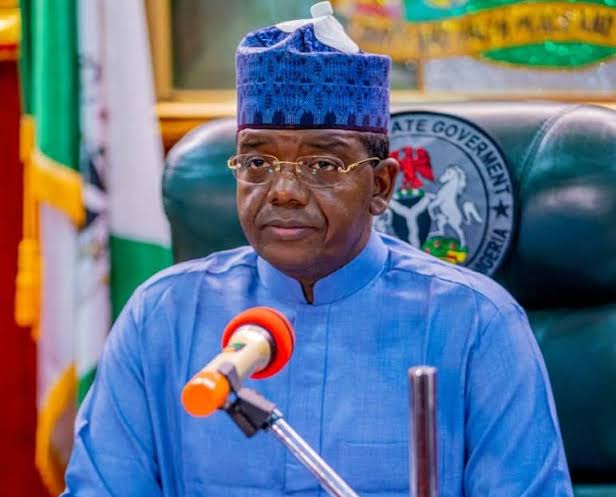
A coalition of Nigerians in the United States has strongly criticised recent remarks by US lawmaker, Kimberly Daniels, describing her call for the removal of Bello Matawalle as “ill-informed, externally influenced, and injurious to Nigeria’s sovereignty”.
Operating under the banner of the Nigerian-American Coalition for Strategic Stability (NACSS), the group said the intervention by the US lawmaker reflects a troubling pattern of foreign commentary shaped by actors with little understanding of Nigeria’s complex security environment.
In an e-statement issued on Thursday and signed by its convener, Dr Maxwell Akarachi, the coalition warned that attempts to scapegoat key officials within Nigeria’s defence architecture risk distorting facts and emboldening those working against the country’s stability.

Akarachi said Daniels’ position appeared “curiously aligned with narratives long promoted by vested interests intent on discrediting Nigeria’s security institutions,” raising concerns about the motivations behind her claims.
“It is deeply concerning that a foreign legislator would adopt such a narrow and accusatory stance without engaging the full spectrum of stakeholders or appreciating the progress being made under extremely difficult circumstances,” he said.
The group argued that Nigeria’s security challenges, particularly in the north-central and north-west regions, are the result of years of structural vulnerabilities, cross-border criminal networks, and evolving asymmetric threats that cannot be reduced to the actions of a single office holder.
According to Akarachi, portraying Matawalle as a liability based on “unproven and recycled allegations” not only undermines ongoing security efforts but also risks legitimising misinformation at a time when coordinated action is most needed.
“Those pushing these narratives know exactly what they are doing. They are attempting to fracture confidence in Nigeria’s defence leadership by amplifying half-truths and presenting them as established facts,” the statement read.
The coalition maintained that since his appointment under the administration of Bola Tinubu, Matawalle has been part of a broader, coordinated push to strengthen military operations, enhance intelligence sharing, and stabilise troubled regions.
While acknowledging that security incidents continue to occur, the group noted that there have been incremental but significant gains in disrupting armed groups and restoring access to communities previously overrun by bandits.
Akarachi also questioned the timing of Daniels’ remarks, suggesting they could be exploited by groups seeking to internationalise Nigeria’s internal security discourse for political or strategic gain.
“When foreign voices echo unverified claims and prescribe drastic actions, it raises legitimate questions about whose interests are truly being served. Nigeria must not become a theatre for externally driven narratives that weaken its institutions.”
The coalition further emphasised that accountability within Nigeria’s security sector must be pursued through established legal and institutional frameworks, not through what it described as “public campaigns orchestrated from afar”.
It urged international partners to exercise caution and responsibility in their engagements with Nigeria, stressing that constructive collaboration, not accusatory pronouncements, is essential in addressing shared security concerns.
“We welcome global partnerships, but such partnerships must be grounded in respect, accuracy, and a genuine commitment to solutions,” Akarachi added.
The group concluded by calling on Nigerians at home and in the diaspora to remain vigilant against what it termed “coordinated attempts to delegitimise national institutions,” insisting that the country’s security challenges require unity, resilience, and strategic clarity.
“Hard times demand steady leadership, not opportunistic criticism. Nigeria’s path to stability will not be dictated by external pressure, but by the strength and coherence of its own institutions,” the statement added.