
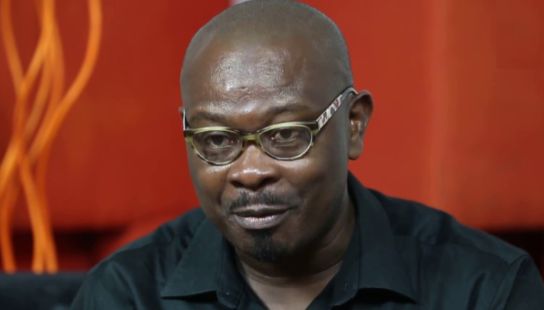
Okechukwu Nwanguma, the Executive Director of the Rule of Law and Accountability Advocacy Centre (RULAAC), has described the country’s democracy as “work in progress”.
Mr Nwanguma said this in an interview with journalists in Owerri on Thursday, pointing out that democracy in the country was facing multiple challenges.
He said that while Nigeria had successfully sustained civil rule since 1999, conducted successive elections, and witnessed the transfer of political power, “democratic performance in key areas remains deeply discouraging”.
According to him, our democracy has failed to deliver its full dividend to the majority of citizens.

Evaluating the safety of the nation’s civic space, compared to the 1999 transition year, he said that the current political landscape was both more open and intensely contested.
He said that the expansion of independent media, civil society organisations, and digital platforms had greatly democratised access to information and amplified voices previously excluded from public discourse.
Yet, Mr Nwanguma warned that the freedom was threatened by severe pressure.
“Journalists, activists, and critics of government continue to face harassment, intimidation, habitual arrests, and prosecution under broadly interpreted cybercrimes and security-related laws,” he said.
The rights advocate pointed to the historic EndSARS protests as a critical turning point that exposed a subtle return to authoritarian tactics by state security forces.
He said that the experience of the movement “remained a stark reminder of how the state responds to peaceful civic engagements in ways that quickly become repressive”.
Mr Nwanguma argued that “even years after the protest, there are reports of continued surveillance, intimidation, and targeting of activists and citizens perceived as critics of authorities”.
He said that attempts to regulate online expression continued to suppress freedom of speech.
He spoke on “the true meaning of June 12 anniversary”, saying that the endurance of democracy should not be measured solely by the absence of military rule.
He said that a vibrant civic space must not be viewed as a threat to national security, but as one of the strongest pillars of democratic governance.
“The true test is whether citizens can freely express opinions, criticise those in power, organise peacefully, and seek accountability without fear of reprisals,” Mr Nwanguma said.
He called on the federal government to “safeguard these fundamental rights”.
He said the single greatest threat to the country’s democracy was the systemic weakening of institutional accountability and the growing concentration of power without effective checks and balances.
He decried the rising intolerance for dissent, the weakening of oversight institutions, and a political culture where loyalty to individuals was taking precedence over competence and the rule of law.
“This decay has fueled a deepening distrust between the citizens and government, creating fertile ground for instability, authoritarian tendencies, and political apathy,” Nwanguma said.
He called for an immediate and comprehensive commitment to strengthen institutional accountability, beginning with a total overhaul of security agencies.
“President Bola Tinubu should demonstrate leadership by ensuring absolute transparency, respecting court orders, protecting oversight institutions, and enforcing zero tolerance for abuse of power, unlawful detentions, and extrajudicial actions.
“June 12 symbolises the struggle for democratic rights and popular sovereignty.
“Therefore, the best way to honour that sacred legacy is to build public institutions that serve the law and protect the people, rather than narrow political interests,” the activist said.