
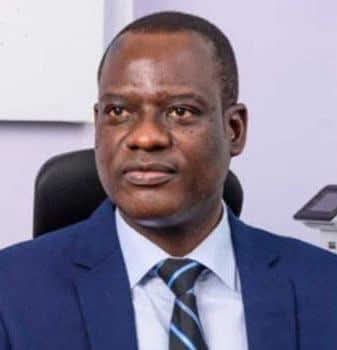
The Minister of Finance and Coordinating Minister of the Economy, Mr. Taiwo Oyedele, on Monday mounted a robust defence of the Tinubu administration’s borrowing record, insisting that the Federal Government had not borrowed anywhere near the N75 trillion to N80 trillion being attributed to it.
Speaking during a four-hour interactive session with the Senate Committee on Finance chaired by Senator Sani Musa, Oyedele said the sharp increase in Nigeria’s public debt was largely the result of the naira’s exchange rate adjustment, the securitisation of inherited Ways and Means advances, and refinancing of maturing obligations rather than fresh borrowing.
He also disclosed that the Federal Government generated N21.6 trillion in tax revenue between January and June 2026, representing a 49 per cent increase over the corresponding period of last year.
Providing a detailed explanation of the debt profile, Oyedele rejected claims that the Tinubu administration had borrowed up to N80 trillion.

“For external loans, we always require the approval of the National Assembly. What usually happens is that once the National Assembly approves a borrowing plan, many people interpret that as money already borrowed.
“We have not even taken half of what the National Assembly approved,” he said.
According to him, over N40 trillion of the increase in Nigeria’s debt stock resulted solely from the revaluation of existing foreign debts following the depreciation of the naira after the exchange rate reforms. He added that another N33 trillion arose from the securitisation of Ways and Means advances inherited from the previous administration.
“The actual amount this administration has borrowed is nowhere near what many people believe,” Oyedele said.
“Even for domestic borrowing, much of it is refinancing. Debt that was borrowed previously matures, and the government raises new debt to refinance it. That is not new borrowing.”
Responding to concerns that improved revenue should have reduced borrowing needs, he explained that government expenditure still substantially exceeded available revenues because of growing statutory obligations.
“If our expenditure requirement is N10 and our projected revenue is N6, we borrow N4. If revenue later increases to N7, we still need to borrow N3 because expenditure remains N10,” he said.
He listed major expenditure pressures as debt servicing, the new national minimum wage, salary adjustments, education financing through NELFUND and other statutory commitments.
Oyedele painted an optimistic picture of the economy, saying reforms initiated over the last three years had restored macroeconomic stability.
“Three years ago, our economy was on the brink of severe distress. Today, we have made significant progress.
Macroeconomic fundamentals are improving, investor confidence has returned, fiscal revenues are increasing and the economy is better positioned for sustained domestic and external growth.
These reforms were not easy, but they were necessary. Without them, it would have been almost impossible to stabilise the economy,” he said.
He disclosed that Nigeria’s Gross Domestic Product grew by 3.8 per cent in Q1 2026 compared with 3.13 per cent in Q1 2025, with the non-oil sector driving much of the expansion. Tax collections climbed to N21.6 trillion in the first half of the year.
“Allowing tax evasion to persist amounts to taxing honest taxpayers while rewarding non-compliance. That is not the kind of country we seek to build,” he said.
He also disclosed that Nigeria’s external reserves had risen above $51 billion, the highest level in 17 years, providing more than 10 months of import cover, while net reserves stood at approximately $40 billion.
“Inflation remains one of our greatest macroeconomic challenges because it directly affects household welfare and purchasing power.
However, coordinated fiscal and monetary policies are beginning to moderate inflation,” he said.
Oyedele defended tax incentives and import duty waivers, saying figures often quoted represented the value of imported goods covered rather than the actual tax concessions. He said many waivers covered military hardware, food imports, pharmaceuticals, CNG equipment, electric vehicles and industrial raw materials.
“We do not want to impose excessive taxes that would ultimately increase the prices of goods and services and make life more difficult than it already is,” he said.
Earlier, Senator Sani Musa described the session as one of the most comprehensive engagements between the National Assembly and economic managers.
“We have never had a meeting where the minister came with his entire team. This means that whenever there are questions the minister may not answer directly, the relevant directors who are knowledgeable in those areas can provide the necessary clarifications,” he said.
Musa said the committee would scrutinise debt sustainability and investigate whether import duty waivers were utilised strictly for their approved purposes.
“We need to understand the true state of our foreign debt. What measures is the government taking to ensure these debts do not become an unbearable burden?
We also intend to investigate whether import duty waivers were utilised strictly for the purposes for which they were approved,” he stated.
He added that both the executive and legislature agreed the budget framework needed reforms: “We also felt that what the National Assembly legislators and the executive need to look at is the budget framework itself because you can see so many line items that keep repeating every year, adding more pressure to the budget.”
Senate Chief Whip, Senator Tahir Monguno, however, questioned why rising revenues had not translated to budget implementation.
“If revenue performance has improved so significantly, it appears inherently contradictory that the government is still struggling to implement the budget. Where is the revenue going?” he asked.
Monguno noted that security agencies told the committee they had received “zero capital releases.”
“The dividends of democracy are delivered through the implementation of the budget, particularly capital projects. If the budget is not being implemented, then the fundamental purpose of government is undermined.
For example, the security of lives and property is the primary responsibility of government. Yet all the security agencies that have appeared before this committee informed us that they have received zero capital releases.
Why is the budget not being implemented? Failure to implement an Appropriation Act amounts to a breach of the law, and such a breach is an impeachable offence,” he said.
He also demanded clarification on why about N1.7 trillion out of approximately N3.7 trillion reportedly accruing to the Federation Account last month was retained rather than distributed.
Responding, Oyedele assured lawmakers that FAAC distributions were being carried out strictly in accordance with constitutional provisions and pledged continued transparency in debt management.
Senator Adamu Aliero also expressed concern over the rising debt profile despite infrastructure projects like the Lagos-Calabar Coastal Highway and Sokoto-Badagry Highway, noting that “budget implementation remained well below expectations.”
The committee resolved to sustain oversight of public finances, debt management and fiscal reforms.