
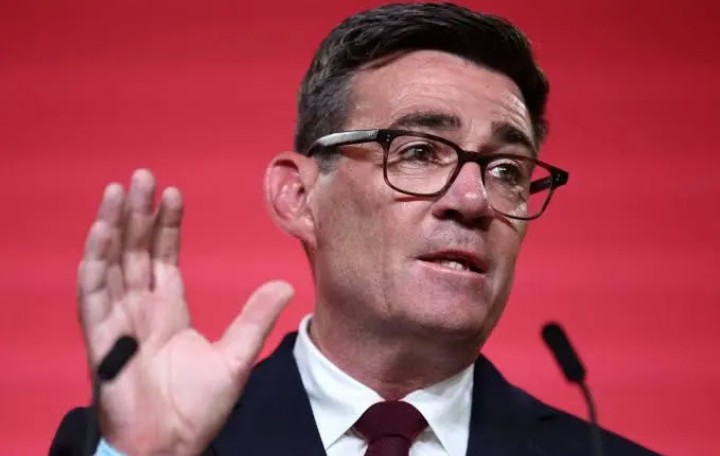
British Prime Minister Andy Burnham has announced plans to remove value-added tax (VAT) from household electricity bills from October 1, describing the measure as one of the first steps by his new administration to help families cope with the rising cost of living.
The tax cut, unveiled on Tuesday during Burnham’s second day in office, is expected to reduce the average annual electricity bill by about 45 euros, based on the current average household bill of 1,862 euros.
According to Burnham, the initiative will be financed through savings from the cancellation of a proposed 1.8 billion-euro digital identity programme, a decision his government announced on Sunday.
”We’re taking immediate action to reduce taxes on energy bills, leave more money in people’s pockets and restore hope,” the prime minister said, reiterating his promise to give households greater financial relief.
The electricity tax reduction is among several early policies Burnham hopes will demonstrate his government’s commitment to addressing the cost-of-living crisis and rebuilding public confidence after years of economic hardship.
However, some energy analysts argue that the measure may provide only limited relief, especially as rising gas prices linked to the conflict in the Middle East are expected to push Britain’s energy price cap higher in October.
Energy costs have remained a major burden for British households since wholesale gas prices surged following Russia’s invasion of Ukraine in 2022. Although prices began to decline in mid-2023, electricity bills are still estimated to be as much as 60 per cent higher than before the energy crisis.
During the previous Conservative administration, billions of pounds were spent on energy support schemes to cushion households from soaring utility costs.
Reacting to Burnham’s announcement, the End Fuel Poverty Coalition described the move as a positive signal but maintained that it falls short of addressing the full scale of the financial challenges facing many families.
Similarly, Resolution Foundation Chief Executive Ruth Curtice said the tax cut could disproportionately benefit higher-income households because it is not specifically targeted at those most in need. She argued that the funds could have been better used for direct support, particularly with energy bills projected to rise by more than 150 euros in October.
Burnham has indicated that more policy measures will be introduced in the coming weeks. He said his administration is focused on delivering changes that people, especially low-income earners, will experience quickly.
The strategy is seen as part of Labour’s effort to strengthen public support and counter growing competition from the opposition Reform UK party, led by Nigel Farage.
Widely known as the “King of the North” for his leadership in Greater Manchester, Burnham enters office as one of Britain’s most popular political figures. Nevertheless, Britain’s recent history of frequent changes in prime ministers highlights the pressure on new leaders to produce results quickly.
In his first address as prime minister on Monday, Burnham pledged to eliminate rough sleeping across Britain and said his government would also consider measures such as capping bus fares, building on similar policies introduced during his tenure as Mayor of Greater Manchester.
He said improving the welfare of ordinary citizens would remain at the centre of his administration’s agenda.
Reuters/NAN
UK’s New Prime Minister Andy Burnham Unveils Energy Bill Tax Relief Plan
103