
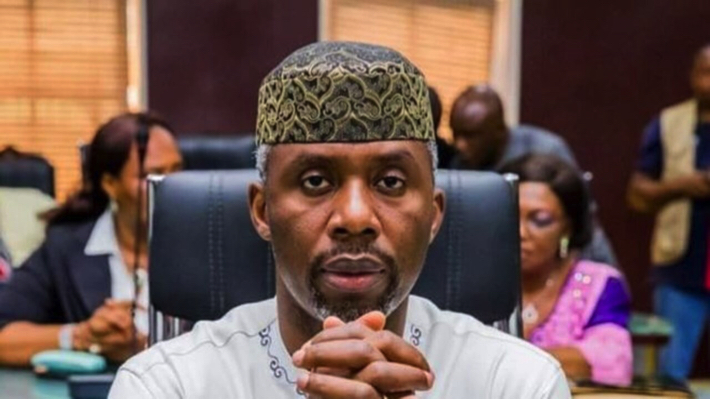
Former Imo governorship candidate and ex-Chief of Staff to the Imo State Government, Uche Nwosu, has called for a comprehensive reform of the traditional Igbo apprenticeship system, urging stakeholders to modernise the model while preserving its core values.
Nwosu made the appeal while delivering a keynote address titled “Rebuilding the Igbo Apprenticeship System for a New Generation” at the 2026 Igbo National Convention organised by the Igbo Union Canada, according to a statement issued on Sunday.
He described the apprenticeship scheme—widely known as Igba Boi, Imu Ahia and Imu Oru—as one of the most successful indigenous economic structures that has produced generations of entrepreneurs.
According to him, the system existed long before modern business concepts such as mentorship, startup incubation, venture capital and professional networking became popular.
He explained that the model equips young people with practical business knowledge, including customer relations, negotiation, inventory management, market operations and ethical business practices.
Nwosu noted that beyond training apprentices, the system traditionally enabled them to establish their own businesses through financial support, equipment, merchandise, business contacts or access to customers upon completing their service.
He also highlighted the role the apprenticeship model played in rebuilding Igbo businesses after the Nigerian Civil War, saying it helped many families recover economically and produced thousands of successful traders, manufacturers, transport operators, artisans, importers and employers.
Despite its achievements, he acknowledged that the system has shortcomings that require urgent attention.
He observed that some apprentices were denied settlement after completing their training, while others suffered exploitation due to the absence of legally recognised agreements. He also pointed out that women had often been left out of the system and that many apprentices were not being equipped with digital, financial and technological skills needed in today’s economy.
Nwosu stressed that traditions remain relevant when they evolve to meet changing realities without abandoning their fundamental principles.
To strengthen the system, he proposed the introduction of written apprenticeship agreements, structured training programmes, clearly defined settlement arrangements, safe working environments, recognised certification and effective mechanisms for resolving disputes.
He further advocated greater participation of women, arguing that excluding them would limit the future growth of Igbo enterprise.
Nwosu also called on members of the Igbo diaspora to contribute through mentorship, investment, technology transfer and access to international markets, encouraging every successful Igbo professional abroad to mentor at least one aspiring entrepreneur.
In addition, he urged the Igbo Union Canada to ensure that its proposed Igbo House functions not only as a cultural centre but also as a hub for entrepreneurship, innovation, skills development, mentorship and investment.
He emphasised that long-term prosperity depends on passing knowledge to younger generations while embracing accountability, education, technology and global opportunities.
According to him, reforming the apprenticeship system would ensure it remains a powerful driver of economic growth for future generations rather than merely a celebrated part of Igbo history.
(NAN)
Ex-Imo Governorship Aspirant Advocates Overhaul of Igbo Apprenticeship Model
135