
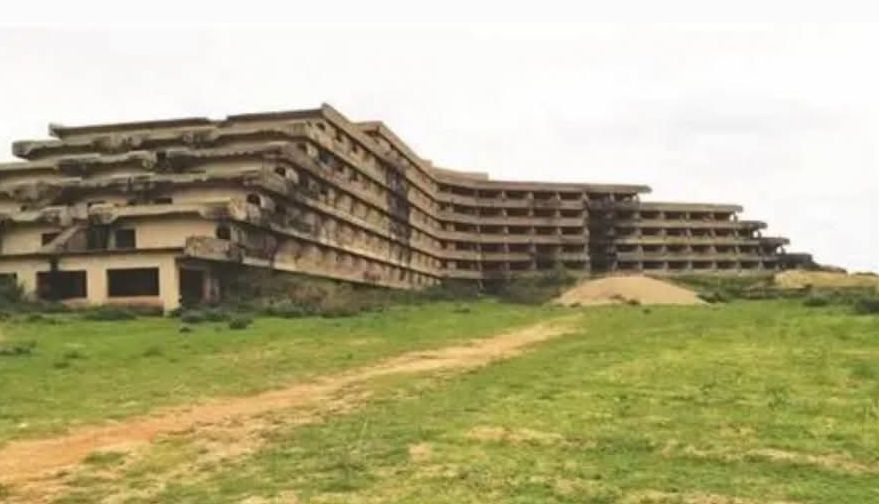
Stakeholders are demanding the resuscitation of the state-owned moribund industries across Ekiti, Osun and Ondo States to tackle unemployment and boost economic growth.
They noted that reviving the moribund companies would help move the states from civil-service dependence to thriving industrial hubs.
In separate interviews on Sunday, the stakeholders argued that a recurring pattern of policy inconsistency, structural neglect, bad management and high operational costs had left most of the historic factories moribund.
They noted that the three states, once dotted with thriving factories, are now marred by the skeletal remains of moribund industries, noting that “these silent giants” stand as stark reminders of lost potential and a struggling economy.

For years, Ekiti State’s economy was largely civil-service driven, with many state-owned agro and industrial projects either abandoned, underfunded, or poorly managed.
For instance, the Ikun Dairy Farm in Moba Local Government Area, abandoned for over 40 years, was supposed to be a flagship dairy and livestock project but lacked equipment, cattle and working capital.
The multi-million naira poultry farms initiative, involving wooden-shed poultry construction units across 16 local government areas, initiated by former Governor Ayodele Fayose, had completely failed.
Also, the Ikogosi Warm Springs Resort and other Tourism/Community Assets were listed among abandoned flagship projects needing commercial and technical viability review.
The common causes and challenges cited for the collapse of these industries were poor infrastructure, lack of power, insecurity, weak private-sector participation, and mismanagement.
Speaking on the development, Ekiti-based entrepreneur Segun Ibitola urged the state government to do more to upgrade the Ikun Dairy Farm to meet internationally acceptable standards and generate export earnings.
Mr Ibitola lamented that the dairy farm used to be the best in the 1980s and 1990s, producing milk that was sold at affordable prices to people at the grassroots.
However, the Ekiti State Commissioner for Industries, Trade and Investment, Omotayo Adeola, said the state would focus on boosting micro, small and medium enterprises (MSMEs).
She noted that the state government remains resolute in providing a conducive business environment supported by sound policies, infrastructure development and technical assistance to enable enterprises to grow.
Mrs Adeola mentioned the Ekiti-Egypt Industrial Investment Mission in July 2026, which secured potential investments worth up to $500 million, as a good case to buttress her point, with a focus on agriculture, agro-processing, commercial farming, seed production, textiles, manufacturing and solid minerals.
According to her, the government’s immediate priority is to convert expressions of interest into concrete investments through site visits, commercial agreements, capital deployment, and the establishment of factories.
The commissioner disclosed that a 76 per cent stake in Ikun Dairy Farm had been sold to Promasidor Nigeria Limited.
“Ikun Dairy Farm is now operational for the first time in 40 years, producing over 80,000 litres of milk per month, with a full capacity target of 10,000 litres per day and a $5 million new investment for equipment, cattle and out-grower feed scheme,” she said.
The commissioner said Ikogosi Warm Springs already had a deal with Irin Ajo Travels and Tours and Future Africa to take over and operate it, and listed other PPP initiatives now operational, including FMS Farms, JMK Foods, Promise Point, AROG Limited, Stallion Group, and Egbeja Snail Village.
“On agriculture, YSJ Farms is now operating, processing and packaging Igbemo Ofada Rice, cassava, yam, maise, etc. Off-takers now come from Lagos, Ondo, Osun, Kwara. Over 1,000 youth farmers are engaged.
“NBS records Ekiti as having the lowest food inflation in Nigeria due to this surge,” she said.
Mrs Adeola said the administration had replicated and revived the Awolowo-era Farm Settlements, with three Renewed Hope Farm Dormitories commissioned in Eporo, Iyemero, and Ikere, with 13 more created.
She said the administration was also leveraging infrastructure development and providing an enabling environment for old industries to revive and for new ones to emerge.
“There is a clear-cut policy to revisit the commercial and technical viability of abandoned projects, security infrastructure to make Ekiti safe for investment, as well as a $1.6m 350KW hydropower and 7.5MW gas turbine project approved, plus solar and metering programs,” Mrs Adeola said.