
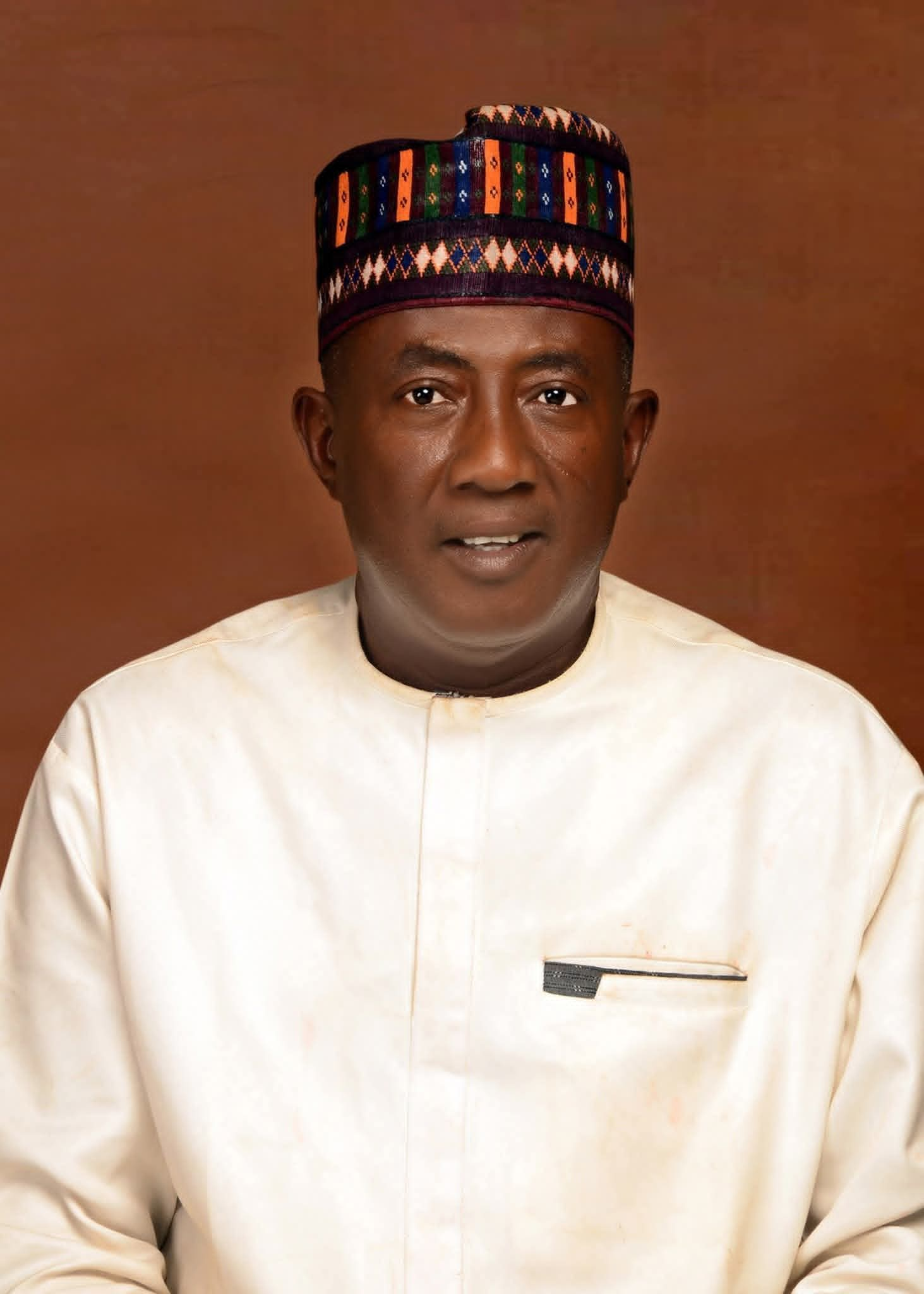
The twin flyovers being constructed in Mararaba by Governor Abdullahi Sule of Nasarawa State are more than a response to traffic congestion. They offer an opportunity to transform the Karu–Mararaba axis into a modern urban centre, attract investment, create jobs and expand the state’s revenue base.
For years, motorists travelling between Nasarawa State and Abuja have endured hours of gridlock around Mararaba. The congestion wastes productive time, raises transport costs and frustrates daily commuters. The flyovers are designed to ease this burden, but their wider significance lies in the economic opportunities that improved access could unlock.
With his background as an engineer and corporate executive, Governor Sule understands the role infrastructure plays in development. The challenge is not simply to move vehicles faster through Mararaba but to use improved connectivity as a foundation for urban renewal.
The N39 billion project, flagged off in December 2025, comprises two flyover bridges and associated road infrastructure. In August 2026, the state government announced that completion was expected by December.

Critics who describe the project as a misplaced priority are entitled to question public spending. However, the assessment should go beyond the construction cost to consider the economic losses caused by persistent congestion and the investment opportunities that better roads could create. Public infrastructure should be judged not only by what government spends but also by the productive activities it enables.
Karu and Mararaba occupy a strategic position beside the FCT. Thousands of people who work in Abuja live in these communities because of their proximity to the capital. Yet, rapid population growth, poor roads, inadequate public services and unplanned development have limited their potential.
Their location should make them attractive to property developers, businesses and investors seeking opportunities close to Abuja. But traffic congestion and infrastructure deficits have weakened that advantage.
The flyovers could help change this situation. More predictable journeys would make the area more attractive for residential estates, commercial centres, hotels, offices and other businesses. They could also encourage Abuja workers to see Karu and Mararaba as desirable places to live rather than merely cheaper alternatives to housing within the FCT.
However, the bridges alone cannot deliver this transformation. Their benefits must be supported by better drainage, water supply, electricity, waste management, security and an expanded network of intra-city roads.
The economic implications are particularly important for Nasarawa’s internally generated revenue. One of the major sources of state revenue is Pay As You Earn (PAYE), the personal income tax deducted from the salaries of eligible employees.
According to the National Bureau of Statistics, states and the FCT generated approximately N3.63 trillion in internally generated revenue in 2024. Lagos State accounted for about N1.26 trillion, while the FCT generated approximately N282.36 billion. PAYE is a major component of tax revenue nationally, demonstrating the importance of employment-related taxation to public finances.
For Nasarawa, the opportunity lies partly in the thousands of people who work in Abuja but reside in Karu, Mararaba and neighbouring communities. Under the applicable tax rules, PAYE for an employee working in the FCT but genuinely residing in Nasarawa may be payable to the Nasarawa State Internal Revenue Service.
The challenge is to ensure that workers’ residential details are accurately recorded and taxes are remitted to the appropriate authorities. Nasarawa State Internal Revenue Service Executive Chairman Ibrahim Adamu Sarki has highlighted the difficulties the state faces in accessing this revenue.
Some residents may be reluctant to identify with Karu and Mararaba because of the negative social perception attached to parts of the area. Others may have different reasons for providing Abuja addresses. Reliable records are therefore necessary to establish the scale of the problem and ensure proper tax administration.
The FCT Internal Revenue Service has clarified that PAYE for an employee working in Abuja but residing in Mararaba or Suleja is payable to the tax authority of the employee’s state of residence. For a genuine Nasarawa resident, this means the Nasarawa State Internal Revenue Service.
This makes urban development a matter of fiscal importance. When communities offer decent housing, good roads and reliable public services, residents have stronger reasons to identify with their actual places of residence. Better infrastructure can also attract businesses, stimulate property investment and support formal employment, widening the state’s potential tax base.
Lagos provides a useful comparison. Its concentration of businesses, formal employment and commercial activity has helped it build the country’s largest state revenue base. Ogun State has also benefited from its proximity to Lagos, attracting industries, housing estates and businesses into communities along their shared boundary.
Nasarawa can draw a similar lesson from its relationship with Abuja. It does not need to replicate Lagos’s economy; it needs to convert its geographical advantage into sustainable development and revenue.
This will require continuity and a clear plan from the administration that succeeds Governor Sule. Senator Ahmed Wadada Aliyu, who is expected to lead the state after him, will need to make the development of Karu and Mararaba a major priority.
The immediate task should be to expand the intra-city road network, building on the work already undertaken by the Governor Sule administration. Better connections between residential areas, commercial centres, schools, hospitals and major highways would spread the benefits of the flyovers beyond the main road.
The next administration must also strengthen town planning and work with private developers to provide decent, affordable housing. The objective should be to create well-serviced communities accessible to people across income levels, rather than allow unplanned growth to deepen existing infrastructure problems.
For instance, the Wadada’s proposed relocation of the Jos film industry to Karu could provide another avenue for economic diversification if supported by a sound business plan. Film production can generate employment and create demand for studios, accommodation, transport, catering, equipment and other services. However, the proposal would require feasibility studies, suitable facilities, reliable power and private-sector participation.
Beyond PAYE, organised urban development could expand property-related revenue, land administration income and business activity. But these gains will depend on effective tax administration, accurate records and fair enforcement. Residents must also see tangible improvements in public services if government expects stronger compliance and confidence.
The argument that the Mararaba flyovers are a misplaced priority overlooks the cost of leaving the area’s problems unresolved. Persistent congestion affects productivity, while inadequate infrastructure discourages investment in a corridor that should be one of Nasarawa’s greatest economic assets.
For Governor Sule, the project is an investment whose full value will be measured over time. For the incoming administration, the responsibility will be to build on it through better roads, planned housing, improved services and policies that turn urban growth into jobs and revenue.
Nasarawa does not have to become Lagos to benefit from Abuja. It must make Karu and Mararaba places where people want to live, businesses want to invest and government can collect the revenue legally due to it.
If the flyovers help set this transformation in motion, their significance will extend far beyond easing traffic. They could mark an important step towards a more prosperous and financially stronger Nasarawa State.
Copied from Ali Abare