
By Cliff Stanley
There are roads that inconvenience. There are roads that punish. And then there is the Jengre–Saminaka road in the Lere Local Government Area of Kaduna State a stretch of asphalt and earth that has become a rolling graveyard of promises, a monument to official indifference, and a daily referendum on whether government exists or not at all.
I travelled that road on 21 November 2026, from Jos to Saminaka, for a wedding and other people in the car. I did not come as a politician. I came as a Nigerian who came to support groom. By the time I arrived, I understood why the people of Lere no longer asked for much. They have learned to survive on the leftovers of governance.
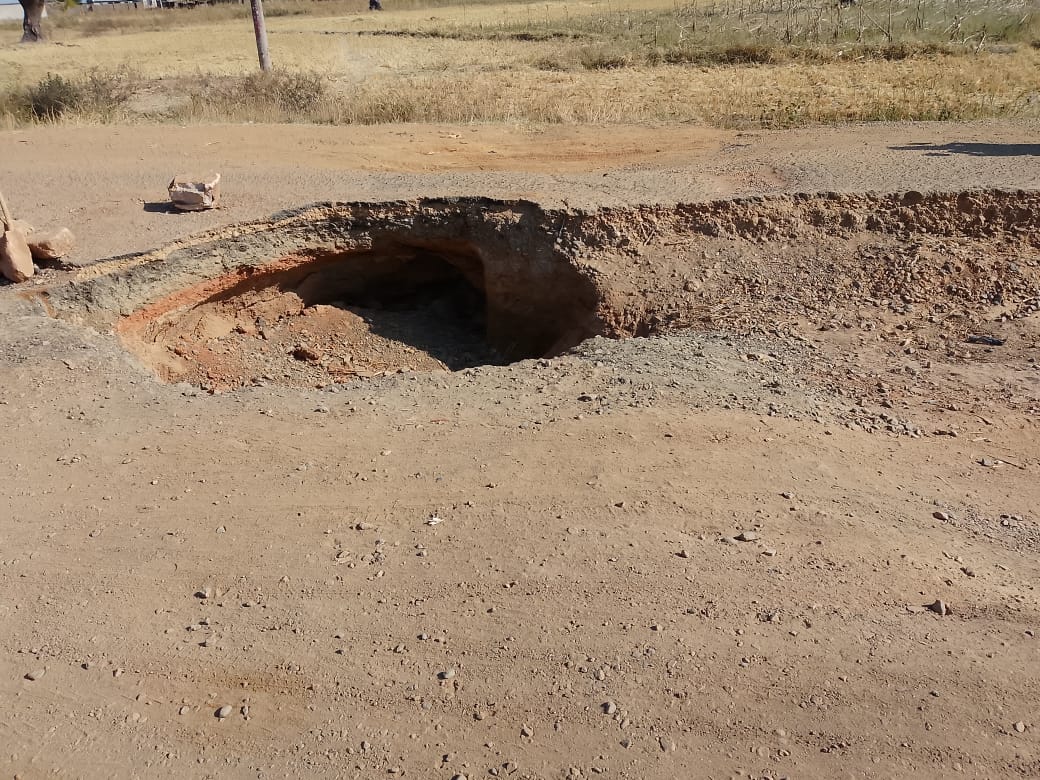
The road is not merely bad. It is cruel. It is a sequence of craters, gullies, broken shoulders and death traps, where vehicles crawl like wounded animals and passengers sit in silence, waiting for the next jolt, the next scrape of metal, the next accident. In some spots, the road has surrendered entirely to erosion. In others, it is a narrow, treacherous passage where two vehicles cannot pass without one yielding to the ditch. Motorcycles weave through the wreckage of the road, carrying passengers, farm produce and hope. Women walk long distances with loads on their heads. Children go to school through dust and mud. The sick are carried to hospitals on roads that may kill them before the illness does.
This is not a forgotten village path. It is a strategic corridor. Jengre, in Plateau State, and Saminaka, in Kaduna State, are linked by a road that matters to farmers, traders and travellers across the region. A Daily Trust report described the area as a major grain-producing corridor and noted that poor roads have made it difficult for farmers to move their produce to markets, with vehicles sometimes unable to access farms during the rainy season. That was in 2022. Four years later, the road has not improved. It has aged. It has collapsed. It has killed.
And yet, Lere is not a constituency without representatives. It is not a place without senators, members of the House of Representatives, or members of the Kaduna State House of Assembly.
The men and women who hold Lere’s mandate are not obscure figures. They are Hon. Munir Ahmed Mohammed, member of the House of Representatives for Lere Federal Constituency. They are Hon. Munira Suleiman Tanimu, member of the Kaduna State House of Assembly for Lere East and Majority Leader of the Assembly. They are Hon. Bashir Idris Gatari, member of the Kaduna State House of Assembly for Lere West and Deputy Majority Leader. They are Senator Lawal Adamu Usman, who represents Kaduna Central in the Senate. And above them sits Rt. Hon. Abbas Tajudeen, Speaker of the House of Representatives, a son of Kaduna State.
Not one of them can claim ignorance. The road is not hidden. It is not a rumour. It is a daily, visible, bone-shaking reality for every man, woman and child who travels between Jengre and Saminaka. If they have not seen it, they have been told. If they have been told, they have chosen not to act. And if they have chosen not to act, then their silence is not an oversight. It is a verdict.

The most painful part is not the road itself. It is the resignation of the people. In some of the worst spots, where the road narrows into a death trap and the earth gives way beneath the wheels, I asked residents a simple question: Do you have a government? They did not shout. They did not curse. They laughed the tired, hollow laugh of people who have exhausted their anger. They have normalized the suffering. They have accepted that bad roads are their portion. They have stopped expecting anything from the people they elected.
That is what neglect does. It does not only destroy infrastructure. It destroys expectation. It teaches citizens that government is a distant, seasonal phenomenon—something that appears during elections, distributes bags of rice and wrappers, and disappears until the next cycle. A people who have stopped complaining are not at peace. They have simply learned that nobody is listening.
Kaduna is an APC state. The Governor, Uba Sani, is APC. The Speaker of the House of Representatives, Abbas Tajudeen, is APC. The members representing Lere in the state and federal legislatures are APC. The party calls itself progressive. But there is nothing progressive about a road that belongs to the Stone Age. There is nothing progressive about children dying on their way to school, farmers losing their harvests, and pregnant women praying that the road will not become their delivery room.
Governor Uba Sani has done visible work in Kaduna. His urban renewal projects, road interventions and social programmes are real. Speaker Abbas Tajudeen has also attracted attention for his interventions in Zaria and beyond. But development that stops at the city limits is not development. It is decoration. A government that can build flyovers in Kaduna while Saminaka’s access road collapses is a government that has mistaken visibility for governance. The test of leadership is not what happens under the cameras. It is what happens on the roads that cameras ignore.
The representatives of Lere must answer a direct question: What have they done with the mandate they hold? What motions have they moved? What constituency projects have they attracted? What emergency interventions have they demanded? What have they said publicly about the road that their people travel every day? If the answer is silence, then the people of Lere have been represented in name only.
Senator Lawal Adamu Usman represents Kaduna Central, the senatorial district that includes Lere. He sits in the Senate, where a motion on the state of federal roads can be moved, where budget allocations can be influenced, and where the plight of a constituency can be escalated to the national stage. The people of Lere are not asking him to build the road with his personal money. They are asking him to do the job for which he was elected.
Speaker Abbas Tajudeen occupies one of the most powerful offices in Nigeria. He is not merely a representative of Zaria. He is the Speaker of the House of Representatives, the number four citizen of the country. If a road in Kaduna State cannot receive federal attention under a Kaduna-born Speaker, then what does federal presence mean?
The Speaker should use his office to push the Federal Ministry of Works and the relevant agencies to intervene. He should not wait for a video to go viral before he remembers that Kaduna is his home.
The Kaduna State House of Assembly members Hon. Munira Suleiman Tanimu and Hon. Bashir Idris Gatari are both leaders in the Assembly. They are not backbenchers. They are Majority Leader and Deputy Majority Leader. They have access to the Governor. They have access to the floor. They can move motions, summon commissioners, demand budget lines and force the state government to explain why a road in Lere has been left to rot. Their silence is not neutral. It is complicity.
I filmed the road. I have the video. It is not propaganda. It is evidence. It shows the craters, the gullies, the narrow escapes, the motorcycles wobbling through the wreckage, the women walking, the children returning from school, the vehicles slowing to a crawl. It shows what words cannot fully capture: the indignity of a people who have been abandoned by the very system that claims to serve them.
The people of Lere are not asking for charity. They are asking for governance. They are asking for a road that does not kill. They are asking for representatives who remember them between elections. They are asking for a Governor who sees the whole state, not just the capital. They are asking for a Speaker who understands that power is measured by what it does for the powerless.
The government must act now. Governor Uba Sani should direct an emergency reconstruction of the Jengre–Saminaka road, with a clear timeline, a published budget and independent monitoring. The Federal Government, through the Ministry of Works and relevant agencies, should assess the road and include it in the next federal intervention programme. The Speaker of the House of Representatives should use his office to facilitate that intervention. The Senator and the members of the House of Representatives and the Kaduna State House of Assembly should jointly convene a town hall in Lere, listen to the people, and present a concrete plan not another promise.
The road to Saminaka is a 25-kilometre indictment of Kaduna’s political class. It is a road that shames the state, embarrasses the federal government, and exposes the gap between the rhetoric of representation and the reality of neglect. Every day that road remains unrepaired, the government is telling the people of Lere that their lives do not matter.
The people have normalized the suffering. The government must not normalize the neglect. Fix the road. Answer the people. Do the job.
Cliff Stanley political scientist public theologian wrote from Jos Ecwa Theological seminary JETS
cliffstanley3@gmail.com
07032826319.