
By Cliff Stanley
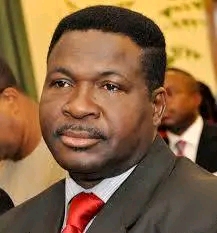
In a country where the law is often invoked more readily than obeyed, Chief Mike Agbedor Abu Ozekhome, SAN, has spent more than four decades insisting that constitutional promises must become lived realities. Constitutional lawyer, human-rights activist, pro-democracy campaigner, author, and public commentator, Ozekhome belongs to a generation of Nigerian advocates who treated the courtroom not merely as a venue for professional advancement, but as a frontline in the struggle for liberty and accountable government.
As he marks his 69th birthday, his career offers a compelling study of how one lawyer’s intellectual energy, rhetorical force, and personal resilience can intersect with a nation’s turbulent democratic history.
Mike Ozekhome was born on 15 October 1957 in Iviukwe, Agenebode, in Edo State. His early education took him through St. Mary’s Catholic Primary School now Athekhai Primary School St. Peter’s College, Agenebode, and Baptist Academy, Lagos. He later entered the University of Ife, now Obafemi Awolowo University, to study law, graduating in 1980 at the age of 23.

He was called to the Nigerian Bar in 1981 and obtained a Master of Laws degree in 1983. He later earned a doctorate in constitutional law, adding an academic dimension to a career already defined by litigation and public advocacy.
That blend of scholarship and practice has remained central to his public identity. Ozekhome is not simply a courtroom advocate; he is a prolific writer whose work addresses constitutionalism, federalism, judicial independence, electoral processes, fundamental rights, and insecurity in Nigeria. His published titles include Constitutionalism and the Constitution, The Doctrine of Separation of Powers, Fundamental Human Rights and their Enforcement, Elections and Electoral Process, and Nigeria in the Throes of Insecurity.
Law as social engineering
Ozekhome founded Mike Ozekhome’s Chambers in 1986, after early professional experience in the chambers of the late Chief Gani Fawehinmi, Nigeria’s most iconic human-rights lawyer. The influence of that apprenticeship is evident in his career: like Fawehinmi, Ozekhome has consistently used litigation, public commentary, and civic organisation to challenge impunity and expand the space for democratic participation.
He was among the pioneers of organised human-rights activism in contemporary Nigeria. In 1987, he co-founded the Civil Liberties Organisation (CLO), widely described as the country’s first modern human-rights league. In 1998, he co-founded the Joint Action Committee of Nigeria (JACON) with Fawehinmi, at a decisive moment in Nigeria’s transition from military rule.
His work has also included service as legal adviser to Amnesty International, and his chambers describes him as counsel at the International Criminal Court in The Hague. Whatever weight one gives to self-described professional distinctions, the broader record is clear: Ozekhome has sought to connect Nigerian legal practice to international human-rights norms and global democratic discourse.
The advocate in the courtroom
In Nigerian legal culture, the title Senior Advocate of Nigeria carries both prestige and expectation. Ozekhome earned the rank after years of litigation in constitutional, human-rights, commercial, and political cases. His practice has involved landmark disputes before Nigerian appellate courts, including cases that shaped the enforcement of fundamental rights and the limits of state power.
One frequently cited example is his successful challenge to the military-era Students Union Activities Act of 1989, which restricted student-union activities to individual campuses. The Federal High Court held that the law violated students’ rights to freedom of association, a judgment with enduring significance for civic life in Nigerian universities.
Ozekhome’s advocacy is equally notable for its style. His arguments often combine legal doctrine with history, literature, philosophy, and moral exhortation. Supporters regard this as a rare form of forensic eloquence; critics sometimes see theatrical excess. But the style has purpose. It translates constitutional technicalities into a language of public accountability, making the law legible to citizens far beyond the courtroom.
Kidnapping and the price of insecurity
No biography of Ozekhome can omit 23 August 2013. While travelling on the Benin–Auchi Expressway in Edo State, he was abducted by armed men. Police officers who responded to the attack were killed, and Ozekhome was taken into captivity.
He was held for approximately three weeks before being released on 12 September 2013. The episode was a brutal illustration of Nigeria’s security crisis and the vulnerability of even prominent public figures. For Ozekhome, however, it also became a personal encounter with the failures he had long criticised in his writing and advocacy.
Justice came late. In 2023, the Federal High Court in Abuja sentenced Kelvin Ezeiegbe and Frank Azuekor to 20 years’ imprisonment each for their roles in the abduction and related killings. The convictions did not undo the trauma, but they affirmed a principle central to Ozekhome’s life’s work: that impunity, however entrenched, should not be accepted as inevitable.
Constitutional critic and reformer
Ozekhome’s public interventions have often placed him at the centre of Nigeria’s most divisive constitutional debates. He has argued repeatedly that the 1999 Constitution carries the imprint of military rule and produces a centralised system that weakens true federalism. In recent public comments, he has advocated a fundamental restructuring of Nigeria’s governance architecture, including proposals for stronger regional governance and a more functional federal system.
He has also been a persistent critic of executive overreach and threats to judicial independence. His writings on the judiciary, separation of powers, the media, and civil society argue that democratic institutions survive only when they are protected from political interference and sustained by an informed citizenry.
This willingness to speak against power has made him both influential and controversial. Yet it is precisely this public-facing conception of law that distinguishes him: for Ozekhome, a lawyer’s duty does not end when a case is decided. It extends to educating the public, defending democratic norms, and challenging the political conditions that make rights precarious.
A legacy in progress
At 69, Ozekhome’s legacy rests on three foundations.
The first is intellectual: a substantial body of writing on constitutionalism, rights, governance, and Nigerian democracy. The second is professional: a career of high-stakes advocacy and landmark litigation. The third is moral: a willingness to confront insecurity, injustice, and authoritarian tendencies, even after experiencing their consequences personally.
He remains a complex figure flamboyant, combative, prolific, and unapologetically political. But complexity is part of his significance. In a democracy still negotiating the gap between constitutional text and governmental conduct, Ozekhome represents the advocate who refuses to let the law become a quiet servant of power.
Happy 69th birthday to Chief Mike Agbedor Abu Ozekhome, SAN: scholar, advocate, survivor, and enduring defender of Nigeria’s constitutional promise.
Cliff Stanley political scientist,
Write from Jos Ecwa Theological Seminary (JETS)