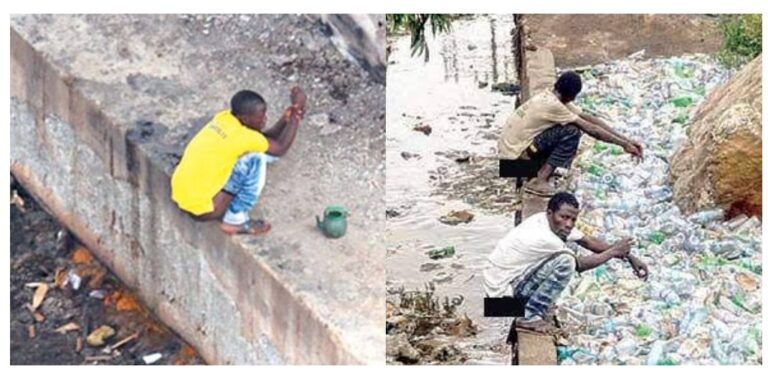
The Federal Government has unveiled a Presidential Executive Order aimed at strengthening the legal and institutional framework for ending open defecation in Nigeria by 2030.
The Vice-President, Kashim Shettima, represented by the Senior Special Assistant to the President on Delivery and Coordination in the Office of the Vice-President, Akubo Adegbe, unveiled the order in Abuja on Thursday.
The event coincided with the 2026 World Toilet Day and the seventh anniversary of the Clean Nigeria: Use the Toilet Campaign.
Speaking at the event, Shettima said the executive order, signed by President Bola Tinubu, reaffirmed the Federal Government’s commitment to eliminating open defecation across the country.

He explained that the order would improve coordination and strengthen collective efforts among governments and other stakeholders towards achieving an Open Defecation-Free (ODF) Nigeria by 2030.
According to him, Nigeria has attained ODF status in 185 Local Government Areas (LGAs), while Jigawa and Katsina have achieved the status across their respective states since the campaign was launched in 2019.
However, he noted that much work remained, considering that the country has 774 LGAs, and called for faster implementation, improved accountability and measures to prevent communities from returning to open defecation.
Shettima stressed the need for increased funding for sanitation, dependable data, stronger institutions, effective service delivery and sustained behavioural change.
He also urged state and local governments to take responsibility for the campaign by providing sufficient resources and strengthening institutions responsible for sanitation services.
The Vice-President further called on development partners, traditional rulers, community leaders, civil society organisations and the private sector to maintain their support, describing the campaign as a collective national responsibility.
Earlier, the Minister of Water Resources and Sanitation, Joseph Utsev, said the Clean Nigeria campaign had developed over the past seven years into a platform for policy coordination, institutional participation, community mobilisation and performance monitoring.
Utsev said the government had improved its implementation framework through the Revised Clean Nigeria Strategy 2025–2030, which is built around six strategic pillars.
He identified the pillars as enabling environment; partnerships and coordination; public finance; service delivery; advocacy and communication; and monitoring, evaluation, learning and accountability.
The minister also highlighted the introduction of the Clean Nigeria Real-Time Monitoring and Information System (CNC-RTMIS), saying it would strengthen data management, track performance and improve accountability.
He added that the revised Presidential Executive Order 009, signed by Tinubu after the country’s ODF target was extended to 2030, would strengthen stakeholder participation, private sector involvement, monitoring and accountability.
Utsev listed adequate funding, community ownership, continuous behavioural change, collaboration across sectors and reliable data as critical requirements for attaining and maintaining ODF status.
Also speaking, the UNICEF Chief of Water, Sanitation and Hygiene (WASH), Emily Rand, called for intensified efforts to end open defecation, urging governments and stakeholders to improve sanitation financing, planning and coordination.
Rand asked participants to indicate by a show of hands whether they resided in LGAs that had achieved ODF status and whether their institutions had specific budgets for sanitation.
She also sought to establish how many regularly worked with finance and planning departments, non-governmental organisations, private sector operators and other stakeholders.
“We have a big goal before us. We cannot continue doing what we are doing; we really need to accelerate our efforts,” she said.
Rand stressed that every child deserved access to proper sanitation, describing the responsibility as one that had been passed down through generations.
She further noted that the increasing risks of floods and droughts made it necessary to provide durable and climate-resilient sanitation facilities.
The UNICEF official also advocated sustainable household sanitation facilities as Nigeria stepped up efforts to achieve ODF status.
Goodwill messages were delivered by representatives of the Ministry of Youth Development, the Clean Nigeria Campaign WASH Ambassador and the Society for Water and Sanitation (NEWSAN), among others.
Activities at the event included the presentation of ODF certificates to qualifying LGAs and the decoration of First Ladies as Clean Nigeria Campaign Ambassadors to strengthen sanitation advocacy and community mobilisation.
The theme of the 2026 World Toilet Day is “Sanitation and Gender Equality.”