
The Gates Foundation has called on African countries to integrate their instant payment systems (IPS) to promote cross-border trade and strengthen regional economic integration under the African Continental Free Trade Area (AfCFTA).
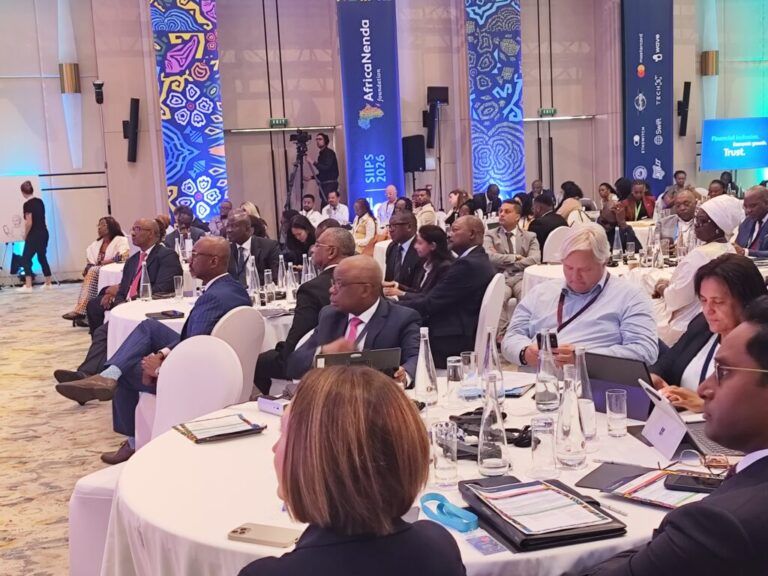
The foundation’s Director of Economic Opportunity, Enock Chikava, made the call during the launch of the 2026 State of Inclusive Instant Payment Systems in Africa Report, organised by the AfricaNenda Foundation in Balaclava, Mauritius.
Speaking at the event on Thursday, Chikava said the increasing movement of goods and people across the continent required payment systems capable of supporting seamless financial transactions between countries.
He noted that the objectives of the African Continental Free Trade Area could only be fully achieved when money could move across borders as easily as goods and people.

“Goods and people are beginning to move freely across this continent, and the money must move with them,” he said.
Chikava illustrated the importance of interconnected payment systems with the example of a Zambian farmer selling maize to a buyer in Kenya and receiving payment instantly in her local currency.
He explained that interoperable payment systems, digital identity and data-sharing infrastructure would reduce the cost of transferring money and information while helping businesses connect across national borders.
However, he stressed that instant payments should not be limited to facilitating transactions but should also create economic opportunities by connecting users to credit facilities, insurance and markets.
According to him, receiving payments instantly should serve as a starting point for economic advancement, enabling small business owners to expand their businesses, invest in equipment, employ more people and improve their families’ living conditions.
He added that digital transaction records could help small businesses build financial histories and provide evidence of their economic activities when seeking loans from financial institutions.
Chikava described payment systems as a foundation for income growth and business expansion, noting that they could accelerate financial transactions, reduce trade costs and establish records that could help businesses access their first loans.
He also identified agriculture as a major sector that could benefit from digital transformation, saying increased investment in the sector could improve livelihoods and reduce poverty.
He said digital public infrastructure could connect farmers to markets, financial services and relevant information, while artificial intelligence could provide smallholder farmers with guidance on seeds, weather conditions, market prices and credit opportunities in local languages.
Earlier, the Chief Executive Officer of AfricaNenda, Dr Robert Ochola, said the organisation was exploring ways to use digital payment records to improve farmers’ access to credit.
Ochola disclosed that AfricaNenda had started collaborating with an African university on a pilot project involving cotton farmers to facilitate access to credit through instant payment systems.
He also revealed that the organisation was examining behavioural credit-scoring models in Rwanda, using digital transaction records involving more than two million farmers.
He said such initiatives depended on having a strong digital public infrastructure integrated into instant payment systems.
Ochola added that digital payment infrastructure could help governments pay community health workers more efficiently and enable small businesses to demonstrate their financial activities to potential lenders.
Chikava maintained that achieving Africa’s digital transformation would require cooperation among governments, central banks, regulators, financial institutions and payment service providers to develop affordable, accessible, reliable and interoperable systems.
He said the shared objective was to ensure that every African country had an inclusive instant payment system either operational or under development by 2030.
According to him, the success of the initiative should be assessed through improved incomes, business expansion and increased economic opportunities, particularly for women and underserved communities.
In her welcome address, the Governor of the Bank of Mauritius, Dr Priscilla Thakoor, also advocated stronger connections among African payment systems, saying the next stage of digital financial development should prioritise regional and continental integration.
Thakoor challenged stakeholders to develop a continental payment network that would allow money to move across African economies as securely, efficiently and seamlessly as information does today.
She outlined three major priorities for Africa’s payment ecosystem: ensuring meaningful use of financial services, strengthening cross-border connectivity and linking national payment systems with regional and continental infrastructure.
She said individuals and businesses should be able to carry out transactions reliably, affordably and securely without needing to understand the technical processes behind the payment systems.
Thakoor warned that without proper coordination, the fragmentation already affecting African markets could be replicated in the digital financial sector.
She noted that effective cross-border payment connectivity required common standards, strong governance structures, reliable settlement arrangements, adequate consumer protection and closer cooperation among regulators.
The governor identified the Common Market for Eastern and Southern Africa’s Regional Payment and Settlement System, the Southern African Development Community’s real-time gross settlement system and Afreximbank’s Pan-African Payment and Settlement System as important platforms for continental integration.
She stressed that the existing systems should complement one another rather than operate as separate and competing infrastructures.
Thakoor called for measurable progress within the next two to three years, including faster and cheaper cross-border payment channels, harmonised technical and regulatory standards, and stronger connections among existing payment infrastructures.
She said the ultimate success of the initiative should be determined by whether individuals and businesses could make payments across African borders with the same confidence and convenience they enjoyed when conducting transactions within their own countries.
NAN