
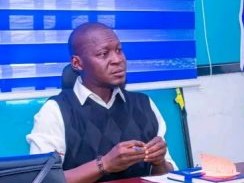
By Cliff Stanley
Nasir El-Rufai’s political estrangement from President Bola Tinubu is not merely a personal quarrel; it is a lesson in the unforgiving arithmetic of Nigerian power. In a system where loyalty is transactional, ambition is tolerated only when it does not threaten the principal, and political structures are built around control rather than ideology, El-Rufai’s trajectory illustrates both the opportunities and dangers of being a highly capable but politically restless actor.
The former Kaduna governor’s move into the opposition coalition seeking to unseat Tinubu in 2027 has been read by some as betrayal. But it is better understood as the culmination of a long-standing political mismatch: El-Rufai supported Tinubu tactically, while never fully accepting Tinubu’s political supremacy. Tinubu, in turn, appears to have calculated that a man with presidential ambitions, a national network and a history of institutional confrontation was too risky to place at the centre of his administration.
A marriage of convenience

El-Rufai’s support for Tinubu during the 2023 APC primary was real and consequential. He helped mobilise northern political opinion behind a southern candidate at a moment when the party’s succession contest was volatile. Yet support in Nigerian politics is not the same as ideological conversion. It may reflect a shared enemy, a temporary convergence of interests, or a calculation that one candidate offers a better route to influence than another.
El-Rufai had long been associated with the reformist, technocratic wing of Nigerian politics. As FCT minister under President Olusegun Obasanjo and later as Kaduna governor, he built a reputation for administrative aggression, policy certainty and a willingness to confront entrenched interests. Those qualities made him valuable. They also made him potentially difficult to manage.
His subsequent role in the African Democratic Congress-led opposition coalition, alongside Atiku Abubakar, Peter Obi, Rotimi Amaechi and others, confirms that his differences with Tinubu were not superficial. The coalition was explicitly formed to challenge the president in 2027, and El-Rufai became one of its most visible organisers.
This does not necessarily make him disloyal in a moral sense. Politics is not a monastery. Politicians form alliances, break them and rebuild them. But it does expose a central tension: Tinubu needed El-Rufai’s energy before the 2023 election; after victory, he needed predictability, discipline and control.
The ministerial rupture
The immediate rupture came in 2024, when El-Rufai’s ministerial nomination was withheld by the Senate amid claims of unresolved security clearance. He later insisted that the legislature did not reject him and that Tinubu never wanted him in the cabinet. Whatever the precise internal mechanics, the political meaning was clear: El-Rufai was not going to be a central instrument of the Tinubu presidency.
For a politician of El-Rufai’s temperament, exclusion from the inner circle was unlikely to produce quiet retirement. He had governed Kaduna with an assertive style, cultivated a national reformist brand and retained a substantial base among northern elites, civil-society reformers and younger technocrats. Being kept outside the presidency did not erase his ambition; it redirected it.
His entry into the opposition coalition therefore should not surprise serious observers. It is less an inexplicable act of vengeance than a rational response to political exclusion. In Nigerian politics, a politician denied access to power often seeks an alternative route to it. The question is whether that route can deliver victory or merely another expensive lesson in coalition-building.
Tinubu’s cold calculation
The article’s central claim that Tinubu “saved himself” is politically plausible, though it should not be presented as proven fact. Tinubu may have judged that El-Rufai’s ambition, independence and confrontational instincts made him unsuitable for a senior cabinet role. He may also have feared that placing El-Rufai beside National Security Adviser Nuhu Ribadu, another ambitious northern figure with presidential prospects, would create rival power centres within the presidency.
That concern is not irrational. Nigerian presidencies are fragile coalitions. A president must balance regional interests, party factions, security institutions, governors, business elites and personal loyalists. Bringing in a figure who sees himself as a future presidential contender can be useful, but it can also create a competing gravitational centre.
History offers cautionary examples. Obasanjo and Atiku Abubakar governed together from 1999 to 2007, but their relationship degenerated into a bitter struggle over succession and control of the political machinery.
The conflict did not merely damage their personal relationship; it reshaped the PDP and contributed to the party’s later fragmentation. The lesson is enduring: a deputy or senior ally with an independent base can become a rival if the principal’s political architecture is weak.
Tinubu’s apparent decision to keep El-Rufai at arm’s length may therefore reflect not paranoia but political survival. A president’s first duty, in the brutal logic of Nigerian politics, is to preserve the coherence of his own coalition.
Wike’s dangerous gamble
If El-Rufai represents the danger of open rebellion, FCT Minister Nyesom Wike represents a subtler and perhaps more consequential risk: building an autonomous structure inside a ruling coalition while publicly professing loyalty to its leader.
Wike’s recent request that Tinubu assign him Imo and Kwara states for the 2027 presidential campaign after declaring that he had “finished” Rivers and the FCT was framed as an offer of service. But in Nigerian political language, it was also a statement about ownership. He was effectively saying that he could deliver states, resolve internal crises and command political structures beyond his official jurisdiction.
That is a formidable claim. It is also a potentially destabilising one. If Wike can “deliver” Imo and Kwara, APC stakeholders will ask why their sitting governors cannot. If he succeeds, he will expand his influence. If he fails, he will have exposed the limits of his much-advertised political machinery. Either way, the request turns a campaign assignment into a contest over party control.
The reaction from Imo APC was telling. The state chapter dismissed Wike’s offer and accused him of trying to portray Tinubu as dependent on external support. That response suggests that Wike’s intervention is not universally welcomed within the APC, even among those who benefit from the president’s government.
Wike’s position is inherently precarious. He remains a PDP figure serving in an APC-led federal government. That arrangement can work when it produces mutual benefit: the president gains a formidable mobiliser, while Wike gains federal protection, visibility and a platform. But it becomes dangerous when the junior partner begins to build a structure that could outlive the alliance.
His Rainbow Coalition may be presented as a pro-Tinubu mobilisation vehicle. Yet any serious politician understands that a coalition built around a powerful individual can become a personal movement. The question is not whether Wike supports Tinubu today. It is whether, by 2031, the structure he is constructing will remain subordinate to Tinubu’s interests or become the foundation of an independent presidential project.
The Tinubu doctrine
Tinubu’s political strength has always rested on patience, coalition management and an unusual capacity to wait. He did not become president by rushing. He built alliances across regions, absorbed setbacks, negotiated with rivals and understood that power in Nigeria is often won by those who can endure delay.
The claim that Buhari “did not stand in his way” in 2023 is too simple. Buhari’s eventual support mattered, but Tinubu’s victory also reflected years of party-building, alliance-making and the ability to present himself as the candidate most capable of holding the APC together. Still, the broader point stands: Tinubu’s success has rested on knowing when to advance and when to restrain ambition.
That is why the El-Rufai and Wike cases matter. Both men are talented, energetic and politically consequential. Both have national ambitions. But ambition without restraint can become a liability. In a presidential system where the incumbent controls appointments, resources, party machinery and the power of federal patronage, a subordinate who openly signals an independent future can quickly become a threat.
History’s warning
Nigeria’s political history is filled with alliances that collapsed because ambition outran institutional discipline. The Obasanjo-Atiku split, the crises within the PDP, the defections that produced the APC in 2013 and the recurring fragmentation of opposition coalitions all show the same pattern: personal ambition is not inherently destructive, but unmanaged ambition can fracture even the most powerful political structures.
El-Rufai’s move to the opposition is not necessarily a mistake. It may yet prove strategically astute if the ADC coalition develops discipline, a credible candidate and a programme capable of appealing beyond elite bargaining. But coalition politics is notoriously difficult. The coalition includes figures with rival presidential ambitions, different regional calculations and incompatible expectations. Its stated aim is to remove Tinubu in 2027; its greater challenge will be agreeing on who should replace him.
Wike faces a different dilemma. He may be more strategically disciplined than El-Rufai, but his growing structure within the ruling coalition could provoke the same suspicion that ultimately isolated El-Rufai. A president can tolerate a powerful ally only for so long as the ally’s power appears to serve the president. Once it begins to look like an alternative centre of authority, the relationship changes.
The lesson of power
The deeper lesson is not that El-Rufai was a “political accident.” He is a serious political actor whose ambitions collided with the realities of presidential control. Nor is Wike merely a careless opportunist. He is a skilled operator whose current strategy may work until it encounters the limits of presidential tolerance.
Nigeria’s democracy would be healthier if political competition were organised around ideas, institutions and accountable governance rather than personal loyalty and control of structures. But until that happens, the decisive political skill will remain the ability to read power accurately: to know when to serve, when to wait, when to build quietly and when to challenge openly.
El-Rufai chose open challenge after exclusion. Wike may be attempting to build influence from within. Both paths carry risk. In Nigerian politics, the most dangerous politician is often not the one who lacks ambition, but the one whose ambition becomes visible before the principal is ready to accommodate it. Tinubu’s apparent handling of El-Rufai suggests that he understands this rule. Whether Wike understands it and whether the APC can manage the tensions now gathering around 2027 will help determine the shape of Nigeria’s next political cycle.
Cliff Stanley political scientist, public theologian wrote from Jos Ecwa Theological seminary (JETS) cliffstanley3@gmail.com
07032826319.