
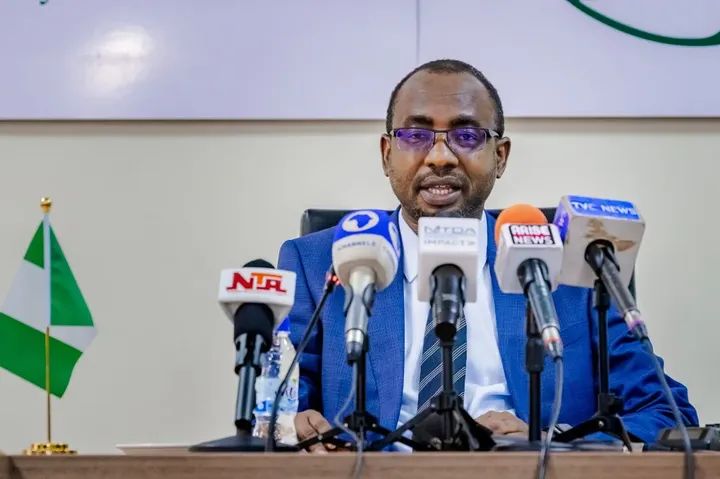
The National Information Technology Development Agency, NITDA, has intensified efforts to equip Nigerians with digital skills, unveiling plans to train at least 30 million people as part of a broader strategy to accelerate the country’s transition to a knowledge-driven economy.
The Director-General of NITDA, Kashifu Abdullahi, disclosed this on Thursday while speaking at the Omniverse Africa Summit 3.0 in Lagos, themed “Connected Future, Synergy for Impact.”
Mr Abdullahi said the agency was working with government institutions, development partners and private sector organisations to achieve 70 per cent digital literacy across Nigeria by 2027.
According to him, NITDA has already begun deploying digital literacy champions across local government areas to help equip millions of Nigerians with relevant digital competencies needed for the rapidly evolving global economy.

He noted that the initiative forms part of the agency’s Strategic Roadmap and Action Plan (SRAP) 2.0, which prioritises digital skills development, infrastructure expansion, artificial intelligence adoption and support for innovation-driven enterprises.
Mr Abdullahi said Nigeria was well-positioned to benefit from the global digital revolution due to its youthful population and growing technology ecosystem.
“As Africa’s largest digital economy and home to one of the world’s youngest populations, we recognise that our greatest asset is no longer what is beneath the ground but the minds of our people,” he said.
The NITDA boss observed that emerging technologies such as artificial intelligence, blockchain, robotics, quantum computing, extended reality and the Internet of Things were reshaping industries and economies worldwide.
He stressed that Africa must move beyond being a consumer of technology and become a producer of innovative solutions capable of addressing local and global challenges.
According to him, young Africans are already developing digital solutions that are expanding financial inclusion, improving healthcare delivery and transforming sectors such as agriculture, education and governance.
“Africa is no longer imagined. Africa is no longer potential. Africa is innovative. Africa is leading,” Mr Abdullahi said.
He added that NITDA was implementing programmes to support startup growth, research commercialisation, artificial intelligence development and transparent digital governance, all aimed at strengthening Nigeria’s digital economy.