
By Jane Salihu
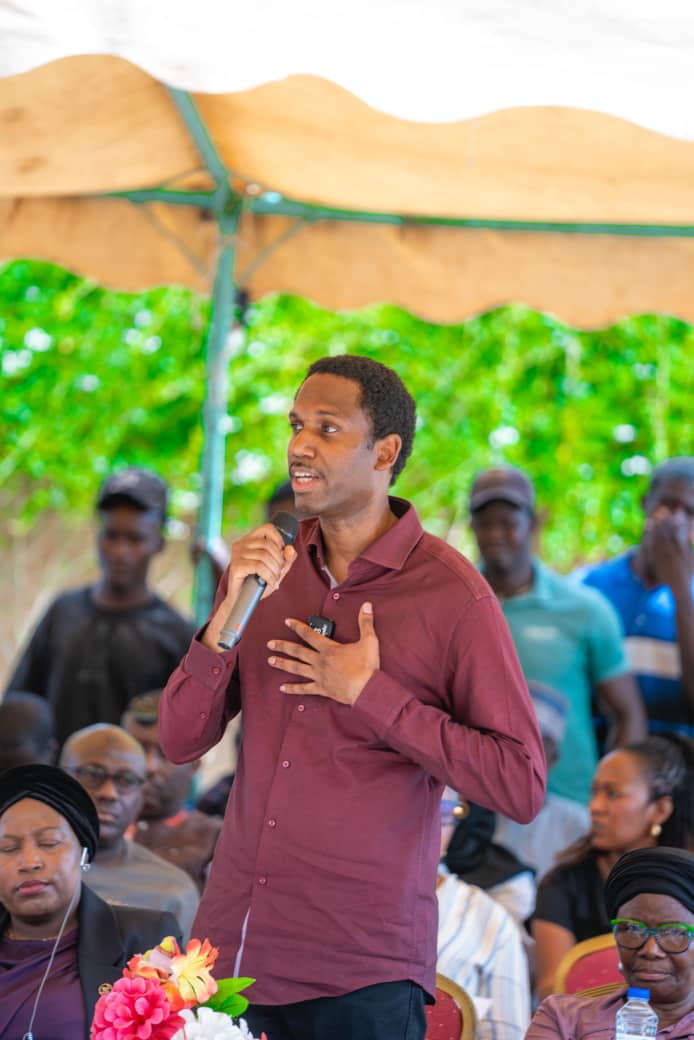
The Vice Chairman of the ECOWAS Parliament committee on infrastructure, Hon. Ahmed Munir, has said evidence from communities benefiting from renewable energy projects across West Africa shows that rural electrification is directly contributing to job creation, poverty reduction and economic transformation.
Hon. Munir, who presided in an acting capacity for the committee chairman during the Delocalized Meeting of the Joint Committee on Infrastructure, Agriculture, Energy and Mines in Dakar, Senegal, made the remarks while speaking with journalists on the sidelines of the meeting.
He said the committee’s field visits to solar-powered communities provided practical evidence that access to electricity is stimulating economic activities and improving livelihoods beyond merely providing lighting.
“We were not just sitting in a conference hall discussing these issues. We went to the field and saw what was happening. It goes beyond charging phones and watching television. Women are producing and selling ice blocks using deep freezers, tailors are operating their businesses and several enterprises are thriving because of access to electricity,” he said.
According to the Nigerian lawmaker, the benefits also extend to indirect economic activities, noting that food vendors and other small business owners are now able to operate longer hours, thereby generating more income and creating wealth within their communities.
He disclosed that many young people have acquired technical skills and are actively engaged in maintaining and repairing solar facilities, while others have ventured into food processing and other productive enterprises.
“The youth are involved. Some have become technicians who help maintain the systems, while others are engaged in food processing and different businesses. Engaging with the communities and hearing directly from the people was one of the key aspects of this mission,” he stated.
Speaking on measures needed to ensure communities become active stakeholders rather than mere beneficiaries of renewable energy projects, Munir stressed the importance of sustainability and local ownership.
He argued that communities should not rely solely on governments or foreign investors, but should initiate and support projects that can gradually expand to underserved areas.
“Government resources are limited, and investors may not always find remote communities attractive enough. Communities have to take ownership. The youth and women have critical roles to play, and there must be a sense of responsibility to ensure that revenues generated from these services are reinvested to sustain the projects,” he said.
On the challenge of maintaining renewable energy infrastructure in remote communities, the House Committee Chairman on Commerce said ECOWAS would continue to provide the necessary policy impetus, while communities themselves must drive sustainability.
“The projects we have seen are like pilot schemes. The same system that powers a few communities today can power towns, cities and industries tomorrow. The ECOWAS Parliament has adopted a report and is ready to serve as a megaphone to ensure these projects spread throughout the region,” he added.
Addressing investors, developers and development partners, Munir noted that Africa presents enormous opportunities for renewable energy investments, adding that governments across the region are putting in place laws and regulatory frameworks to encourage investment and guarantee returns.
“The good news is that there is a market for renewable energy in Africa. There is also political will. We are working to establish laws and incentives that will encourage investors to commit their resources and achieve positive outcomes,” he said.
He emphasized that stronger partnerships among governments, investors and communities would be essential to ensuring that renewable energy becomes a catalyst for sustainable development and inclusive growth across West Africa.