
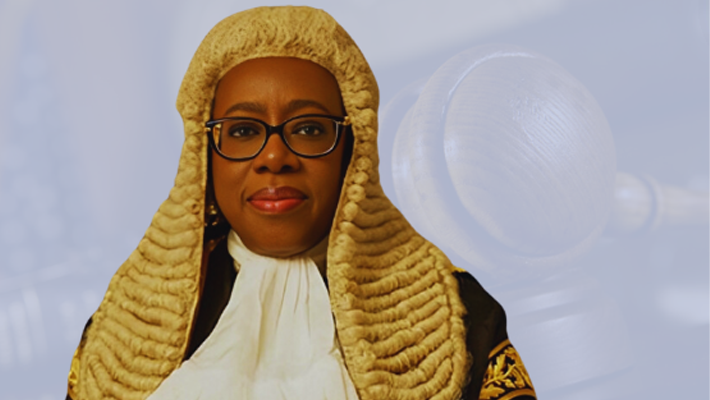
The Chief Justice of Nigeria (CJN), Justice Kudirat Kekere-Ekun, has cautioned magistrates and other lower court judges against yielding to pressure to deliver hasty judgments.
Ms Kekere-Ekun gave the warning on Monday at the opening ceremony of the 2026 All Nigeria Judges Conference of the Lower Courts, organised by the National Judicial Institute (NJI) in Abuja.
The conference is themed, “Enhancing Effective Justice Delivery Through Innovation and Institutional Efficiency”.
The CJN said judicial officers must strike a balance between conducting proceedings firmly and efficiently and ensuring that every case receives adequate attention and consideration.

She described magistrate, Sharia, area and customary courts as vital components of the country’s judicial system, noting that they handle cases directly affecting people’s daily lives, including family relationships, inheritance, land disputes, commercial transactions and personal liberty.
According to her, these courts serve as the first, and sometimes only, point of contact with the judiciary for many Nigerians, making the conduct of judicial officers particularly important in shaping public perception of the institution.
Ms Kekere-Ekun identified delays as one of the most persistent complaints against Nigeria’s justice system, saying ordinary litigants often bear the greatest burden through transportation expenses, legal fees and repeated court adjournments.
She noted that prolonged proceedings could worsen the difficulties of individuals seeking justice over land ownership, family disputes and criminal charges.
The CJN acknowledged that some causes of judicial delays, including inadequate facilities, insufficient personnel and limited resources, were institutional challenges beyond the immediate control of individual judges.
However, she maintained that judicial officers could address other sources of delay through personal discipline and effective courtroom management.
She urged judges to take responsibility for proceedings before them and ensure that everyone appearing in court receives fair and respectful treatment.
According to her, judicial authority must be exercised with dignity, patience and restraint, regardless of the social or financial status of those seeking justice.
She stressed that being unrepresented, poorly educated or financially disadvantaged should not deprive anyone of courtesy and fairness, adding that lawyers, witnesses and other court users also deserved respectful treatment.
The CJN said judges could maintain order and exercise firmness without being discourteous or humiliating anyone.
She urged judicial officers to ensure that litigants leave their courtrooms satisfied that they were given the opportunity to be heard and treated with dignity, even when they might not fully understand the legal reasoning behind a judgment.
On the conference theme, Ms Kekere-Ekun called for greater adoption of innovation and technology to improve judicial operations.
She identified digital case management systems, electronic filing, electronic records and other technological tools as opportunities to minimise administrative delays and improve access to court information.
However, she noted that effective technology adoption required adequate training, reliable infrastructure, technical support and safeguards for confidential information.
She also cautioned against allowing people without access to digital facilities to become excluded from the justice system.
The CJN further acknowledged the potential of artificial intelligence in legal research, document summarisation and certain administrative duties, urging judicial officers to familiarise themselves with such developments while exercising appropriate caution.
Earlier, the Administrator of the NJI, Justice Babatunde Adejumo, advised judges to observe professional and ethical standards while embracing technological innovations.
He warned them against actions capable of compromising the judiciary’s integrity or undermining the authority of their respective heads of court.
Mr Adejumo stressed that innovation without proper control and discipline could create serious risks and produce flawed solutions.
He said the institute had strengthened its capacity-building programmes for lower court judges in line with its statutory responsibility to provide judicial education for all categories of judicial officers.
According to him, the All Nigeria Judges Conference of the Lower Courts remains the largest and most significant strategic gathering of judicial officers whose contributions are essential to upholding the rule of law and administering justice in Nigeria.
He added that the biennial conference provided an important opportunity to recognise and appreciate the contributions of lower court judges, despite the often thankless nature of their responsibilities.
(NAN)