
By Melvin Tejan Mansaray, Abuja Nigeria
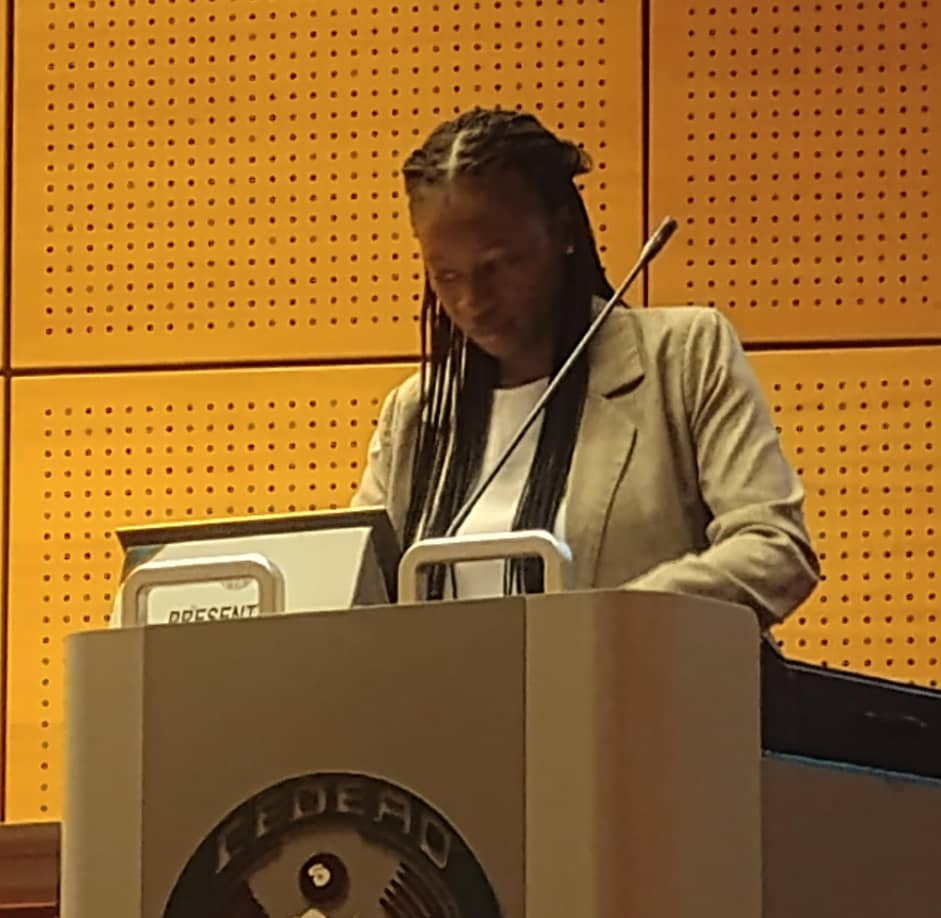
Dr. Zandile Ndebele, an International Tax Policy Expert working for Tax Justice Network Africa (TJNA) has following her presentation at an interactive sitting with Technical Partners, Civil Society Organization representatives and Legislators of the ECOWAS Parliament said that there has to be local beneficiation in African countries if they want to do better in domestic resource mobilization and management.
She was speaking exclusively to this Writer following her presentation, “Addressing Tax-Related Illicit Financial Flows (IFFs) through Legislative Frameworks and Transparency,” wherein she spoke about anti IFF Policy Tracker, Beneficial Ownership, Exchange of Information, Tax Transparency and Accountability Mechanisms.
Her call came on the backdrop of an interaction with the West African Tax Administration Forum (WATAF) engagement on Monday 11th May, 2026 at the Sixth Legislature’s ongoing 2026 First Ordinary Session holding at the International Conference Center, Area 10 Abuja Nigeria.

According to Dr. Ndebele, for Africa to curb IFFs, the continent and its leaders must seek to add value to the lots of its natural resources.
Asked how this call should be made possible, Dr. Ndebele said:
“Basically, Africa has a lot of resources. It’s not that we are short of resources, no matter what region you go to, we’ve got a natural resource that stays.”
She said that TJNA has been observing and advocating for several years now on the need for local beneficiation, a notion which she said the African Union has also encouraged through its mining vision as a way to generate more revenues from its resources than when they are exported as raw materials.
Asked if foreign influence more especially from the West will allow Africans to move towards the path of local beneficiation of natural resources, considering the experience from her own country’s (Zimbabwe) land expropriation policy that has been lampooned by foreign powers, she said yes.
“For example, a country like Botswana recently made a statement telling President Donald Trump that if you want to negotiate about African resources, then he has to come to Botswana to negotiate there because they are the buyers that want the minerals. So, I think Africa has the capacity to introduce the necessary legislations and although we need other support systems, we do have the capacity and I don’t think the West can say anything about it because we are the ones that own the minerals at the end of the day.”
Dr. Ndebele however urged Legislators to dedicate efforts towards local beneficiation of Africa’s rich resources, noting that:
“It’s possible to introduce legislations for domestic beneficiation to gain more resources and revenues apart from gaining from just taxes. I think it will help our service provision and it will help our domestic resource mobilization efforts if we introduce these types of laws and it’s very possible.”
On the global conversation on who is to pay more or less taxes, especially in Africa, Dr. Ndebele said with laughter that:
” I think we should be taxing the rich and they should be paying more. It’s one of the articles in the United Nations Tax Convention. There is an article on high networth individuals. It’s not a priority area for us African negotiators or African countries, but it’s definitely an area where we can get more revenues.”
TJNA is a regional network of civil society organisations.
It is composed of think tanks, trade unions, feminist groups, youth-led and faith-based organisations, and community-based organisations spread across African countries.
Dr. Zandile Ndebele is a Zimbabwean admitted legal practitioner, academic, and policy expert specializing in international tax law, tax policy, and tax justice.
She is prominently recognized for her advocacy on public financial management reform and equitable international financial architecture.