
By extending its reach to the Nigerian military, the Presidential CNG Initiative is demonstrating how energy transition can become a wider instrument of economic inclusion, institutional transformation and affordable mobility.
The strength of a national policy is not merely in the ambition behind its conception, but in the breadth of institutions it can mobilise, the boundaries it can cross and the number of people whose lives it can positively affect.
“The strength of a national policy is not merely in the ambition behind its conception, but in the breadth of institutions it can mobilise, the boundaries it can cross and the number of people whose lives it can positively affect,” the report noted.
Policies are most consequential when they move beyond government declarations, transcend institutional boundaries and progressively bring more citizens and organisations within the reach of their benefits. This is the increasingly important story emerging from Nigeria’s Presidential Initiative on Compressed Natural Gas (Pi-CNG).

What began as a strategic response to the transportation cost pressures occasioned by fuel subsidy removal is steadily evolving into a broader national infrastructure and economic inclusion programme. Its expanding institutional reach reflects a recognition that affordable mobility is not the exclusive concern of commercial transport operators or private vehicle owners; it is an economic necessity that cuts across the entire architecture of the Nigerian state.
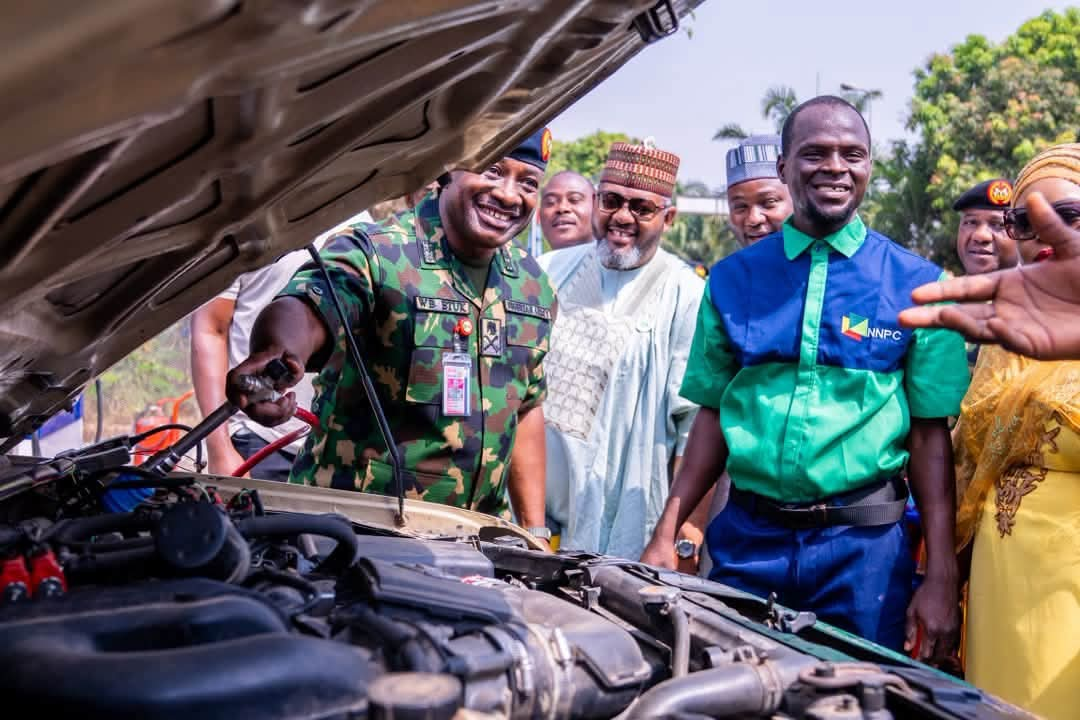
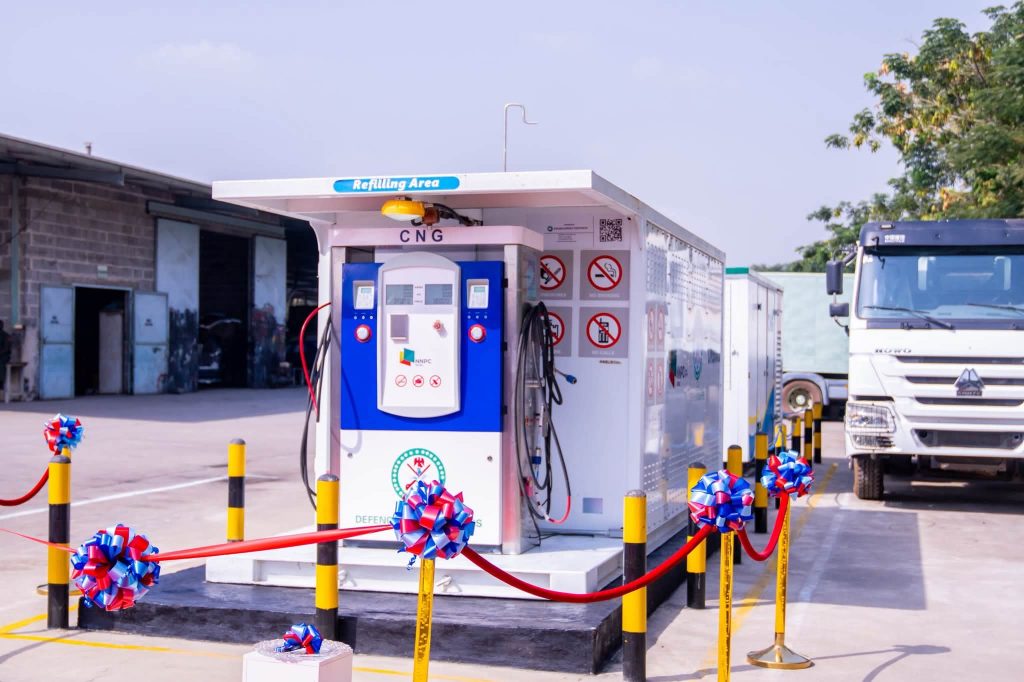
The latest demonstration of this all-inclusive approach came on Friday, November 27, 2026, when the Chairman of the Presidential Initiative on Compressed Natural Gas, Barrister Ismail Ahmed, joined other stakeholders at the commissioning of a CNG Daughter Station at Mogadishu Cantonment, Abuja.
The facility, established through a collaborative arrangement involving the Defence Headquarters, NNPC, private-sector partners and Pi-CNG, marks another significant step in extending the benefits of Nigeria’s gas-powered transportation transition to the military establishment.
And that is what makes this development particularly noteworthy. It is one thing for a government to announce an energy transition policy; it is another to build the institutional partnerships and infrastructure necessary to make that policy work across different segments of society.
“The Mogadishu Cantonment facility illustrates that the CNG initiative is not being conceived as an intervention for a narrow category of beneficiaries, but as a national proposition whose dividends can reach commercial operators, civil servants, businesses, public institutions and now the military,” the report said.
The military’s inclusion is especially significant. As an institution with considerable transportation, logistics and operational demands, the Armed Forces have a legitimate interest in the search for more affordable and diversified energy solutions. Bringing CNG infrastructure into a military cantonment creates an opportunity to explore the economic advantages of alternative fuel systems within the defence establishment, while reinforcing the military’s participation in the country’s broader energy transition agenda.
Beyond its immediate operational value, the development sends an important institutional message: national transformation works best when public institutions see themselves not as isolated entities but as partners in a common development project.
For millions of Nigerians, transportation remains one of the most visible channels through which economic pressures are experienced. Rising fuel prices translate almost immediately into higher transport fares, increased logistics costs, pressure on household incomes and more expensive goods and services. The consequences ripple through the economy, affecting workers, traders, manufacturers and small businesses.
“An intervention that seeks to reduce this burden is therefore more than an energy policy. It is an economic relief mechanism with potentially far-reaching social implications,” the report stated.
Nigeria’s natural gas resources provide a compelling foundation for this proposition. The country possesses substantial gas reserves, yet the challenge has historically been converting that resource endowment into accessible domestic economic value. The CNG initiative represents an attempt to close that gap by creating the infrastructure, investment opportunities and market conditions necessary to make natural gas a practical alternative for transportation.
This is an important shift in economic thinking. Rather than allowing the country’s energy wealth to remain largely an abstract national advantage, the initiative is seeking to translate it into tangible benefits through vehicle conversion programmes, refuelling infrastructure, technical partnerships and the development of a domestic gas-powered mobility ecosystem.
“The logic is straightforward: a country endowed with natural gas should be able to leverage that resource to reduce its dependence on more expensive transportation fuels, strengthen domestic energy security and stimulate investment in related industries,” the report said.
But resources alone do not produce transformation. Institutions, coordination and sustained investment do. This is where the collaborative architecture behind the Mogadishu Cantonment project deserves particular attention. The involvement of the Defence Headquarters, NNPC, private-sector partners and Pi-CNG demonstrates the value of bringing together institutional authority, technical expertise, investment and policy coordination.
“No single institution can independently deliver the scale of infrastructure required to transform Nigeria’s transportation economy,” the report noted.
Government must provide policy direction and an enabling environment, while private capital and technical capacity help translate ambition into functioning infrastructure.
“Such collaboration is increasingly central to effective governance. The government does not necessarily have to undertake every aspect of implementation itself; its more enduring responsibility is to establish the vision, coordinate institutions, remove bottlenecks and create the conditions for different stakeholders to contribute meaningfully,” the report said.
The expanding reach of Pi-CNG under the leadership of Barrister Ismail Ahmed offers an encouraging illustration of this approach. The initiative’s growing engagement with different sectors suggests an appreciation that the success of energy transition cannot be measured solely by policy announcements, but by the infrastructure delivered, the partnerships sustained and the economic benefits made accessible.
There is, of course, a larger opportunity beyond transportation savings. A thriving CNG ecosystem can stimulate domestic industrial development, create employment and encourage investment across engineering, fabrication, vehicle conversion, gas distribution, equipment manufacturing and technical services. It can also help deepen Nigeria’s domestic gas market and reduce exposure to the volatility of imported energy products.
The military’s participation adds another layer to this national proposition. It demonstrates that the energy transition is not simply a commercial undertaking or an environmental conversation. It is also about institutional efficiency, economic resilience and the strategic use of domestic resources.
Nevertheless, the real test of the initiative will be its ability to sustain the momentum. CNG must remain competitively priced and reliably available. Refuelling infrastructure must expand beyond major urban centres, conversion facilities must meet rigorous safety standards, and technical expertise must grow alongside market demand. Public confidence will also be essential, particularly in a country where the adoption of new technologies depends heavily on trust, affordability and demonstrable results.
“These are not arguments against the initiative; they are the conditions necessary to secure its long-term success,” the report stated.
There is also a need to measure progress beyond the number of commissioned stations and converted vehicles. The more important indicators will include the actual reduction in transportation costs, the reliability of gas supply, the growth of private-sector investment, the number of jobs created and the extent to which ordinary Nigerians can access the benefits of the transition.
Ultimately, a successful energy transition must be judged by what it changes in people’s lives and how effectively it strengthens the institutions that serve them.
The commissioning at Mogadishu Cantonment is therefore more than another addition to Nigeria’s growing CNG infrastructure. It is an illustration of how a national intervention can cross institutional boundaries, mobilise diverse stakeholders and progressively widen its circle of beneficiaries.
“From commercial transport operators to public institutions and now the Nigerian Army, the Presidential CNG Initiative is making an important statement about the meaning of inclusive governance: national policies must be designed not merely to exist, but to reach; not merely to promise, but to deliver,” the report said.
For a country navigating difficult economic adjustments, the ability to turn domestic resources into practical economic relief is a proposition worth sustaining. Nigeria’s natural gas advantage must translate into cheaper mobility, stronger domestic industries and a more resilient economy. At Mogadishu Cantonment, another institutional bridge has been built in pursuit of that ambition.
“The message is clear: affordable energy should not be the privilege of a few, the transition must leave no critical institution behind, and the dividends of Nigeria’s natural resources must be felt across the national landscape,” the report concluded.
“The CNG revolution is gathering momentum. More importantly, its expanding reach is giving substance to the idea that inclusive governance is not simply about who participates in national development, but who ultimately benefits from it,” it added.