
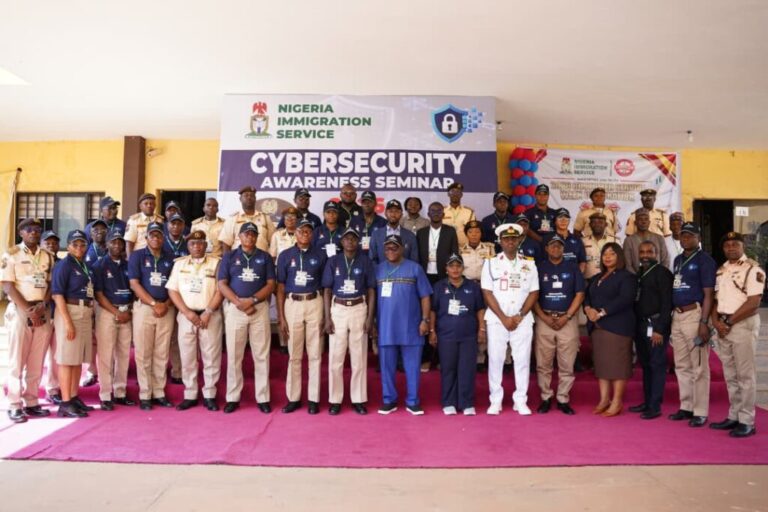
The Nigeria Immigration Service (NIS), in a strategic move to secure its digital architecture and safeguard sensitive national data, has intensified its cybersecurity framework through a comprehensive training seminar for its personnel.
This is contained in a statement by the service’s public relations officer, DCI Akinsola Akinlabi, made available to newsmen in Abuja on Saturday.
Mr Akinlabi said the initiative, driven by the NIS Information and Communication Technology (ICT) and Cybersecurity Directorate, culminated in the 2026 Cybersecurity Awareness Seminar held at the Service Headquarters in Abuja on Oct. 29.
He also said the seminar aimed to cultivate robust digital habits and promote responsible online practices among immigration officers.

He further said the seminar featured technical presentations by resource persons drawn from the State Security Service (SSS), United Nations Office on Drugs and Crime (UNODC), and the Nigeria Data Protection Commission (NDPC).
He said the seminar also featured presentations from the National Information Technology Development Agency (NITDA).
“The session focused on inter-agency collaboration for cybersecurity and critical infrastructure protection, combating cybercrime through law enforcement and international cooperation, data protection and privacy in the digital age.
“Cybersecurity awareness and human risk management in the digital workplace were also discussed at the seminar,” he said.
Mr Akinlabi also disclosed that a plenary session facilitated by Galaxy Backbone Limited (GBB) further examined strategies for securing critical systems through inter-agency collaboration.
He said the session provided participants with the opportunity to exchange experiences and explore practical approaches to strengthening the service’s cybersecurity framework.
Mr Akinlabi quoted the Comptroller-General of Immigration, Kemi Nandap, as emphasising the importance of cybersecurity in protecting the service’s digital infrastructure, safeguarding sensitive information and strengthening national security.
Ms Nandap, represented by the deputy comptroller-general, finance and accounts, DCG Saidu Daura, stressed that cybersecurity was a collective responsibility and urged officers to remain vigilant.
She tasked officers with observing established security protocols and promptly reporting suspected threats.
She also called for continuous capacity building, institutional collaboration and proactive measures to address emerging cyber threats before declaring the seminar open.
The seminar reaffirmed the NIS’s commitment to building a cyber-resilient institution through continuous capacity development, technology upgrades, inter-agency collaboration and compliance with global best practices.
(NAN)