
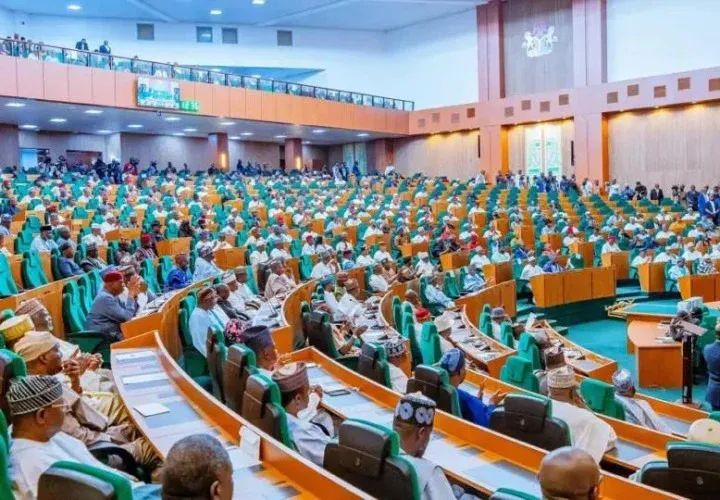
The House of Representatives Special Committee on Crude Oil Theft has called for the establishment of a special court to fast-track the prosecution of crude oil thieves and other economic saboteurs, saying weak laws and delays in the judicial process have continued to undermine efforts to curb oil theft in Nigeria.
The proposal was made at a stakeholders’ meeting in Abuja on Thursday, where lawmakers, security agencies and officials from the Office of the National Security Adviser reviewed the country’s legal framework for tackling crude oil theft, pipeline vandalism and related offences.
The meeting forms part of the committee’s ongoing consultations on legislative and institutional measures to address crude oil theft, which has continued to reduce government revenue, cut oil production, discourage investment and threaten Nigeria’s energy security despite years of security operations.
Chairman of the committee, Alhassan Doguwa, said participants agreed on the need to review existing laws, arguing that many of the statutes governing the sector date back to the military era and no longer provide adequate deterrence against increasingly sophisticated criminal networks.

“We have also recommended in previous bills before the House the possibility of establishing a special court for these kinds of crimes because the crimes themselves are special.
“If we allow these criminal cases to go through the conventional court system, considering the delays involved, many of them will remain unresolved while the criminals escape appropriate punishment,” he said.
He said the committee and stakeholders had agreed to work together to address legal and institutional bottlenecks hampering the fight against crude oil theft.
“The global oil and gas economy is now in an advanced stage. Virtually all oil-producing countries are making progress because they have provided effective legal instruments to address their challenges. For this reason, we believe Nigeria should also review some of its laws,” he added.
Doguwa noted that courts are still relying on outdated legislation enacted during military rule to prosecute offences in the oil and gas sector.
“Unless we provide new measures, new laws and a new legal framework, the courts will continue to rely on this obsolete legislation in handling serious criminality within Nigeria’s oil and gas sector.
“I want to assure Nigerians that the National Assembly, especially the House of Representatives through this committee, will partner with the Office of the National Security Adviser to effectively combat crude oil theft and every other criminal activity within the oil and gas environment,” he added.
The lawmaker said Nigeria’s crude oil production remains below budget projections because of persistent theft and pipeline vandalism, stressing that reversing the trend is essential to improving government revenue and restoring investor confidence.
He noted that representatives of the Nigerian Army, Nigerian Navy, Nigerian Air Force, Nigeria Police Force and the Nigeria Security and Civil Defence Corps attended the meeting, describing inter-agency collaboration as critical to addressing the challenge.
Doguwa, however, criticised the absence of the Nigerian Upstream Petroleum Regulatory Commission from the meeting, describing it as disappointing.
“It was rather unfortunate that some of the critical regulatory agencies in the oil and gas sector, particularly the NUPRC, neither attended nor sent representatives.
“We frown at that action and have directed the Clerk of the Committee to write to them, requiring them to appear before the committee because they are key stakeholders in the fight against this serious problem bedevilling our country,” he added.
A member of the committee, Cyril Hart, said the committee’s mandate extends beyond tackling crude oil theft to ensuring Nigeria’s oil assets are fully developed for national benefit.
He said operators that fail to develop oil blocks within stipulated timelines should also be held accountable.
Representing the National Security Adviser, the Director of Energy Security in the Office of the National Security Adviser, Goodluck Ilajufi, said stronger legislation had become necessary because existing penalties were no longer serving as effective deterrents.