
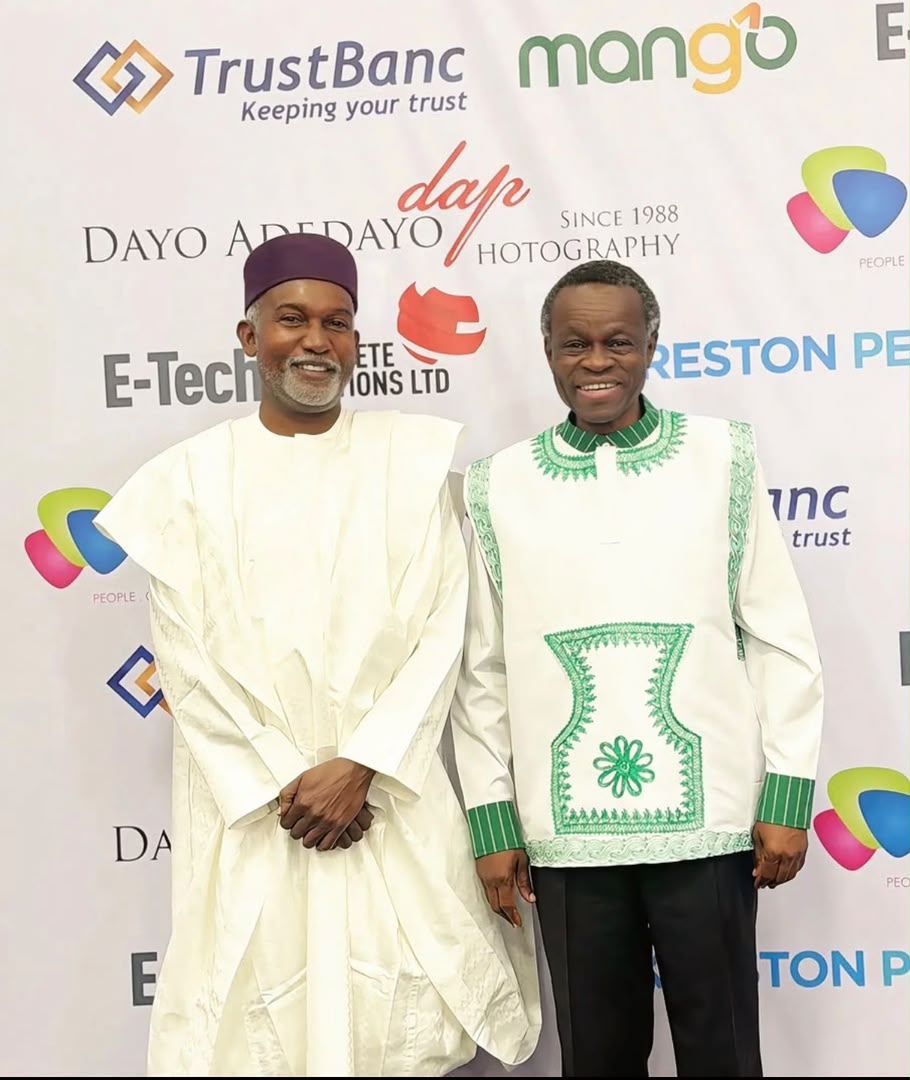
Former Foreign Affairs Minister says Africa must confront xenophobia through economic integration, historical understanding and stronger continental cooperation.
Former Minister of Foreign Affairs, Ambassador Yusuf Maitama Tuggar, has called for renewed Pan-African solidarity and stronger economic integration among African countries, warning that xenophobic attacks against fellow Africans undermine the continent’s collective aspirations.
Tuggar made the call on Thursday, November 12, 2026, while delivering an address as Chairman of the Bridge Club’s 2026 Grand End-of-Year Event, which focused on Xenophobia and Pan-Africanism.
He condemned the targeting of Nigerians and other black Africans in South Africa, describing the phenomenon as Afrophobia and arguing that the term more accurately captures the racial dimension of the hostility than the broader description of xenophobia.

The former minister said the attacks were particularly troubling given Nigeria’s historical contribution to the liberation struggle against apartheid, including its financial, diplomatic and educational support for South Africans and other African liberation movements.
Recalling Nigeria’s role during the anti-apartheid struggle, Tuggar highlighted the country’s provision of scholarships to victims of the 1976 Soweto massacre, support for liberation movements in Namibia and Angola, and its hosting of the World Conference Against Apartheid.
He said Nigeria’s solidarity with South Africa was demonstrated even during periods of economic difficulty, underscoring the sacrifices made by successive Nigerian governments and citizens in the struggle against racial oppression.
Tuggar, however, argued that understanding the contemporary tensions required examining the historical and structural roots of segregation in Africa, particularly the legacy of colonial administration and apartheid.
He traced elements of institutionalised segregation to colonial policies associated with Lord Frederick Lugard and their subsequent development under South Africa’s apartheid system, arguing that these structures left enduring psychological and social divisions.
According to him, historical context should help explain the tensions but must never be used to justify discrimination or attacks against fellow Africans.
On Pan-Africanism, Tuggar identified economic integration, industrialisation and intra-African trade as essential instruments for overcoming divisions and advancing the continent’s development.
He cited the intellectual contributions of prominent African economists, including Adebayo Adedeji and Thandika Mkandawire, who advocated manufacturing, regional market integration and the production of finished goods as pathways to economic independence.
He described the African Continental Free Trade Area (AfCFTA) as a critical instrument for translating Pan-African ideals into practical economic cooperation.
Tuggar also highlighted the relationship between free trade and the movement of people, arguing that the free circulation of labour was fundamental to an effective continental trade system.
He noted what he described as three significant ironies: that Pan-Africanism’s economic future depended on continental free trade, that free movement of labour was essential to free trade, and that the AfCFTA was headed by a South African.
The former minister further urged greater scrutiny of external influences that could be fuelling anti-migrant sentiments, questioning the funding and organisation behind movements such as March and March and Operation Dudula, as well as the possible role of externally amplified social media campaigns.
He cautioned against allowing domestic tensions and external narratives to undermine the strategic relationship between Nigeria and South Africa.
Tuggar stressed that cooperation between the two countries remained vital to Africa’s future, recalling South Africa’s support for Nigeria’s efforts to join the G20 during its 2025 presidency and its designation of Abuja to host the Africa Outreach Meeting on Industry and Agriculture in November 2025.
He also commended the Bridge Club for bringing together experienced professionals, business leaders and public figures, stressing the importance of retaining the institutional knowledge and policy experience of former public office holders through think tanks and other intellectual platforms.
The event featured Professor P.L.O. Lumumba as keynote speaker, while the Chairman of the Nigerians in Diaspora Commission (NiDCOM), Hon. Abike Dabiri-Erewa, was also recognised for her contributions to protecting the dignity and interests of Nigerians abroad.
Tuggar concluded by reaffirming the importance of African solidarity, intellectual engagement and economic cooperation in confronting xenophobia and advancing a more integrated and prosperous continent.