
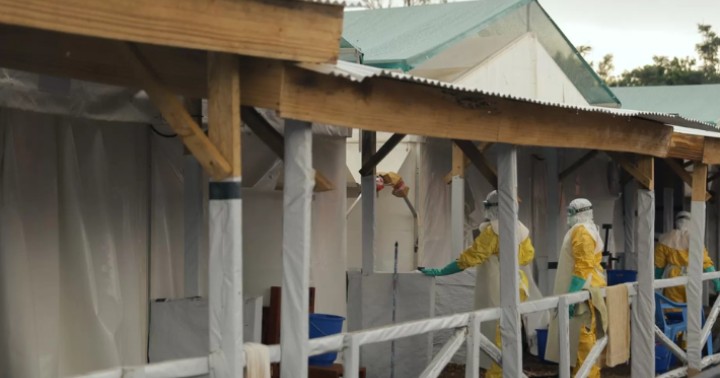
The World Health Organisation (WHO) has announced that most of the early epicentres of the Ebola outbreak in the Democratic Republic of the Congo (DRC) have been brought under control, with about 3,000 people recovering six months after the outbreak began.
The UN health agency disclosed this in a statement on Sunday, noting that the outbreak had been successfully contained and rapid transmission halted in several areas, including Mongbwalu, Nyankunde, Nizi, Rwampara and Butembo.
WHO said that although transmission remained significant in Bunia, one of the major early epicentres, the number of new cases had reduced by half, while treatment centres were recording low occupancy rates.
The agency is leading the technical health response, while the wider humanitarian system provides support in access, logistics, protection and the continued delivery of essential services. Nearly 100 health and humanitarian partners are operating across affected communities, providing vital services, including treatment for acute malnutrition.

The Africa Centres for Disease Control and Prevention (Africa CDC) and WHO are jointly leading the continental Incident Management Support Team, which coordinates health and development partners across affected and at-risk countries to strengthen response, preparedness and readiness.
The UN agency acknowledged significant progress over the past six months in bringing life-saving services closer to affected communities.
However, it warned that the outbreak continues to spread, particularly in areas affected by persistent conflict, population displacement and humanitarian challenges.