
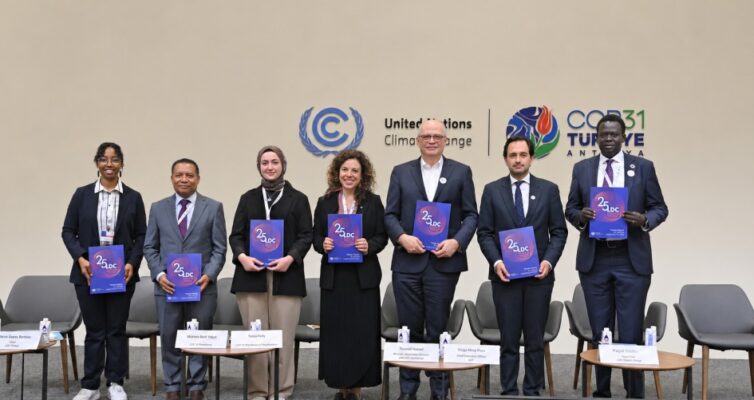
The United Nations has commemorated 25 years of initiatives aimed at helping the world’s least developed countries address climate change, calling for increased funding and stronger national capacity to implement adaptation plans.
The United Nations Framework Convention on Climate Change (UNFCCC) announced the milestone in a statement on Friday.
The anniversary marks 25 years since the establishment of the Least Developed Countries (LDC) work programme, the Least Developed Countries Expert Group (LEG) and the Least Developed Countries Fund (LDCF).
The initiatives have helped vulnerable countries identify and address urgent climate adaptation needs, from developing National Adaptation Programmes of Action (NAPAs) to preparing long-term strategies through National Adaptation Plans (NAPs).

According to the UNFCCC, more than 140 countries have begun developing their National Adaptation Plans, while 84 countries have submitted their plans.
The anniversary event brought together representatives of least developed countries, the COP31 presidency, its presidency of negotiations, the UNFCCC secretariat, the Global Environment Facility (GEF) and members of the LEG to review achievements, share lessons and identify priorities for the next phase of climate adaptation support.
Speaking at the event, the chair of the LDC group, Adao Barbosa, urged participants to go beyond celebrating past achievements and consider ways to improve support for the countries.
Barbosa said the success of the initiatives should be measured by the lives protected and futures secured rather than the number of plans developed or decisions adopted.
He noted that the countries had already developed their plans, identified priorities and demonstrated commitment, adding that what they needed most was the resources to implement them.
Representing the COP31 presidency, Müberra Yalçın said least developed countries remained among the nations most vulnerable to climate change despite contributing the least to its causes.
She also highlighted the persistent difficulties they faced in accessing funding and the necessary support to translate their adaptation priorities into practical action.
Similarly, Tessa Kelly, who represented the COP31 presidency of negotiations, acknowledged the contributions of least developed countries to expanding climate adaptation support.
Kelly said the LDC work programme had also contributed to the development of National Adaptation Plans for countries outside the least developed countries category.
Meanwhile, the Chief Executive Officer of the Global Environment Facility, Diego Puyo, identified country ownership, grant financing and innovative approaches as essential to strengthening climate adaptation efforts.
He stressed that countries must determine their own priorities and take the lead in implementing adaptation projects, while public funding should be strategically deployed to address financial barriers preventing vulnerable nations from accessing the support they need.