
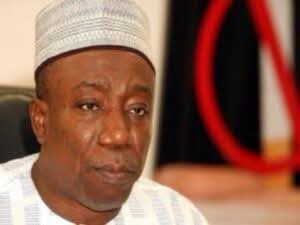
Senator representing Kebbi Central, Adamu Aliero, has expressed concern over Nigeria’s rising debt profile, describing the pace of borrowing under President Bola Tinubu’s administration as alarming and a growing source of public anxiety.
Mr Aliero made the remarks on Tuesday during an interactive session between the Senate and officials of the Ministry of Finance in Abuja, where lawmakers reviewed the government’s fiscal position and borrowing strategy.
The senator questioned why the government continued to rely heavily on loans despite improvements in revenue generation.
He said the issue of rising debt was already in the public domain, stressing that many Nigerians were worried by the country’s increasing borrowing.
According to Mr Aliero, the Tinubu administration inherited a national debt of more than N75 trillion and has since accumulated an additional N75 trillion to N80 trillion.
He also criticised the slow pace of budget execution, noting that implementation of the 2026 budget had yet to commence despite the rising debt burden.
In response, Chairman of the Presidential Fiscal Policy and Tax Reforms Committee, Taiwo Oyedele, dismissed claims that the administration had borrowed as much as N80 trillion, saying the figures widely circulated were based on a misunderstanding of the borrowing process.
Mr Oyedele explained that approval granted by the National Assembly for loans does not automatically mean the funds have been drawn down.
He noted that external borrowing requires legislative approval before it can be accessed, but many people wrongly assume approved borrowing plans represent money already received.
He further stated that a substantial share of domestic borrowing was aimed at refinancing existing obligations rather than taking on fresh debt.
According to him, when previously issued loans mature, the government raises new funds to settle those obligations, a process he said should not be regarded as additional borrowing.
On concerns that stronger revenue performance had not reduced the need for loans, Mr Oyedele said government spending still exceeded earnings because of increasing statutory responsibilities.
He illustrated that if government expenditure stood at N10 while expected revenue was N6, it would require borrowing N4. Even if revenue later increased to N7, borrowing of N3 would still be necessary as long as expenditure remained unchanged.
He added that the government had not utilised up to half of the borrowing approved by the National Assembly.
Mr Oyedele also argued that much of the increase in Nigeria’s debt stock resulted from accounting adjustments rather than fresh loans.
He said more than N40 trillion of the increase reflected the revaluation of existing foreign debt following the depreciation of the naira after the foreign exchange reforms.
Another N33 trillion, he explained, came from the securitisation of Ways and Means advances inherited from the previous administration, not from new borrowing by the Tinubu government.
He maintained that the actual amount borrowed by the current administration was significantly lower than figures being reported in the public space.
Aliero Flags Nigeria’s Debt Growth, FG Says Borrowing Figures Misrepresented
114