
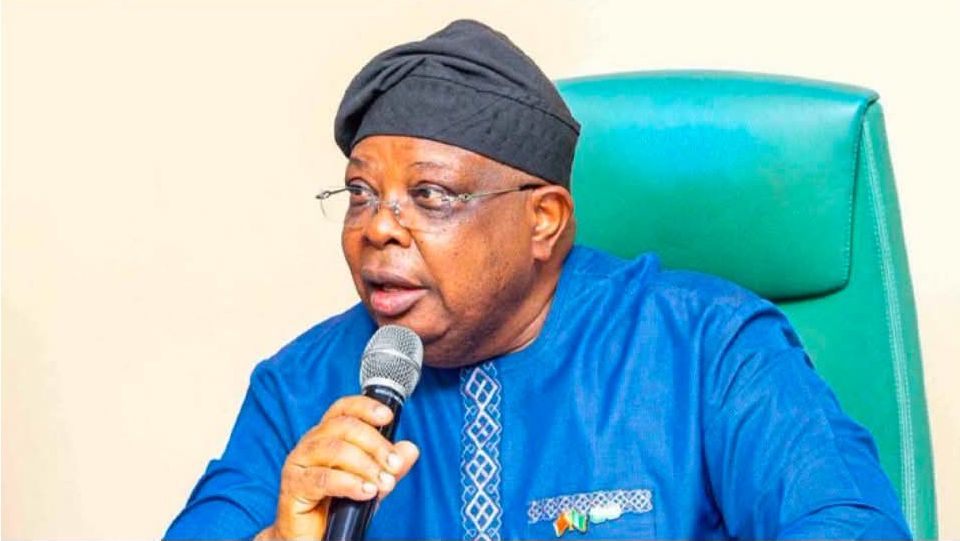
The federal government, in partnership with the United Nations Development Programme (UNDP) and the Rural Electrification Agency (REA), has inaugurated the Africa Minigrids Programme (AMP) in Nigeria.
The Minister of Power, Joseph Tegbe, while inaugurating the programme in Abuja, said achieving universal energy access was central to Nigeria’s economic transformation, industrial growth, and sustainable development.
According to him, expanding clean, reliable, and affordable energy, particularly in underserved rural communities, is essential to unlocking agricultural productivity, creating jobs, strengthening local enterprises, and improving livelihoods.
The AMP is a Global Environment Facility (GEF)-financed technical assistance initiative, supported by the UNDP and implemented by REA.

It is a renewable energy initiative and a strategic enabler of REA’s Energising Agriculture Programme (EAP), which aims to expand electricity access to underserved communities, stimulate rural economies, and accelerate the transition to clean energy.
Mr Tegbe said, “The programme represents more than the commissioning of mini-grid infrastructure. It represents the power of partnership, innovation, and our shared commitment to expanding sustainable energy across Nigeria.
“It marks the transformation of communities, the improvement of livelihoods, and the revitalisation of local economies.”
He said that the first phase of the programme, comprising 23 mini-grids, would provide electricity to 50,000 people, serve 20,000 households, and support thousands of businesses.
He added that additional phases were already being planned, and noted that Nigeria currently had its first 200-megawatt solar farm.
In his remarks, Mohammed Fall, the UN Resident and Humanitarian Coordinator in Nigeria, said access to sustainable energy remained essential to achieving the United Nations’ Sustainable Development Goals.
According to him, without sustainable energy, sustainable development remains out of reach.
He added that mini-grids were not simply energy projects, but development solutions capable of transforming rural communities.
The UNDP Regional Director for Africa, Ahunna Eziakonwa, said the programme marked a shift from fragmented, grant-funded energy projects to scalable investments driven by private-sector partnerships.
According to her, Africa has a unique opportunity to leapfrog traditional fossil fuel-based energy systems and become a global leader in renewable energy deployment.
The UNDP Resident Representative in Nigeria, Elsie Attafuah, said the unveiling of the 23 AMP projects had proven that energy is economic infrastructure capable of driving productivity, investment, and inclusive growth.
Meanwhile, Abba Aliyu, Managing Director/CEO of REA, described electricity as the backbone of modern society.
He said the AMP connected electricity directly to productive economic activities while leveraging public funding to attract private sector investment.
It supports the deployment of standardised, solar-powered mini-grids that provide reliable electricity to productive agricultural clusters across Nigeria’s six geopolitical zones.