
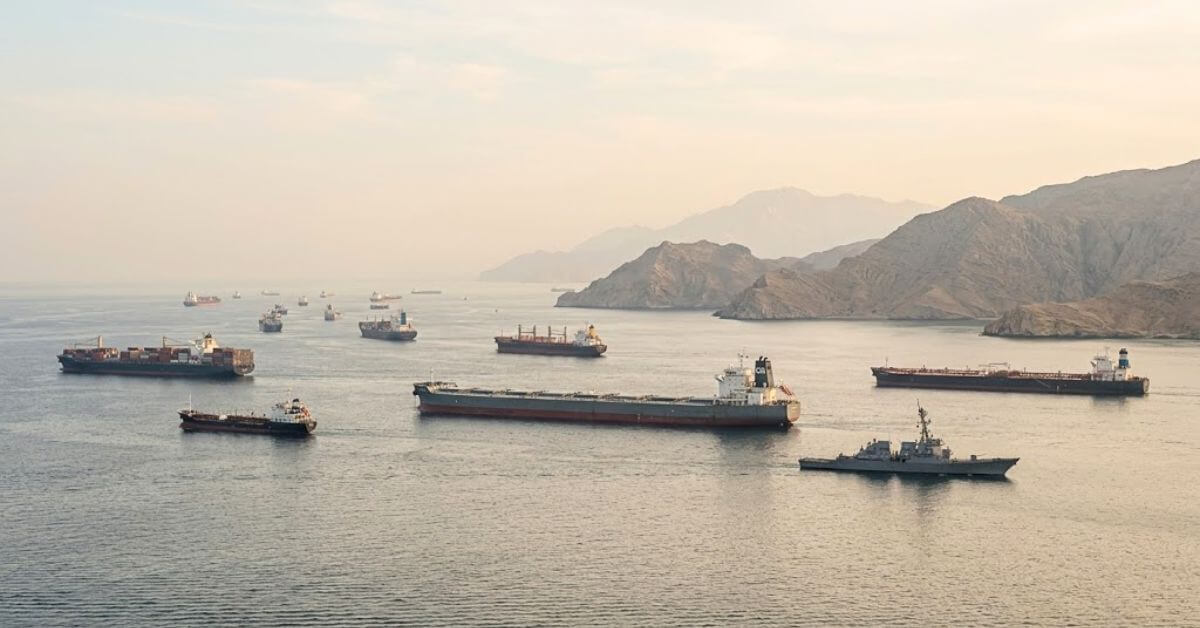
Tension in the global oil market may ease in the short term following Iran’s decision to reopen the Strait of Hormuz, a critical shipping route that handles a significant share of the world’s crude exports.
Iran’s Foreign Minister, Abbas Araghchi, confirmed that the waterway will remain accessible for commercial shipping for as long as the current ceasefire holds.
“The passage for all commercial vessels through the Strait of Hormuz is declared completely open for the remaining period of the ceasefire.”

The development comes after weeks of disruption triggered by the closure of the strait on February 28, when Iran responded to military actions involving the United States and Israel. The shutdown raised immediate concerns across global energy markets, with fears of supply shortages and price spikes.
Although the reopening offers temporary relief, uncertainty remains over the exact scope of the ceasefire. It is still unclear whether the commitment applies strictly to the ongoing 10-day truce involving Israel and Lebanon, or the earlier two-week agreement between Iran and the United States which began on April 8.
The strategic importance of the Strait of Hormuz cannot be overstated. A large volume of global oil shipments passes through the narrow corridor daily, making any disruption a direct threat to energy security, particularly for import-dependent economies.
Reacting to the announcement, US President Donald Trump welcomed the move, signalling cautious optimism from Washington.
“THANK YOU!” Trump wrote, adding that the waterway was now “FULLY OPEN AND READY FOR FULL PASSAGE.”
Iran’s decision to reopen the strait is tied directly to the ceasefire arrangement, suggesting that any breakdown in the truce could quickly reverse the situation. This keeps markets on edge, as traders and governments monitor developments closely.
The earlier closure had already exposed how vulnerable global oil supply chains remain to geopolitical conflict in the Middle East. Even short-term disruptions can trigger sharp reactions in crude prices and shipping costs.
For now, the reopening restores a degree of stability to international oil flows, but the situation remains fragile. The durability of the ceasefire will ultimately determine whether the Strait of Hormuz stays open or becomes a pressure point once again in an already volatile region.