
The National Emergency Management Agency (NEMA) has declared its preparedness to spearhead Nigeria’s move towards a locally led humanitarian response framework as the United Nations transitions from its frontline coordination role to a supportive one.
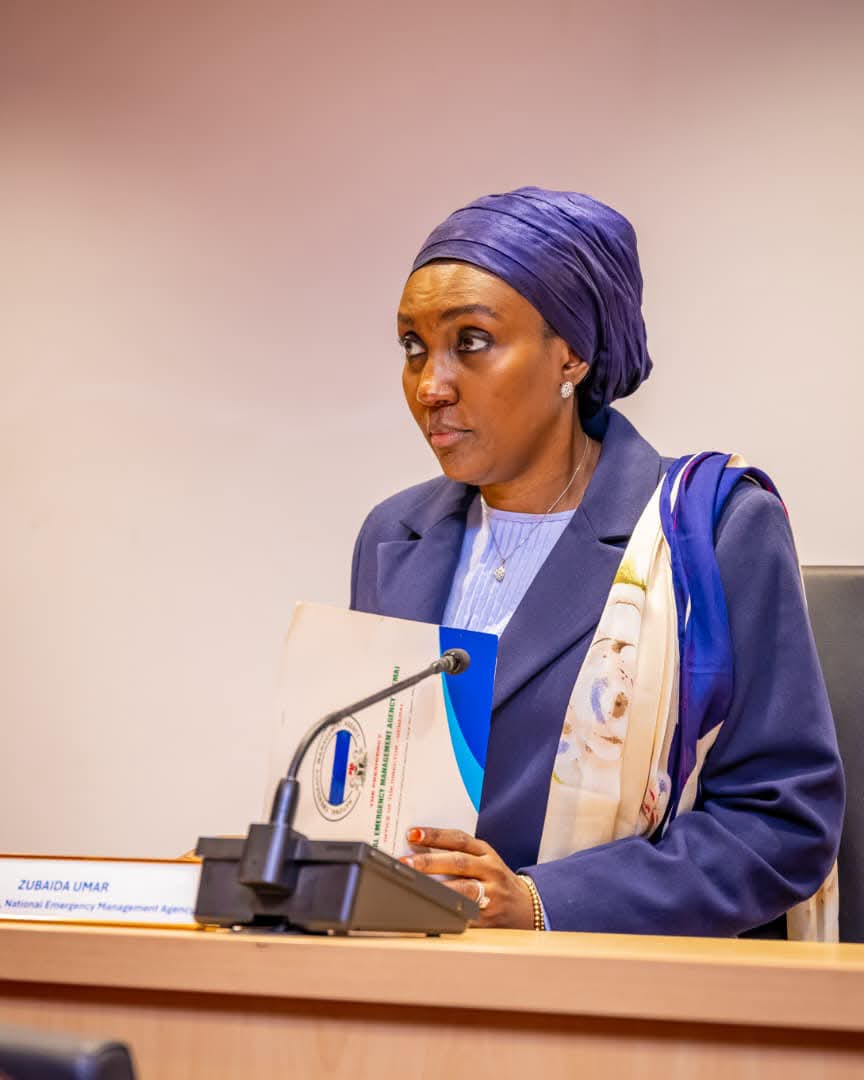
Speaking on Tuesday at the opening of the Humanitarian Transition Workshop organised by the United Nations Office for the Coordination of Humanitarian Affairs (UNOCHA) in Abuja, NEMA Director-General Zubaida Umar said the shift would help establish a stronger and more sustainable humanitarian system driven by national institutions.
She noted that the transition is consistent with NEMA’s legal mandate to coordinate disaster management and humanitarian interventions across the country, stressing that the agency is ready to provide the leadership required for the process.
Umar explained that NEMA would focus on strengthening collaboration among stakeholders, improving disaster preparedness, advancing anticipatory action, enhancing data management and deepening partnerships at the federal, state and local government levels.
According to her, the workshop is expected to produce a joint action plan aimed at reinforcing federal and state institutions, improving coordination structures and ensuring humanitarian responses remain inclusive, accountable and responsive to the needs of vulnerable Nigerians.
She also reaffirmed NEMA’s commitment to working alongside State Emergency Management Agencies (SEMAs), UN agencies, development partners and other stakeholders to develop a resilient, nationally owned humanitarian response system.
Also addressing participants, the Minister of Humanitarian Affairs and Poverty Reduction, Dr Bernard Doro, said evolving global humanitarian realities had made the transition necessary. He appealed to state and local governments, the private sector, development partners and Nigerians in the diaspora to contribute resources towards supporting vulnerable communities.
The United Nations Resident Coordinator in Nigeria, Dr Mohamed Malik Fall, clarified that the transition does not mean the UN is leaving Nigeria. Instead, he said it reflects a strategic realignment that will allow Nigerian institutions to take greater ownership of humanitarian operations, while the UN continues to offer technical assistance, capacity development and institutional support.
The workshop attracted representatives from federal and state governments, UN agencies, development partners and civil society organisations, who gathered to map out strategies for strengthening nationally led humanitarian efforts and ensuring a seamless transition to a sustainable humanitarian response system.
NEMA to Lead Nigeria’s Humanitarian Response as UN Shifts to Support Role
128