
By Cliff Stanley
Human societies have an uncomfortable habit: we often reserve our highest praise for people after they have left office, retired, or died. We wait for the farewell speech before we clap; we wait for the vacancy before we acknowledge the value of the person who filled it. This culture of delayed appreciation does a disservice to leaders who are still working, still sacrificing, and still creating opportunities for others.
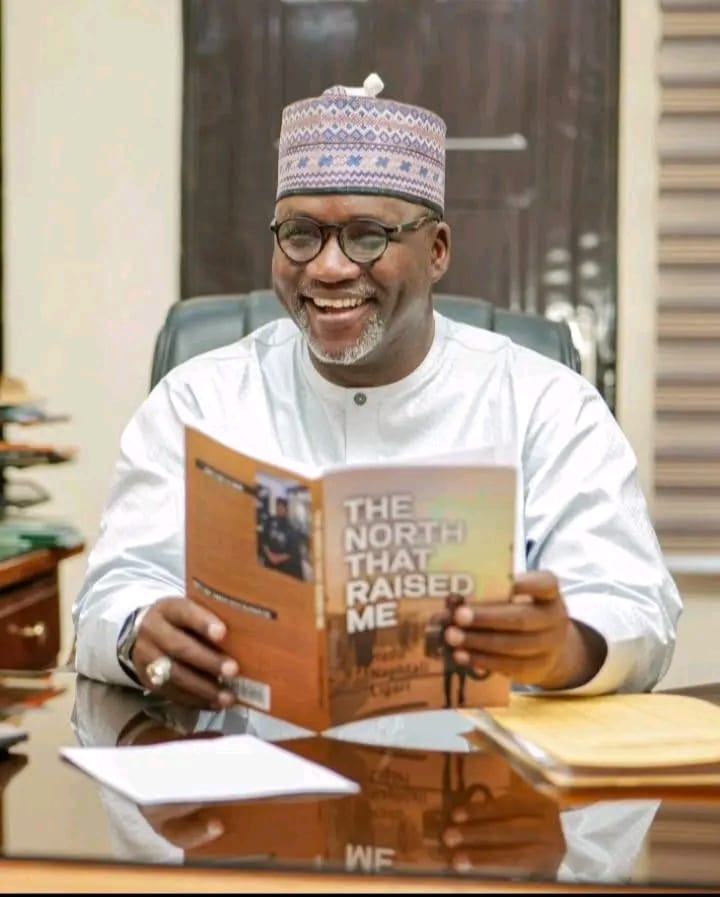
Professor Sani Ahmed Yauta, Vice-Chancellor of Gombe State University (GSU), deserves a different treatment. While he remains in office still showing up, still solving problems, still expanding the boundaries of what a state university in North-East Nigeria can become it is right to say plainly: the man is doing the work.
Leadership as development
From a development perspective, a university is not merely a place where degrees are awarded. It is a engine for human capital, local innovation, food security, environmental resilience, public health, and social mobility. In a region still recovering from insecurity, climate pressure, poverty, and infrastructure deficits, the quality of university leadership can determine whether young people become creators of solutions or casualties of neglect.
Professor Yauta’s leadership should therefore be assessed not only through ceremonies and titles, but through visible institutional outcomes: new faculties, stronger research capacity, improved student welfare, wider access, and partnerships that connect Gombe to national and global knowledge networks.
Expanding access and opportunity
One of the most significant developments under his watch is the establishment of the Faculty of Agriculture at Malam Sidi and the Faculty of Environmental Sciences at the Dukku campus, where more than 200 pioneer students were matriculated. These are not cosmetic expansions. Agriculture and environmental sciences speak directly to the development priorities of Gombe State and the wider North-East: food production, land management, climate adaptation, rural livelihoods, and sustainable resource use.
By creating new academic pathways, GSU is widening access to university education for young people who might otherwise have been excluded. In development terms, this is meaningful: every additional student admitted into a relevant faculty represents potential skills retained in the state, potential jobs created, and potential solutions developed for local challenges.
Research, infrastructure, and credibility
A university cannot drive development without laboratories, libraries, hostels, lecture theatres, and credible research. Reports associated with GSU’s current transformation include a substantial federal investment reported at about N4 billion for laboratories, hostels, and modern teaching facilities. If fully and transparently delivered, such investment can change the daily learning experience of thousands of students and strengthen the university’s capacity for applied research.

Professor Yauta’s own academic background is also relevant. Before becoming Vice-Chancellor, he served as Deputy Vice-Chancellor (Academic), Dean of the Faculty of Education, and held several major committee roles. He has attracted research grants and contributed to scholarship on education in North-East Nigeria, including teacher absenteeism and emergency remote teaching after COVID-19. This matters because a Vice-Chancellor who understands research is better placed to build a culture where inquiry, evidence, and innovation are valued.
GSU has also recorded full accreditation for all 63 undergraduate programmes, a major institutional credibility milestone that improves graduate mobility, employer confidence, and eligibility for further academic partnerships.
Putting students at the centre
Perhaps the most human part of Professor Yauta’s leadership is his attention to students who are often invisible in elite conversations about higher education. He has been associated with support for students living with disabilities, efforts to secure philanthropic scholarships for indigent students, and the inclusion of students in university committees.
The National Association of Nigerian Students publicly commended GSU for incorporating students into decision-making structures and for transparency in handling NELFUND loan processes.
This is not merely welfare; it is democratic institution-building. When students participate in committees, they learn governance, accountability, and civic responsibility. When vulnerable students receive financial support, the university becomes a ladder rather than a gate. When disability inclusion is treated as a practical responsibility, the institution signals that talent should never be wasted because of circumstance.
Connecting Gombe to the world
Development also requires connection. A university that is isolated may produce knowledge, but a university that is connected can translate knowledge into impact. GSU’s engagement with Michigan State University in relation to agricultural education, along with collaborations involving UK and Tunisian institutions and partners such as Go-Health and NEWMAP, points toward a more outward-facing institution.
Such partnerships should be nurtured deliberately. They can bring joint research funding, staff exchange, curriculum development, digital learning, climate research, agricultural technology, and postgraduate supervision opportunities. For a university in North-East Nigeria, international partnership is not about prestige alone; it is about bringing global standards and resources to bear on local problems.
A call for more support
The appropriate response to good leadership is not complacency. It is encouragement, scrutiny, and investment. Government, philanthropists, alumni, development agencies, private-sector actors, and international universities should engage GSU more boldly.
They can support endowed scholarships for students with disabilities and economically disadvantaged learners; fund climate-smart agriculture and environmental research; establish innovation hubs and technology-transfer offices; sponsor visiting professorships and staff development; and create joint degree, research, and exchange programmes with universities in Africa, Europe, and North America.
Professor Yauta has opened a door. Others should walk through it with resources, ideas, and partnerships.
Appreciation in real time
Professor Sani Ahmed Yauta is still Vice-Chancellor. The work is still unfolding. The laboratories are still being equipped, the new faculties are still growing, the partnerships are still developing, and the students whose lives are being changed are still writing their stories.
That is precisely why this appreciation should be expressed now.
We do not need to wait for his exit to say thank you. We can say it while he is still building, still serving, and still believing that a public university in Gombe can stand confidently among serious institutions in Nigeria and beyond.
Professor Sani Ahmed Yauta, we see the work. We appreciate it now not after the seat is empty, but while you are still using it to build to the glory of man and that of God.( I acknowledge Aisha Saudah Saraki who also wrote on this too)
Cliff Stanley political scientist Public Theologian, write from Jos Ecwa Theological Seminary ( JETS)
Cliffstanley3@gmail.com
07032826319