
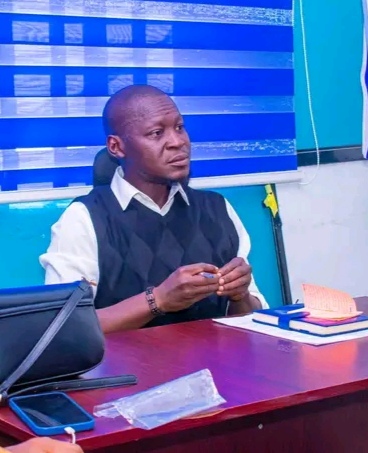
By Cliff Stanley
“The important thing is not to stop questioning. Curiosity has its own reason for existing.” Albert Einstein.
Some encounters leave an imprint that time cannot erase. They become more than memories; they become lessons that shape one’s understanding of leadership, public service, and national character. One such encounter transformed my appreciation of integrity in public office during my undergraduate years at the University of Maiduguri.
As a 200-level Political Science student, I attended a lecture in which one of my lecturer Dr. Ibrahim Umara a popular lecturer in the University, now professor
passionately examined the contributions of the late Dr. Shettima Ali Monguno, CFR, to Nigeria’s political and administrative development. The lecture did more than enrich my academic knowledge it awakened a profound curiosity about the man whose name had become synonymous with distinguished public service.
Rather than allowing that curiosity to remain within the four walls of the classroom, I acted on it.
Accompanied by my senior friend, Mr. Benson Joel, I visited the residence of the elder statesman in Maiduguri Government Reservation Area (GRA) near Government House. What we expected to be a brief visit became one of the defining moments of my university education.
Despite his towering national and international reputation, Dr. Monguno received us with remarkable humility and warmth. There was neither the distance nor the arrogance that often accompanies public office. Instead, we found a statesman who was willing to invest his time in a young Political Science student eager to learn.
For hours, he patiently shared his reflections on Nigeria’s political evolution from the First Republic through successive military administrations to the democratic transition that produced President Umaru Musa Yar’Adua in 2007.

His analysis was measured, historically grounded, and enriched by personal experience. He was not merely recounting history; he had helped shape it.
As we listened, classroom theories came alive. Concepts of governance, public administration, diplomacy, and leadership were no longer abstract academic ideas but practical realities explained by a man who had occupied some of the highest offices in the Federal Republic of Nigeria.
Before we departed, Dr. Monguno presented me with a copy of his autobiography, The Grateful Orphan. That book became more than a gift. It became a lasting reminder that the greatest education often comes through conversations with those who have lived history.
Years later, I have come to appreciate that my encounter with Dr. Monguno was not simply about meeting a prominent Nigerian. It was about witnessing a generation of leadership whose understanding of public office was anchored in service rather than personal enrichment.
Dr. Shettima Ali Monguno’s public record remains extraordinary. He served as Nigeria’s first Minister of Petroleum, appointed in 1972, and became President of the Organization of the Petroleum Exporting Countries (OPEC) between 1972 and 1973 at a pivotal moment in global energy politics. He also served as Federal Commissioner for Trade, Minister of Mines and Power, Minister of Petroleum and Energy, and Minister of the Air Force.
Beyond the executive branch, he represented Nigeria at the United Nations for more than a decade, led Nigeria’s delegation to the United Nations Conference on Trade and Development (UNCTAD II) in New Delhi in 1968, served as Pro-Chancellor of both the University of Calabar and the University of Nigeria, chaired the Maiduguri Metropolitan Council, participated in the 1977–1978 Constituent Assembly, served as Deputy National Chairman of the National Party of Nigeria (NPN), chaired the Borno Education Endowment Fund, and received the national honour of Commander of the Order of the Federal Republic (CFR) in 1982. His international recognition included honours from Ethiopia, Egypt, Sudan, and Cameroon, as well as the symbolic Keys to the Cities of New York, Louisville, Quito, and Lima.
Yet, perhaps the greatest testimony to his life was not the offices he held but the simplicity with which he lived.
One story, now widely recounted, illustrates this more powerfully than any list of achievements.
In 1974, while serving as Nigeria’s Minister of Petroleum during one of the country’s most influential periods in the oil industry, Dr. Monguno sought to build a modest house in Maiduguri. Rather than exploiting his office or public resources, he applied for a ₦40,000 bank loan. When the bank requested a guarantor, he approached the then Head of State, General Yakubu Gowon.
General Gowon declined not out of indifference, but because he believed acting as guarantor for a serving minister could constitute an abuse of office and create an ethical conflict.
Rather than seeking political influence or abusing the privileges of office, Dr. Monguno pursued another lawful solution. He reached an agreement with Julius Berger under what would today resemble a Build, Own, Operate, and Transfer (BOOT) arrangement. The company financed and constructed the modest bungalow, recovered its costs through rental deductions from his salary, and eventually transferred ownership to him after the debt had been fully settled.
Remarkably, after decades in public service and after occupying some of Nigeria’s most strategic national offices, he died owning that single modest house.
In an era when public office is too often associated with unexplained wealth, the life of Dr. Monguno offers a striking counter-narrative. His legacy reminds us that integrity is not measured by speeches but by personal choices made when no one is watching.
His educational journey reflected the same commitment to excellence. From Monguno Primary School, Teachers’ Colleges in Bauchi and Katsina, the College of Arts, Science and Technology in Zaria, Moray House College of Education, to the prestigious University of Edinburgh, he consistently pursued knowledge that later equipped him for national and international service.
Looking back, I now understand that the greatest lesson from my visit was not simply the conversation we had but the life that stood behind every word he spoke. His humility gave credibility to his counsel, and his character gave authority to his leadership.
For today’s generation, particularly young Nigerians preparing for careers in politics and public administration, Dr. Monguno’s life demonstrates that leadership is not about the accumulation of wealth but the preservation of trust. Public office is temporary; integrity is enduring.
His example challenges both leaders and citizens to redefine success. A nation is strengthened not merely by brilliant policies but by public servants whose private lives reflect the ethical standards they proclaim in public.
My encounter with Dr. Shettima Ali Monguno remains one of the greatest privileges of my academic journey. It reaffirmed an enduring truth: curiosity opens doors to wisdom, but character is what leaves a lasting legacy.
In a world searching for ethical leadership, the life of Dr. Shettima Ali Monguno deserves to be remembered not simply because of the positions he occupied, but because he demonstrated that it is possible to wield great power without surrendering one’s integrity.
Sometimes, curiosity knocks on the door of greatness. On that unforgettable day in Maiduguri, greatness answered not with grandeur, but with humility, wisdom, and a life that continues to speak long after its owner has gone.
Cliff Stanley
Political Scientist /Analyst,
Public theologian,
Cliffstanley3@gmail.com
07032826319.