
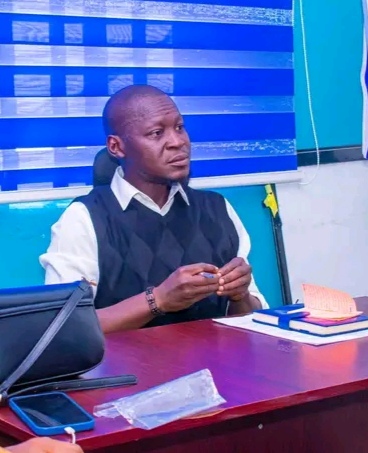
By Cliff Stanley
The Middle Belt is not merely a geographical corridor between Nigeria’s Muslim-majority far North and the Christian-majority South. It is a politically strategic, ethnically diverse and historically assertive region whose people have repeatedly demanded that Nigeria treat them as equal citizens rather than as an appendage of Northern political power. Recent engagements between Middle Belt leaders, including General Theophilus Yakubu Danjuma, and President Bola Ahmed Tinubu have therefore reopened an old question: is the region being genuinely included in national governance, or is it once again being courted only when elections approach?
The answer cannot be reduced to a single meeting. It requires an honest reading of the Middle Belt’s history of marginalisation, the political machinery deployed against its autonomy movements, and the difference between symbolic appointments and structural justice.
The modern Middle Belt political consciousness took organised form in the 1950s, when minority nationalities in the old Northern Region especially the Tiv, Idoma, Igala, Nupe, Ebira, Kaje, Atyap, Birom,Bachama Eggon and other communities challenged domination by the Northern People’s Congress (NPC) and the emirate-centered political order it represented. Their grievance was not hostility to the North as a geographic space; it was opposition to a political arrangement in which power, taxation, traditional authority and administrative patronage were concentrated in hands that did not represent them.
Joseph Sarwuan Tarka became the most recognisable face of that struggle. In 1957, he emerged as leader of the United Middle Belt Congress (UMBC), a party formed through the merger of the Middle Belt People’s Party and the Middle Zone League. The UMBC gave institutional expression to demands for political inclusion, cultural recognition and a separate Middle Belt state. It allied with Chief Obafemi Awolowo’s Action Group, not because the two movements shared an ethnic identity, but because they shared an interest in weakening the monopoly of the NPC over the Northern Region.
That alliance matters today. It shows that the Middle Belt has historically been willing to look beyond regional slogans when its people’s liberty, land, faith, representation and security were at stake.
The marginalisation of the Middle Belt was not simply a matter of election results. It was embedded in the colonial and post-colonial architecture of the old Northern Region, where minority communities were often governed through Native Authorities dominated by groups with greater access to political power.
The consequences were practical: unequal access to education, employment, land administration, local government resources and political appointments. More dangerously, political dissent could be treated as rebellion. The UMBC’s campaign for a Middle Belt state was portrayed by NPC-aligned authorities as a threat to Northern unity, even though its central demand was representation and self-determination within Nigeria.
The 1959 and 1964 elections exposed this tension sharply. The UMBC contested against the NPC in the Middle Belt, and political competition frequently descended into intimidation, arrests, violence and allegations of manipulated traditional and administrative institutions. Tarka himself was arrested and charged with felony alongside other opposition figures after violence following the 1959 pre-independence election.

The UMBC later argued that the violence reflected the “oppressive and marginalised policies” of the NPC-led Northern Regional government, exercised through the Tor Tiv, Native Authorities, subordinate chiefs and security agencies.
This history explains why many Middle Belt communities remain sensitive to political exclusion. For them, marginalisation is not an abstract academic phrase; it is a lived memory of being governed without consent.
The Police as an Instrument of Power
One of the most serious grievances in Middle Belt political history concerns the use of policing and coercive state institutions against opposition politics. In the First Republic, policing was not fully separated from partisan political authority in the way modern constitutional theory presumes. Native Authority police, regional police structures and political party organs could operate in ways that made dissent dangerous.
The NPC did not merely compete with the UMBC electorally. It also controlled, or could influence, the administrative and coercive institutions through which local politics was conducted. The UMBC accused the NPC-led government of arbitrary police raids, mass arrests, imprisonment of innocent people and the use of the Ahmadu Bello Youth Brigade the youth wing of the NPC to manufacture offences against opponents.
This was the political context in which the phrase “the police force used by the Northern People’s Congress” acquires meaning. It does not mean that every policeman was an NPC partisan, nor that every act of policing was illegitimate. It means that, in a highly centralised political system, the institutions of law enforcement could be perceived and in documented cases alleged to serve the ruling party’s effort to suppress opposition.
That perception had lasting consequences. It taught Middle Belt communities that political power without accountability could become domination, and that elections without impartial institutions could become rituals rather than choices.
Liquor Licences and Political Control
The issue of liquor licences is another important, though less widely discussed, dimension of Middle Belt political history. In the colonial and early post-colonial Northern Region, licences for the sale and consumption of alcohol were not merely commercial permits. They were instruments of local administrative control, particularly in communities where Christian and traditional religious practices differed from the Islamic norms favoured by parts of the Northern political establishment.
For UMBC supporters, the control of liquor licensing became symbolic of a wider problem: the ability of NPC-aligned Native Authorities to regulate everyday economic and social life in ways that could punish political opponents or reward loyalists. The issuance, denial, taxation or withdrawal of licences could affect brewers, sellers, hotels, drinking places and local traders many of whom were part of the Middle Belt’s emerging commercial and Christian communities.
It would be historically careless to claim that every liquor-licence dispute was purely political, or that the UMBC alone suffered from such controls. But it would be equally dishonest to dismiss the grievance. In a system where local authorities combined administrative, judicial, fiscal and policing powers, control over permits and licences could become a mechanism of political discipline. The broader point is that marginalisation operated not only through elections and appointments, but through the quiet machinery of daily administration.
The Middle Belt Is Not a Monolith
It would be wrong to portray the Middle Belt as a single, predictable voting bloc.
The region includes Plateau, Benue, Kogi, Kwara, Niger, Nasarawa,Adamawa, Taraba and parts of the Federal Capital Territory. Its peoples differ in religion, language, political tradition and economic interest. Any analysis that treats “the Middle Belt” as one ethnic or religious army misunderstands the region.
That diversity is precisely why the region has often been decisive in national elections. It is large enough to matter, diverse enough to resist simple manipulation, and strategically located between Nigeria’s major political zones. No serious presidential coalition can ignore it.
At the same time, elite meetings do not automatically translate into mass political loyalty. Voters in Benue, Plateau, Kogi, Nasarawa, Adamawa or Taraba will judge the Tinubu administration by insecurity, food prices, infrastructure, jobs, federal presence, justice for victims of violence and whether appointments translate into tangible development.
What the Present Administration Has Given
The Tinubu administration has, in fact, placed several prominent Middle Belt figures in influential positions. This should be acknowledged honestly. It is not evidence that the region has been forgotten.
These appointments matter. They give the Middle Belt visible presence at the highest levels of party organisation, federal administration, the petroleum sector and electoral management.
The APC’s North Central stakeholders’ meeting in October 2026, attended by Yilwatda, Akume and regional governors, ministers and legislators, also shows that the party is actively organising the zone ahead of the 2027 election.
However, appointments alone do not settle the question of marginalisation. A Middle Belt politician in Abuja is not automatically a Middle Belt constituency in Abuja. Representation becomes meaningful only when it produces security, schools, roads, hospitals, agricultural support, power, jobs and credible elections for ordinary people.
The Real Test for Tinubu
President Tinubu’s engagement with Middle Belt leaders should therefore be judged by more than photographs and communiqués.
The real test is whether the administration addresses the issues that have historically driven Middle Belt political anxiety:
Ending rural insecurity, communal violence, banditry, kidnapping and farmer-herder conflicts.
Ensuring that security responses protect all communities impartially.
Investing in agriculture, rural roads, power, education and healthcare.
Guaranteeing fair political representation and credible local governance.
Respecting religious and cultural pluralism.
Making federal institutions responsive to communities that have historically felt excluded.
If these issues are addressed, the Middle Belt may become one of the administration’s strongest political bases. If they are not, no number of meetings, endorsements or appointments will prevent the region from asking the same question it has asked since the days of Tarka: Who speaks for us, and who benefits from our votes?
The question “Who is afraid of the Middle Belt?” is best answered not with conspiracy theories but with political realism. What established political forces fear is not the Middle Belt’s population alone; they fear its capacity to organise, negotiate and refuse to be taken for granted.
The UMBC’s alliance with the Action Group showed that the Middle Belt could become a decisive partner in national politics. The present appointments of Yilwatda, Akume, Ojulari and Amupitan show that the region currently has access to power. But history teaches a harder lesson: access to power is not the same as liberation from marginalisation.
The Middle Belt does not need pity. It needs justice, security, investment and a political system in which its people are citizens, not electoral hostages. Until that is achieved, the question will remain on Nigeria’s political agenda: Who is afraid of the Middle Belt?
Cliff Stanley
political scientist, Public Theologian,
Write from Jos Ecwa Theological Seminary ( JETS)
Cliffstanley3@gmail.com
07032826319.