
Nigeria’s political parties have come under fresh pressure to clean up their internal operations, dismantle entrenched cultures of impunity and demonstrate genuine commitment to fighting corruption before asking Nigerians for their votes in the 2027 general elections.
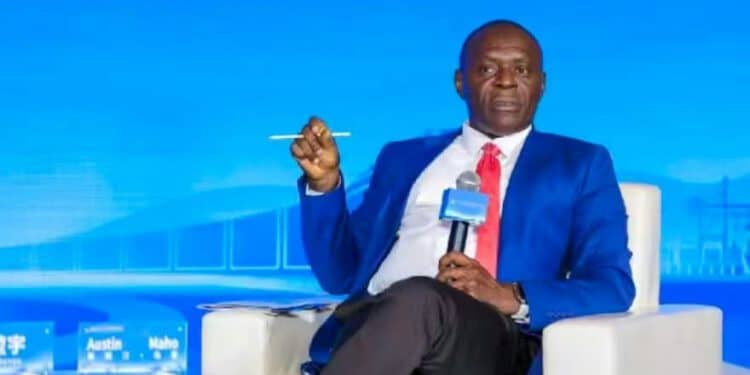
Dr. Austin Maho delivered the blunt challenge in Abuja on Wednesday, warning that Nigeria’s democracy would continue to produce weak governance if political parties remained breeding grounds for indiscipline, corruption, financial manipulation and personality-driven politics.
Maho argued that the country’s political crisis goes beyond the performance of elected officials, pointing directly to the institutional weaknesses of the political parties that recruit, sponsor and present candidates for public office.
He challenged Nigerian parties to abandon their traditional dependence on election-season mobilisation and build permanent, ideologically grounded institutions capable of enforcing discipline, demanding accountability and producing credible leadership.

Speaking at the DICAN International Stakeholders Engagement Forum on Anti-Corruption, Party Building and Democratic Governance, he presented a paper titled “Nigeria’s 2027 Polls: Promoting Party Organization, Discipline, and Anti-Corruption — Lessons from Xi Jinping’s Thought.”
Using the organisational philosophy of China’s Communist Party as a case study, Maho maintained that political parties must first establish order within their ranks before claiming the capacity to impose responsible governance on an entire nation.
His argument was unmistakable: a party that cannot discipline its members, regulate its finances and sanction wrongdoing has little moral authority to promise Nigerians an accountable government.
“To govern China well, the Party must first govern itself well. Internal party discipline is paramount to good governance,” he said.
Maho identified organisational discipline, political unity and an uncompromising approach to corruption as defining features of the Chinese Communist Party’s approach to institutional management.
He said Nigeria could draw valuable lessons from President Xi Jinping’s emphasis on party building, particularly the principle that discipline must become an institutional culture rather than a ceremonial declaration.
To demonstrate the depth of this philosophy, he narrated an experience from a recent two-week visit to China, involving a Chinese journalist who was also a Communist Party member.
According to Maho, the journalist declined to drink alcohol during a meeting at a hotel bar because he had driven himself to the venue. The journalist reportedly explained that drinking and driving, even without causing an accident, could constitute a serious offence with consequences for his party membership.
Maho said the encounter exposed the difference between merely preaching discipline and building a culture in which individuals voluntarily submit themselves to established standards.
“Discipline is not what you do when the Party is watching you. Discipline is what you do when nobody is watching you. That is integrity,” he declared.
He argued that Nigeria’s political environment desperately needed this understanding of personal responsibility, where public officials and party members recognise that integrity must not depend on the presence of security personnel or fear of immediate punishment.
He nevertheless stressed that Nigeria must retain its multi-party democratic framework, explaining that the objective was to borrow lessons in accountability and organisational efficiency, not replicate China’s one-party political system.
In a direct indictment of Nigeria’s political party structure, Maho condemned the practice of maintaining party organisations only when elections are approaching.
He observed that some party offices remain inactive for extended periods, with membership registers, grassroots structures and local leadership networks receiving little attention until politicians begin preparing for electoral contests.
He described this approach as fundamentally incompatible with serious democratic organisation.
Maho demanded functional party structures from the ward level to the national headquarters, supported by credible membership databases, active executives, regular meetings and continuous leadership development.
He said political parties must invest in young people, encourage genuine grassroots participation and build institutions that remain operational regardless of whether elections are approaching.
According to him, political parties must stop behaving like temporary electoral vehicles and begin functioning as institutions with clear ideological identities, enforceable rules and long-term development programmes.
Maho also took aim at the culture of political opportunism, particularly politicians who abandon their parties after losing primary elections, disregard collective decisions or betray agreements whenever their personal ambitions are threatened.
He condemned vote-buying, political violence and the alleged collection of money from aspirants by party officials, describing such practices as damaging to the credibility of internal democracy.
He insisted that political parties must establish disciplinary mechanisms capable of sanctioning influential members instead of allowing political status, wealth or access to power to determine who obeys party regulations.
“Discipline is the hallmark of any serious political party,” he said.
He warned that political parties that tolerate disobedience and transactional politics would struggle to produce leaders committed to national interest and responsible governance.
On corruption, Maho challenged Nigerian political parties to end what he described as selective commitment to accountability, whereby allegations against political opponents attract condemnation while members of the same political camp enjoy protection.
Referencing China’s anti-corruption campaign against the so-called “tigers and flies”, he highlighted the importance of pursuing wrongdoing across different levels of authority.
He acknowledged the work of Nigeria’s EFCC, ICPC and Code of Conduct Bureau but argued that institutional existence alone could not guarantee success without consistent enforcement of anti-corruption laws.
He maintained that political parties must stop shielding individuals accused of wrongdoing simply because they belong to their political family.
Maho called for stringent and transparent screening of aspirants, insisting that those seeking political tickets must demonstrate integrity and provide credible explanations for their sources of wealth and records in public office.
He said political loyalty must never become an escape route from accountability.
In another pointed intervention, Maho questioned the high nomination fees charged by some political parties, warning that the practice was gradually converting democratic participation into an exclusive privilege for financially powerful individuals.
He argued that excessive nomination charges shut out competent Nigerians who lack enormous financial resources but possess the experience, integrity and capacity to serve.
His criticism was particularly forceful as he linked expensive nomination forms to the growing influence of questionable wealth in Nigeria’s political recruitment process.
“When we sell forms at that price, we are telling thieves to come and buy the ticket, because only thieves can afford it,” he said.
He urged political parties to reconsider their financial requirements for aspirants and ensure that access to elective offices is not determined primarily by the size of an individual’s bank account.
To move beyond criticism, Maho outlined three practical reforms he believes Nigerian political parties must undertake before the 2027 elections.
First: End opaque party administration. He demanded the publication of credible membership registers and transparent congresses across ward, local government, state and national structures. He cautioned against imposing consensus arrangements without genuine consultation and participation by party members.
Second: Make party discipline enforceable. He proposed independent disciplinary committees with sufficient authority to investigate and sanction members, irrespective of their political influence. He also advocated public disclosure of disciplinary decisions to demonstrate transparency and equal treatment.
Third: Sign binding anti-corruption commitments. He urged political parties to adopt anti-corruption pacts with their candidates, pledging not to shield elected officials found guilty of corruption and to withdraw political support from individuals whose wrongdoing has been established.
He argued that these measures would help transform anti-corruption declarations into enforceable political commitments.
Maho warned that the 2027 general elections must not become another battle for political positions without addressing the institutional failures that continue to undermine democratic governance.
He said Nigerians needed political parties capable of producing leaders through merit, enforcing internal accountability, promoting integrity and creating opportunities for younger generations to participate meaningfully in governance.
“An election can change faces, but not the system,” he cautioned.
He maintained that the future of Nigeria’s democracy would depend not simply on who wins elections but on whether political parties are prepared to reform the structures, values and practices through which political power is acquired and exercised.
His concluding message was a challenge to the entire political establishment:
“That Nigeria is possible. But it will not happen by prayer alone. It will happen by organisation, by discipline, and by integrity. Let us build parties worthy of Nigeria.”
As the country moves towards 2027, Maho’s intervention raises a critical test for the political class: Will Nigeria’s political parties reform themselves before asking Nigerians to entrust them with another four years of power, or will the next election merely reproduce the same weaknesses under different political faces?