
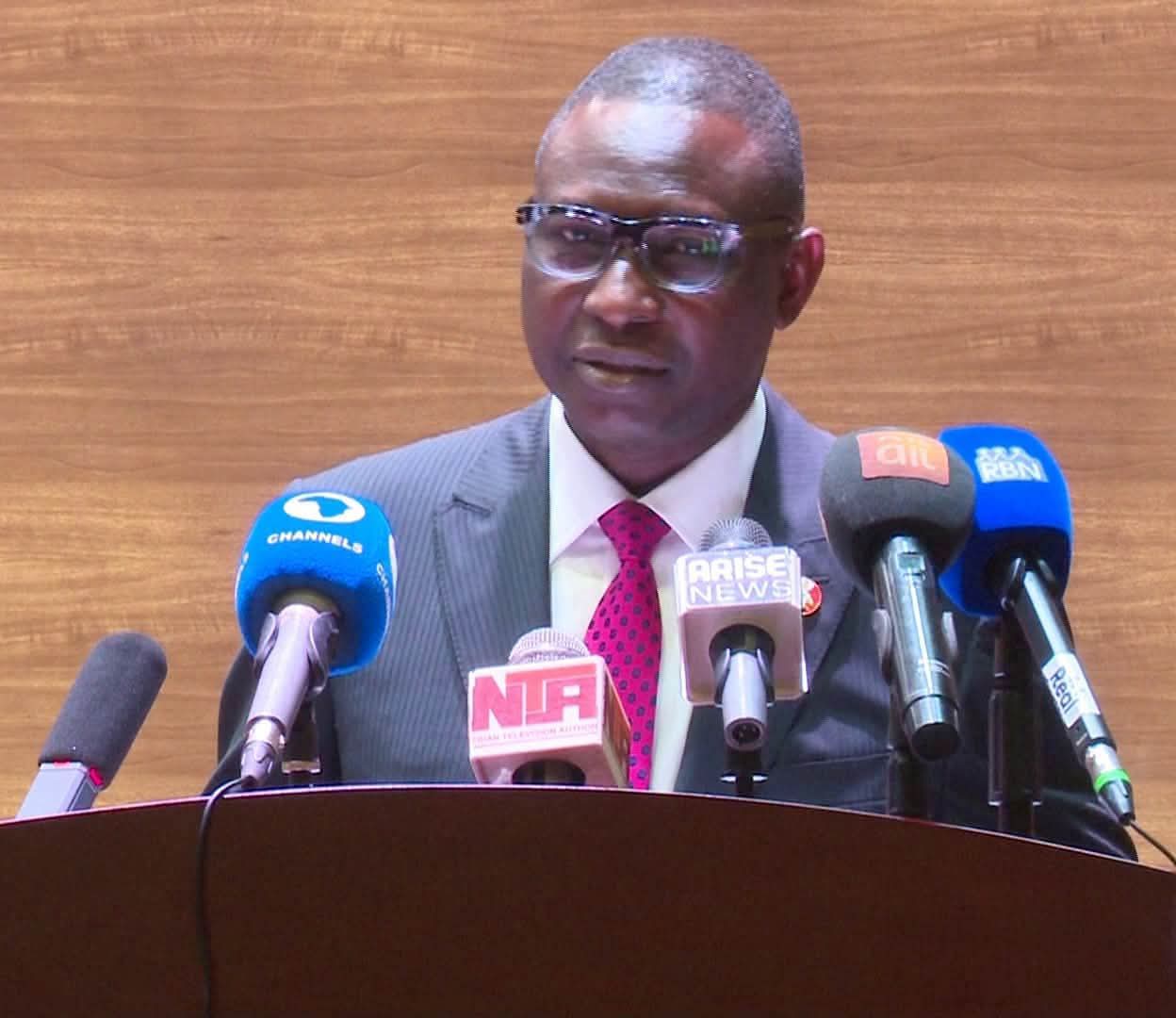
The Chairman of the Economic and Financial Crimes Commission (EFCC), Ola Olukoyede, has cautioned that the growing use of Artificial Intelligence (AI) is introducing fresh challenges in the fight against corruption, despite its potential to strengthen investigative and enforcement efforts.
Olukoyede made the remarks on Tuesday while opening a two-day Leadership Conference for Heads of National Anti-Corruption Institutions in West Africa, held at the ECOWAS Secretariat in Abuja. He spoke in his capacity as both EFCC chairman and President of the Network of Anti-Corruption Institutions in West Africa (NACIWA).
According to him, technological advancements have significantly transformed the nature of corruption and financial crime, making it necessary for anti-corruption agencies to rethink their strategies and upgrade their operational capabilities.
He explained that criminal organisations now exploit digital technologies to conduct activities across multiple countries, while illicit funds can be transferred through several jurisdictions within moments, reducing the effectiveness of traditional enforcement methods.
Olukoyede noted that AI has revolutionised how information is created, processed and utilised. While the technology offers valuable tools for intelligence gathering, fraud detection, risk analysis and institutional efficiency, it also raises concerns about accountability, ethical use, governance, data integrity and organisational preparedness.
He further observed that emerging technologies are not only driving economic growth and innovation but are also being used to facilitate fraud, conceal financial activities and support other forms of economic crime.
The EFCC boss stressed that anti-graft institutions must modernise and embrace technology if they are to keep pace with increasingly sophisticated criminal networks operating on digital platforms.
He also called for stronger regional partnerships, arguing that corruption has become a cross-border challenge that no single country can effectively combat alone.
According to him, the conference was organised to enhance leadership skills among anti-corruption officials and promote closer collaboration between agencies across West Africa. He said the initiative reflects NACIWA’s commitment to institutional development, peer learning and long-term capacity building.
Olukoyede added that the gathering sends a strong message that anti-corruption institutions in the region are ready to work collectively towards strengthening transparency, accountability and integrity.
He emphasised that successful anti-corruption leadership goes beyond investigations and prosecutions, requiring the creation of resilient institutions capable of surviving political transitions and adapting to changing criminal tactics.
“Our institutions must endure beyond individual leaders. They should be guided by strong systems, sound governance structures, skilled personnel, dependable technology and a culture of integrity,” he said.
The EFCC chairman also urged anti-corruption agencies to uphold professionalism, due process, accountability and the rule of law while addressing increasingly complex financial crimes.
Speaking during the NACIWA Distinguished Leadership Lecture, the Attorney-General of the Federation and Minister of Justice, Prince Lateef Fagbemi (SAN), said West Africa is at a critical stage where citizens are demanding greater transparency and stronger public institutions.
Fagbemi maintained that effective anti-corruption campaigns require bold and visionary leadership capable of safeguarding institutional independence and building public trust.
He warned public officials against viewing government positions as opportunities for personal gain, insisting that holders of public office must remain accountable for the management of public resources.
The conference attracted leaders of anti-corruption agencies from across the West African region, including representatives of the Independent Corrupt Practices and Other Related Offences Commission (ICPC), the Code of Conduct Bureau (CCB), and delegates from countries such as Ghana, Senegal, Sierra Leone, The Gambia, Togo and Cape Verde.
Discussions at the event are focusing on issues including artificial intelligence, digital transformation, intelligence-led investigations, institutional autonomy, transnational corruption, cross-border cooperation, judicial collaboration, asset recovery and governance reforms.
The inaugural NACIWA leadership conference is expected to conclude with the adoption of the Abuja Leadership Declaration, a framework intended to establish common leadership principles and coordinated actions for strengthening anti-corruption institutions across West Africa.
AI Creating New Challenges for Anti-Corruption Fight, Says EFCC Chairman
97